
Sign up to save your podcasts
Or



Based on Podcast App listening data
Share a comment
Midnight is not a vibe, it’s a deadline. We step into Exodus 11 and 12 and try to feel what Israel felt: wake the kids, get dressed, eat fast with your shoes on, and be ready to move with no map. The story of the tenth plague is familiar to many, but we slow it down and ask why God calls it the final stroke, why Pharaoh’s “protection” collapses, and why this night becomes the turning point that creates a nation and resets the calendar.
From there, we dig into the Passover lamb with clear, practical language: substitution, symbolism, protection, and submission. The lamb must be without blemish, its blood must be applied, and the household must trust God’s word enough to obey detailed instructions. We talk about why the fire matters, why “when I see the blood” is the hinge of the whole event, and why the inside of the house is not the test. That one line confronts our habit of trying to bring God a stack of deeds and call it safety.
We also lean into the family side of the Passover, because God builds the story for children to ask, “What does this mean?” That becomes a challenge to explain faith with meaning, not empty ritual. We close with a gripping historical story that exposes the emptiness of self-salvation and leaves a direct question on the table: are you trusting your hands, or the Lamb? If this helped you, subscribe, share it with a friend, and leave a review. What part of the Passover story hits you differently now?
We want to translate Stephen's through the Bible teaching series - The Wisdom Journey - into 10 new languages next year. Your support makes that possible.
Make a tax deductible gift right now: https://www.wisdomonline.org/give
Learn about our plans to reach the nations: https://www.wisdomonline.org/2050
Support the show
Share a comment
Pharaoh has evidence stacked to the ceiling and still refuses to bend. That’s the tension we sit in as we keep walking through Exodus 7 to 10, where Moses and Aaron confront the most powerful ruler in the ancient world and Yahweh answers with signs that are anything but random. The plagues hit the Nile, homes, bodies, livestock, crops, and even the sun itself and we trace how each judgment exposes the emptiness of Egypt’s gods and the fragility of Pharaoh’s self-made divinity.
We talk through the phrase about God hardening Pharaoh’s heart, not as God inventing evil in a man, but as God bringing out what was already lodged there: stubborn pride that will not humble itself. From the staff becoming a crocodile to the magicians admitting “This is the finger of God,” the pattern is clear: counterfeit power can imitate for a moment, but it cannot stand. Along the way, we highlight the turning point where Goshen is protected, making the spiritual line unmistakable between God’s people and Egypt’s oppression.
Then we bring it home with two personal lessons that land hard: obeying God may not bring the relief you expect, and serving God may not bring immediate results. If we build our faith on comfort or visible wins, we will quit when the pressure rises. If we build it on God’s glory, we can stay steady even when the frogs are still croaking. Subscribe for more Bible teaching through Exodus, share this with a friend, and leave a review with your biggest takeaway or question from Pharaoh’s story.
We want to translate Stephen's through the Bible teaching series - The Wisdom Journey - into 10 new languages next year. Your support makes that possible.
Make a tax deductible gift right now: https://www.wisdomonline.org/give
Learn about our plans to reach the nations: https://www.wisdomonline.org/2050
Support the show
Share a comment
Obedience is supposed to make things better, right? Moses walks into Pharaoh’s court with a clear word from God and walks out to find Israel’s workload doubled, their hope evaporating, and their leaders spitting blame in his face. We sit with that brutal turn in Exodus 5 and the very human crash that follows when your best efforts seem to trigger the opposite result.
From Pharaoh’s ego to the no straw brick quota, the pressure is designed to break a people and silence worship. We talk through why disappointment often shows up right after a moment of real spiritual momentum, and why Moses’ next move matters so much: he returns to the Lord with his questions instead of walking away hardened. That single choice becomes the hinge between bitterness and maturity.
God’s response is not a step-by-step tactic but a revelation of identity and power. The repeated “I am the Lord” and the cascade of “I will” promises reshape the whole story, moving the weight off Moses’ ability and onto God’s character, sovereignty, and faithfulness. We also draw out a simple application that hits close to home: affliction produces wisdom, and wisdom learns to trust the invisible hand of a God who keeps his word.
If you’re asking “why” or “how” right now, listen through to the end, then subscribe, share this with a friend who’s tired, and leave a review with the question you’re carrying today.
We want to translate Stephen's through the Bible teaching series - The Wisdom Journey - into 10 new languages next year. Your support makes that possible.
Make a tax deductible gift right now: https://www.wisdomonline.org/give
Learn about our plans to reach the nations: https://www.wisdomonline.org/2050
Support the show
Share a comment
God calls Moses out of an ordinary day and into a moment that changes everything: a burning bush, holy ground, and a mission Moses does not want. What follows isn’t just ancient history, it’s a painfully familiar pattern of hesitation. We hear Moses reach for excuse after excuse, and we recognize ourselves in the questions: Who am I to do this? What if I don’t have the answers? What if people don’t believe me? What if I’m not gifted enough to speak or lead?
We trace each objection and God’s response, because the story is packed with practical guidance for Christian leadership, calling, and everyday faith. God doesn’t build Moses with flattering words or promise a perfectly easy path. He offers presence: “I will be with you.” He reveals His name, Yahweh, “I AM,” and shows that spiritual authority comes less from having a polished method and more from knowing God deeply. We also connect that revelation to Jesus’ words in John 8, pointing to the heart of discipleship: learning Christ, not just collecting answers.
Then the tension rises as Moses claims inability and inadequacy, and God answers with undeniable signs and a blunt reminder that He made Moses’ mouth. The conversation lands on the moment where excuses turn into refusal, and we bring it home through Matthew 28 and the Great Commission: Christ gives the authority, the message, and the promise of His presence. If you’ve been stalling, bargaining, or waiting for “someone else” to step up, this is your nudge to stop playing chess with God and surrender. Subscribe, share with a friend who needs courage, and leave a review with the excuse you’re ready to drop.
We want to translate Stephen's through the Bible teaching series - The Wisdom Journey - into 10 new languages next year. Your support makes that possible.
Make a tax deductible gift right now: https://www.wisdomonline.org/give
Learn about our plans to reach the nations: https://www.wisdomonline.org/2050
Support the show
Share a comment
Failure has a way of making life feel like a desert, silent, exposed, and endless. We lean into three of Scripture’s most relatable “blown it” moments and ask a different question than “How did they mess up?” We ask: What did God build in them afterward, and what can He build in us when we’re tempted to quit, hide, or numb the guilt?
We walk through John Mark’s story in Acts, the young helper with every advantage who deserts the mission and becomes a point of sharp disagreement between Paul and Barnabas. From there we widen the lens to the pressure points most of us actually face: fear of ridicule, the ease of keeping quiet about Jesus, and the moment where convenience starts to look like wisdom. It’s a practical conversation about Christian perseverance, courage, and why spiritual potential means little without endurance.
Then we turn to David, not as a coward but as a man crushed by moral failure, and we sit with the raw honesty of Psalm 32 and the turning point of Psalm 51. Finally, we revisit Moses, trained for leadership yet forced into Midian’s obscurity, where self-sufficiency dies and dependence on God is born. A surprising thread ties it all together: God often speaks in the desert through another believer, a Peter, a Jethro, a timely voice you’re meant to hear.
If you’re walking through regret, disappointment, or spiritual dryness, this is a reminder that the desert doesn’t have to be the end of your story. Subscribe for more, share this with someone who needs hope, and leave a review so more listeners can find the conversation.
We want to translate Stephen's through the Bible teaching series - The Wisdom Journey - into 10 new languages next year. Your support makes that possible.
Make a tax deductible gift right now: https://www.wisdomonline.org/give
Learn about our plans to reach the nations: https://www.wisdomonline.org/2050
Support the show
Share a comment
A single sentence can expose an entire life plan. When Moses steps into a fight and tries to position himself as Israel’s deliverer, the response is sharp: “Who made you a ruler and judge over us?” We follow that question through Acts 7 and Exodus 2 to uncover what goes wrong when calling turns into self-appointment, and when passion tries to replace God’s authority.
We talk through Moses’ unique preparation in Egypt, his education, influence, and leadership potential, then the moment he “looks this way and that” and chooses a method God never asked for. The result is a sobering case study in getting ahead of God: serving God while ignoring God, using pragmatic tactics that seem to work, and discovering you can be right about the need and wrong about the timing. Along the way, we connect Moses’ shortcut to the New Testament pattern of spiritual warfare in 1 Timothy 2, where Paul calls believers to prayer even under corrupt and violent leadership.
We also bring it home with three concrete questions for Christian decision making and spiritual leadership: Is impatience shaping your choices, are you violating God’s counsel to get what you want, and are you planning everywhere but up? If you’re facing a big decision, building a ministry, or feeling the pressure to act now, this conversation will slow you down in the best way. Subscribe for more Bible teaching, share this with a friend who needs clarity, and leave a review with the part that challenged you most.
We want to translate Stephen's through the Bible teaching series - The Wisdom Journey - into 10 new languages next year. Your support makes that possible.
Make a tax deductible gift right now: https://www.wisdomonline.org/give
Learn about our plans to reach the nations: https://www.wisdomonline.org/2050
Support the show
Share a comment
A government order turns newborn life into a death sentence, and suddenly Exodus 2 feels less like a children’s story and more like a survival account. We walk through Moses’ rescue with fresh eyes, noticing a detail most people skip: the major characters stay unnamed for a long stretch, as if Scripture is quietly insisting that God is the lead actor, not the supporting cast.
We trace the faith of Amram and Jochebed as something sturdier than optimism: they hide a baby for three months, then build a waterproof basket, choose the placement, and send Miriam to watch with a line ready at the right moment. We also explore the strange providence of Pharaoh’s daughter bathing in the Nile as a religious fertility ritual, and how a crying child and a compassionate heart collide at the only point in the kingdom where Pharaoh’s edict can be overridden. Along the way we connect the story to Acts 7 and Hebrews 11 to frame the whole scene as faith in action.
Then we bring it home with three takeaways that cut close: faith benefits the people nearest to us, faith should shape everyday decisions and integrity, and faith impacts the observers we never knew were watching. The episode even follows the thread of Pharaoh’s daughter beyond the riverbank, raising the question of how living faith can ripple outward for decades. Subscribe, share this with a friend, and leave a review if it sharpened your view of God’s providence and your own choices.
We want to translate Stephen's through the Bible teaching series - The Wisdom Journey - into 10 new languages next year. Your support makes that possible.
Make a tax deductible gift right now: https://www.wisdomonline.org/give
Learn about our plans to reach the nations: https://www.wisdomonline.org/2050
Support the show
Share a comment
A nation grows, a ruler panics, and cruelty becomes “policy.” We open Exodus 1 with the uncomfortable logic of fear: a new Pharaoh forgets Joseph, looks at Israel’s strength, and decides the only safe future is control. That decision spirals fast, from hard labor and forced building projects to covert orders aimed at newborns. The ancient details are vivid, but the questions feel modern: what happens when power is driven by insecurity, and what does it do to a society’s moral compass?
We trace the three escalating plans Pharaoh uses against the Hebrews, then slow down at the turning point in the story: two midwives, Shiphrah and Puah, who “fear God” and refuse to participate in evil. Their courage becomes a practical framework for conscience, authority, and civil disobedience. We talk about the cost of saying no, why integrity is more than a private virtue, and how faith shows up when the pressure is real, whether that pressure comes from leaders, institutions, or the crowd.
The conversation also draws a straight line from Exodus to the bigger biblical story of redemption, pointing to Moses as deliverer and the way Exodus foreshadows rescue from sin through Jesus Christ. We end with two grounded takeaways for anyone walking through suffering: affliction can be unfair yet purposeful, and when God seems absent He is always at work. If you need a final image to hold onto, it’s the story of a child carrying a heavy basket with confidence because his father knows his limits.
Subscribe for more Bible teaching with clear application, share this with a friend who needs courage, and leave a review with your biggest takeaway: where do you need to say no and trust God’s work right now?
We want to translate Stephen's through the Bible teaching series - The Wisdom Journey - into 10 new languages next year. Your support makes that possible.
Make a tax deductible gift right now: https://www.wisdomonline.org/give
Learn about our plans to reach the nations: https://www.wisdomonline.org/2050
Support the show
Share a comment
A glove can point, clap, and wave all day long but only when a hand fills it. That’s the picture we keep coming back to as we walk through Romans 8: the Christian life is not powered by grit, personality, or religious hustle. We’re “willing gloves,” and the Holy Spirit is the One who indwells, energizes, and directs us so our lives actually move in a new direction.
We get practical about a question that confuses a lot of people: what does it mean to be led by the Spirit? We challenge the popular idea that spiritual guidance is mainly a mystical feeling, a private voice, or the latest trend of dream-based direction. When “God told me” becomes more exciting than what God has already said, the result is distraction and instability. We read the warning signs, talk about how false confidence can grow, and why Scripture sufficiency matters for everyday discernment.
Then we lay out a clearer definition: being led by the Spirit means being led into the Word of God and into obedience to the Word of God. From there, Romans 8 opens up the relief of adoption as sons and daughters, not slavery and fear, but full family rights and a real inheritance. That new relationship changes our prayer life too, giving us the freedom to cry, “Abba, Father,” with intimacy and reverence.
If you want biblical guidance, deeper assurance, and a steadier approach to Spirit-led living, press play. Subscribe, share this with a friend, and leave a review with the biggest takeaway you’re wrestling with right now.
We want to translate Stephen's through the Bible teaching series - The Wisdom Journey - into 10 new languages next year. Your support makes that possible.
Make a tax deductible gift right now: https://www.wisdomonline.org/give
Learn about our plans to reach the nations: https://www.wisdomonline.org/2050
Support the show
Share a comment
Your mind is already set on something. The only question is whether it is setting you up for life and peace or quietly training you for death. We start with a hard but clarifying claim from Scripture: there are friends of the world, and there are friends of God. If we truly belong to Christ, we are not just religious consumers of spiritual ideas, we are meant to walk in friendship with the Holy Spirit, the faithful presence who leads, corrects, protects, and empowers us.
From Romans 8:5-11, we trace Paul’s contrast between two mindsets and two destinies. This is not about IQ or personality type. It is about what we crave, what we return to, and what occupies our private thoughts. We talk through the “desire quotient” and why your deepest wants reveal your real direction, then we use vivid stories to expose how obsession works, from noble pursuits to ridiculous ones. If what you love is what you become, what is forming you right now?
The stakes get even higher as Paul connects the mind set on the flesh with death and hostility toward God, while the mind set on the Spirit produces life and peace. We also land on one of the most hope-filled promises in the New Testament: the Spirit who raised Jesus from the dead will also give life to our mortal bodies. The result is both sobering and comforting, especially when we consider what people trust in at the end of life. If this conversation challenges you, share it with a friend, subscribe for more, and leave a review that tells us what part hit closest to home.
We want to translate Stephen's through the Bible teaching series - The Wisdom Journey - into 10 new languages next year. Your support makes that possible.
Make a tax deductible gift right now: https://www.wisdomonline.org/give
Learn about our plans to reach the nations: https://www.wisdomonline.org/2050
Support the show
From the publisher's feed
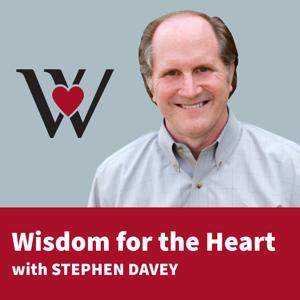
Stephen Davey will help you learn to know what the Bible says, understand what it means, and apply it to your life as he teaches verse-by-verse through books of the Bible. Stephen is the president…
Ranked by our users in the last 21 days

2,501 Listeners

8,593 Listeners

3,934 Listeners
1,424 Listeners

2,568 Listeners

2,184 Listeners

4,728 Listeners

1,981 Listeners

21,171 Listeners

6 Listeners

65,322 Listeners

1,559 Listeners

496 Listeners
6 Listeners

2,460 Listeners
13,149 Listeners
196 Listeners
13 Listeners

9 Listeners
0 Listeners