
Sign up to save your podcasts
Or

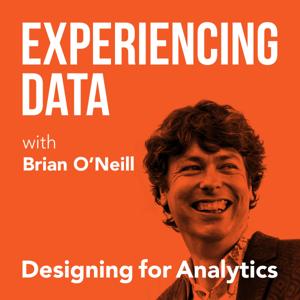

Today, I’m flying solo in order to introduce you to CED: my three-part UX framework for designing your ML / predictive / prescriptive analytics UI around trust, engagement, and indispensability. Why this, why now? I have had several people tell me that this has been incredibly helpful to them in designing useful, usable analytics tools and decision support applications.
I have written about the CED framework before at the following link:
https://designingforanalytics.com/ced
There you will find an example of the framework put into a real-world context. In this episode, I wanted to add some extra color to what is discussed in the article. If you’re an individual contributor, the best part is that you don’t have to be a professional designer to begin applying this to your own data products. And for leaders of teams, you can use the ideas in CED as a “checklist” when trying to audit your team’s solutions in the design phase—before it’s too late or expensive to make meaningful changes to the solutions.
 View all episodes
 By Brian T. O’Neill from Designing for Analytics

4.9
4242 ratings
Today, I’m flying solo in order to introduce you to CED: my three-part UX framework for designing your ML / predictive / prescriptive analytics UI around trust, engagement, and indispensability. Why this, why now? I have had several people tell me that this has been incredibly helpful to them in designing useful, usable analytics tools and decision support applications.
I have written about the CED framework before at the following link:
https://designingforanalytics.com/ced
There you will find an example of the framework put into a real-world context. In this episode, I wanted to add some extra color to what is discussed in the article. If you’re an individual contributor, the best part is that you don’t have to be a professional designer to begin applying this to your own data products. And for leaders of teams, you can use the ideas in CED as a “checklist” when trying to audit your team’s solutions in the design phase—before it’s too late or expensive to make meaningful changes to the solutions.
479 Listeners

1,087 Listeners

43 Listeners

302 Listeners

226 Listeners
320 Listeners
269 Listeners

211 Listeners
142 Listeners

494 Listeners

106 Listeners

110 Listeners

147 Listeners

610 Listeners

27 Listeners