
Sign up to save your podcasts
Or

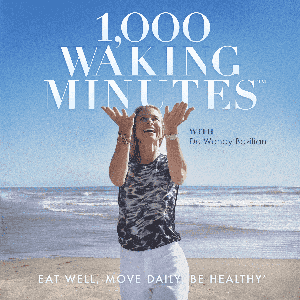


January brings a flood of wellness trends. This episode cuts through the noise, highlighting the patterns that actually work—so you can invest your time, energy, and attention where it counts this year.
The start of the year amplifies wellness noise. New diets. New devices. New promises competing for your time, energy, and attention.—but discernment matters more than ever. This episode offers a smarter way to start the year, focusing on the patterns that truly support how we eat, live, and connect.
In this episode of 1,000 Waking Minutes, Dr. Wendy Bazilian takes a different approach to “trends.” Instead of chasing fleeting fads, she reframes today’s wellness moment as a set of larger patterns shaping how we eat, move, and live—and how we decide what’s actually worth our effort.
Dr. Bazilian introduces three powerful shifts guiding health right now: efficiency, enhancement, and connection. Together, these patterns help make life simpler, more nourishing, and more sustainable—without adding pressure, rigidity, or noise.
From the quiet renaissance happening in the freezer aisle, to purposeful portions in an era of changing appetites, to the growing return to analog hobbies and shared movement, this episode is about discernment over distraction. It’s about building systems that work with your life—not against it.
If you’ve ever felt overwhelmed by wellness trends, this conversation will help you step back, reset, and decide what truly fits your reality—and your 1,000 waking minutes each day.
WE DISCUSS:(00:00) Why wellness trends feel exhausting—and how to view them differently
(02:20) From fads to patterns: choosing discernment over distraction
(04:16) The three major shifts shaping health right now: efficiency, enhancement, and connection
(5:28) Efficiency: Getting More Nutrition per Bite and per Dollar(11:25) The “freezer renaissance” and why frozen foods deserve a second look
(14:09) Purposeful portions in an era of changing appetites and GLP-1 medications
(15:44) Why protecting muscle mass matters more than ever
(23:08) Enhancement: Making What You Eat Work Better(23:40) Intentional additions instead of restriction
(26:01) Why fiber has become the “new protein”
(29:59) The fat reset: adding the right fats for nutrient absorption and synergy
(26:12) Connection: The Pattern That Makes Everything Stick(38:07) Why connection determines whether health habits last
(40:15) The rise of analog hobbies and non-digital restoration
(43:29) Community fitness, accountability, and shared movement
(48:21) Closing ReflectionsBuilding a personal ecosystem for health in the year aheadBefore trying the next trend, pause and ask:
Does this make life easier—or harder?
Does it fit my reality right now?
The most powerful health shifts aren’t louder. They’re quieter, more intentional, and built to last.
CONNECT WITH WENDY:Follow me on Instagram: @1000WakingMinutes
Visit my website: wendybazilian.com
Email me topics you want covered on the podcast: [email protected]
PLEASE SUPPORT:If you’re enjoying 1,000 Waking Minutes, help us grow!
Subscribe to get new episodes as soon as they drop.
Rate & Review the show. Your feedback helps others find the podcast.
Comment & Join the conversation! Share your thoughts or questions by visiting wendybazilian.com or connecting with me on social media.
Thank you for tuning in to 1,000 Waking Minutes and being part of this journey–together. A huge thank you to our amazing collaborators including our production and marketing teams and Gabriela Escalante in particular. To the ultra-talented Beza for my theme music, my lifelong friend and artist Pearl Preis Photography and Design, to Danielle Ballantyne, Jen Nguyen, Joanna Powell, and of course, my family and everyone working tirelessly behind the scenes.
HEALTH DISCLAIMER:The information shared in this podcast is for educational purposes only and should not be considered individual medical or health advice. Always consult with your trusted healthcare provider before making any changes to your diet, exercise, or medical treatment.
Dry January, dopamine detoxes, and how short breaks can be powerful and productive.
What if the most effective way to change a habit isn’t to push harder — but to pause, briefly and on purpose?
In this thoughtful and science-backed episode of 1,000 Waking Minutes, Dr. Wendy Bazilian explores the power of intentional pauses as a tool for restoring energy, focus, and clarity. Using a pause from alcohol — such as Dry January — as a familiar example, she reframes short-term resets not as deprivation, but as opportunities to notice patterns, interrupt autopilot behaviors, and decide what actually feels worth carrying forward.
Drawing on neuroscience, psychology, hydration science, and real-world experience — including her years at the Golden Door spa — Dr. Bazilian explains how small, purposeful breaks can recalibrate the brain, strengthen decision-making, improve hydration and sleep, and restore a sense of vigor. This episode also gently busts myths around “dopamine detoxes,” highlighting why behavior change is more about awareness than willpower.
You’ll experience a guided mindful minute to practice pausing in real time, along with practical strategies to refine rituals, hydrate more effectively, navigate social situations with confidence, and stack pauses for greater benefit — all within the framework of your 1,000 waking minutes.
This episode is an invitation to press pause not to stop life, but to return to it more present, intentional, and energized.
FROM THE EPISODE
“Sometimes it’s not about what we pour into the glass… it’s about what we pour into our moments.”
WE DISCUSS(0:00) Welcome — why this episode is about pausing with intention, not pushing harder
(1:27) Why January naturally invites pauses, resets, and reflection
(3:49) A real-world example from Golden Door: what happens when alcohol is removed — and what replaces it
(8:15) Why pushing harder isn’t always the answer — and how pausing can restore energy and focus
(12:37) The neuroscience of habit loops and how pauses interrupt autopilot behavior
(16:49) Hydration, functional hydration, and why replacing alcohol with fluids affects brain performance
(20:17) Digital pauses, screen time research, and improved sleep and well-being
(24:36) A Mindful Minute and practical strategies for taking a pause without losing ritual or joy
(26:45) Reframing pauses as experiments — and choosing how we spend our waking minutes more intentionally
CONNECT WITH WENDY:Follow me on Instagram: @1000WakingMinutes
Visit my website: wendybazilian.com
Email me topics you want covered on the podcast: [email protected]
PLEASE SUPPORT:If you’re enjoying 1,000 Waking Minutes, help us grow!
Subscribe to get new episodes as soon as they drop.
Rate & Review the show. Your feedback helps others find the podcast.
Comment & Join the conversation! Share your thoughts or questions by visiting wendybazilian.com or connecting with me on social media.
Thank you for tuning in to 1,000 Waking Minutes and being part of this journey–together. A huge thank you to our amazing collaborators including our production and marketing teams and Gabriela Escalante in particular. To the ultra-talented Beza for my theme music, my lifelong friend and artist Pearl Preis Photography and Design, to Danielle Ballantyne, Jen Nguyen, Joanna Powell, and of course, my family and everyone working tirelessly behind the scenes.
HEALTH DISCLAIMER:The information shared in this podcast is for educational purposes only and should not be considered individual medical or health advice. Always consult with your trusted healthcare provider before making any changes to your diet, exercise, or medical treatment.
Menopause is finally getting the attention — and the science — it deserves. In this Science You Can Use episode of 1,000 Waking Minutes, Dr. Wendy Bazilian explores a meaningful shift in women’s health and what it means for how we move through midlife and beyond.
This episode arrives at a moment when menopause care is being reconsidered — not through fear or outdated assumptions, but through updated evidence and lived experience. As the science evolves, the conversation expands beyond hormones alone to include what women can do, day to day, to feel stronger, steadier, and more at ease in their bodies.
Dr. Bazilian takes a close look at movement — not as a generic recommendation, but as something that works differently during this stage of life. Drawing from three recent research reviews, she examines what the data actually show about physical activity and menopause symptoms, including sleep disruption, mood changes, fatigue, and bone health — as well as where movement helps, and where expectations need to be realistic.
The focus isn’t on finding a perfect routine or doing more for the sake of it. It’s about understanding how the body responds during midlife, choosing forms of movement that make sense now, and using consistency — not intensity — to support both physical and mental well-being.
You’ll also hear how movement fits alongside — not in place of — medical options, why timing matters in menopause care, and how breath, attention, and connection can shape the way healthy habits take hold and endure.
WE DISCUSS:(0:00) Welcome — why menopause, movement, and this moment in science matter right now
(3:46) The FDA makes announcement to remove black box warning on hormone replacement therapy medications - why now and what it means
(8:03) Why menopause, movement, and this moment in science matter right now
(9:29) Study #1: Why there’s no single “best” workout in menopause — and what consistently helps symptoms
(14:14) Study #2: How mind-body movement shows up for bone health during midlife
(18:42) Study #3: The link between movement, sleep quality, mood, and fatigue in menopause
(24:30) Practical ways to move through midlife that fit real life
(26:30) Closing reflections on movement as medicine across the 1,000 waking minutes
RESEARCH & REFERENCES[References will be listed here — placeholder]
Follow me on Instagram: @1000WakingMinutes
Visit my website: wendybazilian.com
Email me topics you want covered on the podcast: [email protected]
PLEASE SUPPORT:If you’re enjoying 1,000 Waking Minutes, help us grow!
Subscribe to get new episodes as soon as they drop.
Rate & Review the show. Your feedback helps others find the podcast.
Comment & Join the conversation! Share your thoughts or questions by visiting wendybazilian.com or connecting with me on social media.
Thank you for tuning in to 1,000 Waking Minutes and being part of this journey–together. A huge thank you to our amazing collaborators including our production and marketing teams and Gabriela Escalante in particular. To the ultra-talented Beza for my theme music, my lifelong friend and artist Pearl Preis Photography and Design, to Danielle Ballantyne, Jen Nguyen, Joanna Powell, and of course, my family and everyone working tirelessly behind the scenes.
HEALTH DISCLAIMER:The information shared in this podcast is for educational purposes only and should not be considered individual medical or health advice. Always consult with your trusted healthcare provider before making any changes to your diet, exercise, or medical treatment.
REFERENCESMoney, A., MacKenzie, A., Norman, G., et al. (2024). The impact of physical activity and exercise interventions on symptoms for women experiencing menopause: Overview of reviews. BMC Women’s Health, 24(1), 399. https://link.springer.com/article/10.1186/s12905-024-03243-4
Xu, H., Liu, J., Li, P., & Liang, Y. (2024). Effects of mind-body exercise on perimenopausal and postmenopausal women: A systematic review and meta-analysis. Menopause, 31(5), 457–467. https://journals.lww.com/menopausejournal/fulltext/2024/05000/effects_of_mind_body_exercise_on_perimenopausal.13.aspx
Choudhary, A., & Bansal, K. (2025). Menopause and movement: Exercise for better sleep and psychological well-being — A systematic review. Menopause, 32(11), 1063–1071. https://journals.lww.com/menopausejournal/abstract/2025/11000/menopause_and_movement__exercise_for_better_sleep.12.aspx
Fibermaxxing — you’ve probably seen the term on TikTok, in health headlines, or from wellness influencers layering oats, chia, and psyllium like it’s the next protein craze. But what does it actually mean—and is it worth the hype? In this episode of 1,000 Waking Minutes, Dr. Wendy Bazilian takes a thoughtful look at the fibermaxxing trend: where it came from, what the science really says, and how to safely—and sanely—add more fiber to your life.
From the early days of “Uncle Sam” cereal calling itself a “natural laxative,” to the latest research connecting fiber to heart health, longevity, and even mental well-being, this episode brings clarity to a topic that’s as timeless as it is trending.
Dr. Bazilian unpacks why “more” isn’t always “better,” how to increase fiber safely, and why hydration and gradual change make all the difference. Whether you’re a fiber newbie or a lifelong bran devotee, this short, smart episode will help you understand what fibermaxxing really means for your 1,000 waking minutes each day.
WE DISCUSS:(00:00) Intro
(1:27) What “fibermaxxing” means—and why it’s trending
(3:30) The surprising story behind Uncle Sam cereal and the word “laxative”
(6:41) How much fiber is enough—and why “too much, too fast” can backfire
(7:27) What the science really says about fiber and longevity, heart health, and mood
(10:38) The right way to level up your fiber: food first, variety, and hydration
(13:07) Real-world examples to help you get more fiber without the hype
(17:32) Wendy’s take: Why balance and awareness beat extremes every time
CONNECT WITH WENDY:Follow me on Instagram: @1000WakingMinutes
Visit my website: wendybazilian.com
Email me topics you want covered on the podcast: [email protected]
PLEASE SUPPORT:If you’re enjoying 1,000 Waking Minutes, help us grow!
Subscribe to get new episodes as soon as they drop.
Rate & Review the show. Your feedback helps others find the podcast.
Comment & Join the conversation! Share your thoughts or questions by visiting wendybazilian.com or connecting with me on social media.
Thank you for tuning in to 1,000 Waking Minutes and being part of this journey–together. A huge thank you to our amazing collaborators including our production and marketing teams and Gabriela Escalante in particular. To the ultra-talented Beza for my theme music, my lifelong friend and artist Pearl Preis Photography and Design, to Danielle Ballantyne, Jen Nguyen, Joanna Powell, and of course, my family and everyone working tirelessly behind the scenes.
HEALTH DISCLAIMER:The information shared in this podcast is for educational purposes only and should not be considered individual medical or health advice. Always consult with your trusted healthcare provider before making any changes to your diet, exercise, or medical treatment.
RESEARCH & REFERENCESU.S. Department of Agriculture & U.S. Department of Health and Human Services. (2020). Dietary Guidelines for Americans, 2020–2025 (9th ed.). Washington, DC. https://www.dietaryguidelines.gov
Dietary Guidelines Advisory Committee. (2024). Scientific Report of the 2025 Dietary Guidelines Advisory Committee. Washington, DC: U.S. Department of Agriculture, Agricultural Research Service. https://www.dietaryguidelines.gov/resources/2020-2025-dietary-guidelines-online-materials
https://www.dietaryguidelines.gov/sites/default/files/2021-03/Dietary_Guidelines_for_Americans-2020-2025.pdf
U.S. Department of Agriculture, Economic Research Service. (2023). Food Consumption and Nutrient Intakes Data. Washington, DC. https://www.ers.usda.gov/data-products/food-consumption-nutrient-intakes-and-diet-quality
Mirrafiei, A., Jayedi, A., & Shab-Bidar, S. (2023). Total and different dietary fiber subtypes and the risk of all-cause, cardiovascular, and cancer mortality: a dose-response meta-analysis of prospective cohort studies. Food & function, 14(24), 10667–10680. https://doi.org/10.1039/d2fo04024g
https://pubs.rsc.org/en/content/articlelanding/2023/fo/d2fo04024g
Fu, L., Zhang, G., Qian, S., Zhang, Q., & Tan, M. (2022). Associations between dietary fiber intake and cardiovascular risk factors: An umbrella review of meta-analyses of randomized controlled trials. Frontiers in nutrition, 9, 972399. https://doi.org/10.3389/fnut.2022.972399
https://www.frontiersin.org/articles/10.3389/fnut.2022.972399/full
Yang, M., Cai, C., Yang, Z., Wang, X., Li, G., Li, J., Liu, J., & Zhang, Z. (2024). Effect of dietary fibre on cognitive function and mental health in children and adolescents: a systematic review and meta-analysis. Food & function, 15(17), 8618–8628. https://doi.org/10.1039/d4fo02221a
https://doi.org/10.1039/D4FO02221A
Chen, X., Tao, L., & Wang, Y. (2025). Association of dietary fiber intake with all-cause and cardiovascular mortality in diabetes and prediabetes. Diabetology & metabolic syndrome, 17(1), 231. https://doi.org/10.1186/s13098-025-01810-9 https://dmsjournal.biomedcentral.com/articles/10.1186/s13098-025-01810-9
Barber, T. M., Kabisch, S., Pfeiffer, A. F. H., & Weickert, M. O. (2020). The health benefits of dietary fibre. Nutrients, 12(10), 3209. https://doi.org/10.3390/nu12103209
https://www.mdpi.com/2072-6643/12/10/3209
There’s a reason a good laugh feels like it reaches all the way down to your bones — it’s one of the quickest ways the body remembers joy. In this uplifting and evidence-based episode of 1,000 Waking Minutes, Dr. Wendy Bazilian explores why laughter matters — from its power to rewire the brain and support heart health to its ability to boost immunity, reduce stress, and even help us “jog internally” without leaving the house.
Blending research and real-life examples, including how comedy found its way back after 9/11, insights from Loma Linda University and Vanderbilt studies, and reflections on Andrea Martin’s Lady Parts, Dr. Bazilian connects humor and healing in ways that feel both relatable and inspiring.
You’ll also experience a mindful minute to smile, breathe, and feel the lightness laughter brings — plus practical tips to “find your funny,” watch something that cracks you up, and even “smile loudly” as a daily health tool.
FROM THE EPISODEWE DISCUSS:
(00:00) Intro
(1:34) Why laughter matters — emotionally, physically, and socially
(2:47) The role of humor in healing and connection, from 9/11 to everyday life
(5:44) Andrea Martin, Edith Prickley, and Lil Edith P in her memoir “Lady Parts”
(12:13) How science shows laughter can help our brains, hearts, circulation, and immunity
(19:02) A Mindful Minute: breathing, smiling, and softening through joy
(21:04) Practical ways to bring more lightness and laughter into your 1,000 waking minutes
(29:59) Wrapping up and meeting life a little lighter:... “give me the love, give me the stage, give me the laughter”
CONNECT WITH WENDY:Follow me on Instagram: @1000WakingMinutes
Visit my website: wendybazilian.com
Email me topics you want covered on the podcast: [email protected]
PLEASE SUPPORT:If you’re enjoying 1,000 Waking Minutes, help us grow!
Subscribe to get new episodes as soon as they drop.
Rate & Review the show. Your feedback helps others find the podcast.
Comment & Join the conversation! Share your thoughts or questions by visiting wendybazilian.com or connecting with me on social media.
Thank you for tuning in to 1,000 Waking Minutes and being part of this journey–together. A huge thank you to our amazing collaborators including our production and marketing teams and Gabriela Escalante in particular. To the ultra-talented Beza for my theme music, my lifelong friend and artist Pearl Preis Photography and Design, to Danielle Ballantyne, Jen Nguyen, Joanna Powell, and of course, my family and everyone working tirelessly behind the scenes.
HEALTH DISCLAIMER:The information shared in this podcast is for educational purposes only and should not be considered individual medical or health advice. Always consult with your trusted healthcare provider before making any changes to your diet, exercise, or medical treatment.
RESEARCH & REFERENCESMartin, Andrea. (2014). Lady Parts. HarperCollins Publishers. https://www.harpercollins.com/products/lady-parts-andrea-martin
Providence Heart & Vascular Team. (2021, April 14). Amazing ways laughter improves your heart health. Expert tips and advice for living your healthiest life. Providence Health Blog. Retrieved September 12, 2021, from
https://blog.providence.org/archive/amazing-ways-laughter-improves-your-heart-health
Berk, R. A. (2001). The active ingredients in humor: Psychophysiological benefits and risks for older adults. Educational Gerontology, 27(3–4), 323–339.
https://psycnet.apa.org/record/2001-07072-007
Miller, M., & Fry, W. F. (2009). The effect of mirthful laughter on the human cardiovascular system. Medical Hypotheses, 73(5), 636–639. https://doi.org/10.1016/j.mehy.2009.02.044
Pressman, S. D., & Cohen, S. (2005). Does positive affect influence health? Psychological Bulletin, 131(6), 925–971. https://doi.org/10.1037/0033-2909.131.6.925
Cohen, S., Doyle, W. J., Turner, R. B., Alper, C. M., & Skoner, D. P. (2003). Emotional style and susceptibility to the common cold. Psychosomatic Medicine, 65(4), 652–657. https://doi.org/10.1097/01.PSY.0000077508.57784.DA
Cohen, S., Alper, C. M., Doyle, W. J., Treanor, J. J., & Turner, R. B. (2006). Positive emotional style predicts resistance to illness after experimental exposure to rhinovirus or influenza A virus. Psychosomatic Medicine, 68(6), 809–815. https://doi.org/10.1097/01.psy.0000245867.92364.3c
Colmenares, C. (2005, June 10). No joke: Study finds laughing can burn calories. Vanderbilt University Reporter. Retrieved November 24, 2025, from
https://news.vumc.org/reporter-archive/no-joke-study-finds-laughing-can-burn-calories/
Wollmer, M. A., de Boer, C., Kalak, N., Beck, J., Götz, T., Schmidt, T., ... & Sönmez, D. (2012). Facing depression with botulinum toxin: A randomized controlled trial. Journal of Psychiatric Research, 46(5), 574–581. https://doi.org/10.1016/j.jpsychires.2012.01.027
Magid M, Reichenberg JS, Poth PE, Robertson HT, LaViolette AK, Kruger TH, Wollmer MA. Treatment of major depressive disorder using botulinum toxin A: a 24-week randomized, double-blind, placebo-controlled study. J Clin Psychiatry. 2014 Aug;75(8):837-44. doi: 10.4088/JCP.13m08845. PMID: 24910934. https://pubmed.ncbi.nlm.nih.gov/24910934/
It’s all over social media — the three-bite rule.
Influencers savoring desserts, pasta, and pastries with the claim “just three bites.” The message? You can eat anything you want… as long as you stop after bite number three. Stop - Done - Basta!
But what does that really teach us about food, choice, or control?
In this episode of 1,000 Waking Minutes, Dr. Wendy Bazilian weighs in on the trend, separating fact from fiction. .
Drawing on more than two decades of clinical experience and research in mindfulness and eating behavior, she explores why connection and awareness matters more than control.
You’ll hear what the science says about restraint, awareness, and emotional engagement around food experiences and Dr. Bazilian’s own three-bite ‘practice’- a mindfulness strategy she’s taught for over 20 years that is rooted in curiosity, presence, and joy at the table.
This shorter conversation is part of an occasional series where we unpack trending ideas and frequently asked questions with clarity, nuance, and credible science — all in service of helping you make the most of your 1,000 waking minutes each day.
FROM THE EPISODEWE DISCUSS:(00:00) Introduction and welcome to the episode
(2:51) What is the TikTok “Three-Bite Rule” and why it’s trending
(7:34) What science tells us about restraint, mindfulness, and emotion
(8:04) Three key studies
(13:29) Why flexibility beats rigid control — in food and in life
(17:11) Dr. Bazilian’s Three-Bite “Practice”
(22:34) How to apply the practice in daily life
(23:46) Reflection: choosing connection over control
(25:51) Closing thoughts
CONNECT WITH WENDY:Follow me on Instagram: @1000WakingMinutes
Visit my website: wendybazilian.com
Email me topics you want covered on the podcast: [email protected]
PLEASE SUPPORT:If you’re enjoying 1,000 Waking Minutes, help us grow!
● Subscribe to get new episodes as soon as they drop.
● Rate & Review the show. Your feedback helps others find the podcast.
● Comment & Join the conversation! Share your thoughts or questions by visiting wendybazilian.com or connecting with me on social media.
Thank you for tuning in to 1,000 Waking Minutes and being part of this journey–together. A huge thank you to our amazing collaborators including our production and marketing teams and Gabriela Escalante in particular. To the ultra-talented Beza for my theme music, my lifelong friend and artist Pearl Preis Photography and Design, to Danielle Ballantyne, Jen Nguyen, Joanna Powell, and of course, my family and everyone working tirelessly behind the scenes.
HEALTH DISCLAIMER:The information shared in this podcast is for educational purposes only and should not be considered individual medical or health advice. Always consult with your trusted healthcare provider before making any changes to your diet, exercise, or medical treatment.
RESEARCH & REFERENCESWatson, P., & Le Pelley, M. E. (2021). A meta-analysis of the relationship between eating restraint, impaired cognitive control and cognitive bias to food in non-clinical samples. Clinical psychology review, 89, 102082. https://doi.org/10.1016/j.cpr.2021.102082
Pepe, R. B., Coelho, G. S. de M. A., Miguel, F. da S., Gualassi, A. C., Sarvas, M. M., Cercato, C., … de Melo, M. E. (2023). Mindful eating for weight loss in women with obesity: a randomised controlled trial. British Journal of Nutrition, 130(5), 911–920. doi:10.1017/S0007114522003932 https://www.cambridge.org/core/journals/british-journal-of-nutrition/article/mindful-eating-for-weight-loss-in-women-with-obesity-a-randomised-controlled-trial/FEBA9D60A940E6FC5C1FAD6D5C0B2E2F
Peitz, D., Warschburger, P. What Are You Hungry for? The 9 Hunger Mindful Eating Online Randomized Controlled Trial. Mindfulness 14, 2868–2879 (2023). https://doi.org/10.1007/s12671-023-02263-9
Some connections go beyond time and space. A childhood friend, a whispered prayer, a moment of gratitude—these simple practices can shape our health and how we experience our 1,000 waking minutes.
In this episode of 1,000 Waking Minutes, Dr. Wendy Bazilian explores the power of connection—not only with people, but with something greater than ourselves. From friendships that shape who we are, to the practices of prayer, meditation, gratitude, and belonging, Wendy unpacks how these experiences affect our physical, emotional, and spiritual well-being.
Drawing on science from the Blue Zones, the Nurses’ Health Study, and new research on meditation and prayer, we discover surprising health benefits: from improved mood and reduced anxiety to lower blood pressure, stronger immunity, and even greater longevity. Alongside studies, Wendy shares stories of friendship, family traditions, poetry, and the rituals that help us feel grounded in a bigger universe.
This episode also includes a guided Mindful Minute and practical ways to invite connection into daily life. Whether you identify as religious, spiritual, or simply reflective, you’ll find inspiration to pause, breathe, and honor what connects us all.
CHAPTERS:
(0:00) Introduction and reflections on friendships that shape us
(3:49) What it means to “connect with the universe”—beyond religion or doctrine
(5:28) Elie Wiesel’s wisdom: “If the only prayer you say in your life is thank you, that will be enough.”
(7:55) Science and health benefits of connection: gratitude, prayer, and belonging
(10:29) Longevity lessons from the Blue Zones
(12:30) The Nurses’ Health Study and depression risk
(13:36) Research on spiritual intervention and anxiety and depressive symptoms
(14:40) Study on mindfulness-based interventions and cancer symptoms and coping
(16:15) A study on meditation, prayer, and cognitive clarity
(18:28) The Mindful Minute: a pause for presence and gratitude
(21:08)) Personal story: John Neihardt’s poem The Child’s Prayer
(24:23) Practical ways to connect—belonging, meditation, transitions, affirmations, rituals, and honoring loved ones
(31:02) Closing thoughts on connection, gratitude, and living our 1,000 waking minutes
CONNECT WITH WENDY:Follow me on Instagram: @1000WakingMinutes
Visit my website: wendybazilian.com
Email me topics you want covered on the podcast: [email protected]
PLEASE SUPPORT:If you’re enjoying 1,000 Waking Minutes, help us grow!
● Subscribe to get new episodes as soon as they drop.
● Rate & Review the show. Your feedback helps others find the podcast.
● Comment & Join the conversation! Share your thoughts or questions by visiting wendybazilian.com or connecting with me on social media.
Thank you for tuning in to 1,000 Waking Minutes and being part of this journey–together. A huge thank you to our amazing collaborators including our production and marketing teams and Gabriela Escalante in particular. To the ultra-talented Beza for my theme music, my lifelong friend and artist Pearl Preis Photography and Design, to Danielle Ballantyne, Jen Nguyen, Joanna Powell, and of course, my family and everyone working tirelessly behind the scenes.
REFERENCES:
Buettner, D. (2012). The blue zones: 9 lessons for living longer from the people who’ve lived the longest. National Geographic Books.
Buettner, D., & Skemp, S. (2016). Blue zones: Lessons from the world’s longest lived. American journal of lifestyle medicine, 10(5), 318-321.
Gonçalves, J. P., Lucchetti, G., Menezes, P. R., & Vallada, H. (2015). Religious and spiritual interventions in mental health care: a systematic review and meta-analysis of randomized controlled clinical trials. Psychological medicine, 45(14), 2937-2949.
Li, S., Okereke, O. I., Chang, S. C., Kawachi, I., & VanderWeele, T. J. (2016). Religious service attendance and lower depression among women—a prospective cohort study. Annals of Behavioral Medicine, 50(6), 876-884.
Neihardt, J. G. (1972). Black Elk speaks. Fine Communications. (Original work published 1932)
Pazer, S. (2024). The effect of meditation and prayer on neurocognitive clarity: A German population study. International Journal of Progressive Research in Engineering Management and Science, 4(1), 45–52. https://www.researchgate.net/publication/384893000_The_Impact_of_Spiritual_Practices_on_Neurocognitive_Development_A_quantitative_Study
Rouleau, C. R., Garland, S. N., & Carlson, L. E. (2015). The impact of mindfulness-based interventions on symptom burden, positive psychological outcomes, and biomarkers in cancer patients. Cancer Management and Research, 7, 121–131. https://doi.org/10.2147/CMAR.S64165
Can your daily food choices improve both your health and the planet’s? Can movement help your memory more than you realized? And is just sitting under a tree—without even moving—actually medicine for your mood?
In this “Science You Can Use” episode of 1,000 Waking Minutes, Dr. Wendy Bazilian shares three recent high-quality research studies that reveal how small, daily choices can deliver meaningful benefits. From the foods you eat to how you move and where you spend time, these studies offer a compelling look at how to live well in today’s world—with clarity, purpose, and grounded optimism.
No pressure, no perfection. Just timely, real-world takeaways backed by science. These aren’t just data points—they’re doorways to feeling more connected, resilient, and inspired in your waking minutes.
CHAPTERS
(00:00) Intro
(4:31) Study 1: The Food Environment Matrix – How 30 foods rank for human and planetary health
(15:42) Study 2: Movement and Cognition – What more than 2,700 studies reveal about memory, focus, and low-intensity activity, including active video games
(22:48) Study 3: Nature and Mental Health – How tree-lined sidewalks and parks reduce anxiety and lift mood
(32:14) Tips to bring these ideas into your life this week
(34:25) Gratitude and where to find links, follow, and connect
CONNECT WITH WENDY:Follow on Instagram: @1000WakingMinutes
Visit the website: wendybazilian.com
Email: [email protected]
PLEASE SUPPORT:If you’re enjoying 1,000 Waking Minutes, help us grow:
• Subscribe to get new episodes as soon as they drop
• Rate & Review the show—your feedback helps others find the podcast
• Join the conversation! Share your thoughts or questions by visiting wendybazilian.com or connecting on social media
Thank you for tuning in to 1,000 Waking Minutes and being part of this journey—together.
A huge thank you to our amazing collaborators including our production and marketing teams and Gabriela Escalante in particular. To the ultra-talented Beza for my theme music, my lifelong friend and artist Pearl Preis Photography and Design, to Danielle Ballantyne, Jen Nguyen, Joanna Powell, and of course, my family and everyone working tirelessly behind the scenes.
HEALTH DISCLAIMER:The information shared in this podcast is for educational purposes only and should not be considered individual medical or health advice. Always consult with your trusted healthcare provider before making any changes to your diet, exercise, or medical treatment.
REFERENCES:Study 1 – Food Choices That Shape the Future
A new “food environment matrix” compares the health and environmental impact of 30 food groups. Whole plant foods were among the most beneficial, while certain processed meats and sweetened beverages had the highest toll on health and the planet.
Takeaway: Eat more from the green zone. Plants are powerful—for you and the world.
Berardy A, Fresán U, Abbaspour N, Sabaté J. A matrix approach to visually communicate simultaneously the environmental and health impacts of foods. Front Nutr. 2025 Aug 5;12:1572297. doi: 10.3389/fnut.2025.1572297. PMID: 40837428; PMCID: PMC12361189. https://pmc.ncbi.nlm.nih.gov/articles/PMC12361189/
Study 2 – Movement That Boosts Brain Power
A massive umbrella review shows that yoga, tai chi, and even interactive games can improve memory and cognitive function—even more so than intense workouts.
Takeaway: Low to moderate movement, especially when mentally engaging, supports brain health across all ages.Singh, B., Bennett, H., Miatke, A., Dumuid, D., Curtis, R., Ferguson, T.,
Brinsley, J., Szeto, K., Petersen, J. M., Gough, C., Eglitis, E., Simpson, C. E., Ekegren, C. L., Smith, A. E., Erickson, K. I., & Maher, C. (2025). Effectiveness of exercise for improving cognition, memory and executive function: a systematic umbrella review and meta-meta-analysis. British journal of sports medicine, 59(12), 866–876. https://doi.org/10.1136/bjsports-2024-108589
https://pubmed.ncbi.nlm.nih.gov/40049759/
Study 3 – Green Space as Medicine
Spending time in nature—even in cities—was shown to reduce anxiety, improve mood, and increase well-being. Surprisingly, even passive time (like sitting quietly on a park bench) had measurable benefits.
Takeaway: Just 10–15 minutes of “green time” makes a difference. No need to go far. Just go outside.
Li, Y., Mao, Y., Mandle, L., Rydström, A., Remme, R. P., Lan, X., Wu, T., Song, C., Lu, Y., Nadeau, K. C., Meyer‑Lindenberg, A., Daily, G. C., & Guerry, A. D. (2025). Acute mental health benefits of urban nature. Nature Cities, 2, 720–731. https://www.nature.com/articles/s44284-025-00286-y
Ji, J.S. Urban nature and mental health. Nat Cities 2, 683–684 (2025).
https://doi.org/10.1038/s44284-025-00297-9
One in four calories we eat comes from snacks—so why do we treat them like an afterthought? In this episode of 1,000 Waking Minutes, Dr. Wendy Bazilian takes us beyond the typical snack aisle debate and into a conversation about energy, nourishment, and real life.
In fact, in our 1,000 waking minutes, snacks may be the most flexible, frequent, and overlooked opportunity to nourish well.
In this episode of 1,000 Waking Minutes, Dr. Wendy Bazilian explores the surprisingly significant role snacks play in our daily nutrition—and how to shift from random bites to intentional choices. Inspired by a recent invitation to join Live with Kelly and Mark to talk all about healthy snacks, this episode continues the conversation with real-world ideas, practical strategies, and a look at how snacks can support energy, mood, and long-term well-being.
From “3-ingredient snack success” to a guided moment of mindfulness, you’ll come away with a fresh take on how to make your snack minutes more meaningful.
WE DISCUSS:(1:20 ) Introduction: A little Winnie the Pooh wisdom and a surprising snack stat
(2:41) What we’re talking about when we talk about snacks—and why they matter (Why snacks matter: Not just filler—real opportunities)
(3:26) From TV to real life: How snacking smarter came to bes on Live with Kelly and Mark
(5:48) The statistic that may change how you snack (1 in 4 calories!) and what it means for health
(7:16) The ROI of snacks: energy, performance, blood sugar, focus, mood and more
(8:12) How perception like color and health halos affect our snack choices
(11:33) Evening avocado snack study and flipping the switch on late-night snacking
(19:19) ‘Swapping in’ mixed nuts for satiety: the “stick-with-it” snack
(23:36) Snacking and mood: a surprising link - the ‘junk food’ study
(27:44) A Mindful Minute: A pause for snack awareness
(32:44) What makes a satisfying snack? Practical tips, satiety, and the formula for optimal “snack anatomy”
(41:02 )Tips to snack smarter without overthinking: It’s not just what, it’s how with some planning, shopping, and pleasure
CONNECT WITH WENDY:Follow me on Instagram: @1000WakingMinutes
Visit my website: wendybazilian.com
Email me topics you want covered on the podcast: [email protected]
PLEASE SUPPORT:If you’re enjoying 1,000 Waking Minutes, help us grow!
● Subscribe to get new episodes as soon as they drop.
● Rate & Review the show. Your feedback helps others find the podcast.
● Comment & Join the conversation! Share your thoughts or questions by visiting wendybazilian.com or connecting with me on social media.
Thank you for tuning in to 1,000 Waking Minutes and being part of this journey–together. A huge thank you to our amazing collaborators including our production and marketing teams and Gabriela Escalante in particular. To the ultra-talented Beza for my theme music, my lifelong friend and artist Pearl Preis Photography and Design, to Danielle Ballantyne, Jen Nguyen, Joanna Powell, and of course, my family and everyone working tirelessly behind the scenes.
HEALTH DISCLAIMER:The information shared in this podcast is for educational purposes only and should not be considered individual medical or health advice. Always consult with your trusted healthcare provider before making any changes to your diet, exercise, or medical treatment.
REFERENCES:Avocado Night Snack Study
Preiss C, Marquis O, Edirisinghe I, Burton-Freeman BM. Using the Avocado as an Evening Snack to Investigate Whole Food Matrix and Macronutrient Composition on Morning Metabolic Indices in Adults With Prediabetes. Curr Dev Nutr. 2025 Jun 12;9(7):107486. doi: 10.1016/j.cdnut.2025.107486. PMID: 40689342; PMCID: PMC12272424.
https://cdn.nutrition.org/article/S2475-2991(25)02947-6/pdf
Mixed Tree Nuts Study
Wang, J., Wang, S., Henning, S. M., Qin, T., Pan, Y., Yang, J., Huang, J., Tseng, C. H., Heber, D., & Li, Z. (2021). Mixed Tree Nut Snacks Compared to Refined Carbohydrate Snacks Resulted in Weight Loss and Increased Satiety during Both Weight Loss and Weight Maintenance: A 24-Week Randomized Controlled Trial. Nutrients, 13(5), 1512. https://doi.org/10.3390/nu13051512
https://www.mdpi.com/2072-6643/13/5/1512
Systematic Review and Meta-Analysis on Junk Food and Mental Health
Ejtahed, H. S., Mardi, P., Hejrani, B., Mahdavi, F. S., Ghoreshi, B., Gohari, K., Heidari-Beni, M., & Qorbani, M. (2024). Association between junk food consumption and mental health problems in adults: a systematic review and meta-analysis. BMC psychiatry, 24(1), 438. https://doi.org/10.1186/s12888-024-05889-8 https://bmcpsychiatry.biomedcentral.com/articles/10.1186/s12888-024-05889-8
There’s a rhythm to giving—when we offer our time, our energy, or our care, something flows back to us. And as it turns out, that rhythm is good for our health. In this episode of 1,000 Waking Minutes, Dr. Wendy Bazilian explores the connection between volunteering and well-being—from boosting mood and reducing stress to even potentially improving heart health and longevity. And it’s not just anecdotal—there’s solid science behind the “helper’s high,” reduced stress, and even longevity benefits linked to volunteering.
She shares personal stories—from PE volunteering to a “been there, done that” gem from her grandmother—and dives into the meaningful impact of giving our time and energy to others. Whether formal or spontaneous, volunteering has ripple effects on our emotional and physical well-being.
If you have 10 minutes or 10 hours, this episode reminds us that meaningful contributions can come in all forms—and that small, heartfelt gestures of service might just serve us, too.
WE DISCUSS:
(1:19) Welcome and thinking about the quieter kind of volunteerism that lights our spirits
(5:30) Formal and informal volunteering—and how to think about both and a story about my experience with a former mentee, now colleague and friend, and a career mentorship panel
(11:33) A personal story about Grandma June (16:07) The health benefits of giving back: mood, stress, heart health, even longevity
(24:41) A Mindful Minute to reflect and reconnect(29:46) A few ideas for this week to help you get started
(29:46) A few ideas for this week to help you get started
(32:33) The Dream Volunteer question - if you had just 30 minutes and a few ideas to spark your next small act and final thoughts
CONNECT WITH WENDY:Follow me on Instagram: @1000WakingMinutes
Visit my website: wendybazilian.com
Email me topics you want covered on the podcast: [email protected]
PLEASE SUPPORT:If you’re enjoying 1,000 Waking Minutes, help us grow!
● Subscribe to get new episodes as soon as they drop.
● Rate & Review the show. Your feedback helps others find the podcast.
● Comment & Join the conversation! Share your thoughts or questions by visiting wendybazilian.com or connecting with me on social media.
Thank you for tuning in to 1,000 Waking Minutes and being part of this journey–together. A huge thank you to our amazing collaborators including our production and marketing teams and Gabriela Escalante in particular. To the ultra-talented Beza for my theme music, my lifelong friend and artist Pearl Preis Photography and Design, to Danielle Ballantyne, Jen Nguyen, Joanna Powell, and of course, my family and everyone working tirelessly behind the scenes.
HEALTH DISCLAIMER:The information shared in this podcast is for educational purposes only and should not be considered individual medical or health advice. Always consult with your trusted healthcare provider before making any changes to your diet, exercise, or medical treatment
From the publisher's feed
3,307 Listeners
1,070 Listeners

4,952 Listeners
9,148 Listeners
27,762 Listeners
129 Listeners
10,157 Listeners

13,018 Listeners
41,388 Listeners

10,592 Listeners
2,942 Listeners

19,254 Listeners
3,923 Listeners
10,690 Listeners
2,206 Listeners