
Sign up to save your podcasts
Or

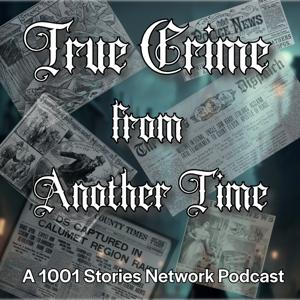


In the early morning hours of September 16, 1922, two teenagers walking along the Raritan River stumbled upon a scene so bizarre and unsettling that it would ignite one of the most sensational murder investigations of the Jazz Age. Beneath a crabapple tree beside the old Phillips Farm Church lay the bodies of Reverend Edward Hall and Eleanor Mills, the choir singer with whom he had carried on a long‑rumored affair.
Their bodies had been carefully arranged, Eleanor's throat slashed, Hall shot, and torn fragments of their love letters scattered around them like a cruel, theatrical confession. Within hours, the quiet town of New Brunswick, New Jersey, became the center of a media circus — reporters swarming the churchyard, photographers snapping images, and gossip spreading faster than the investigation could keep up.
The case would expose small‑town secrets, social hierarchies, political influence, and a cast of characters so eccentric they seemed pulled from a detective novel. And at the center of it all stood the wealthy and formidable Hall family, whose power and connections shaped every twist in the investigation.
Four years later, just when the murders seemed destined to remain unsolved, a new witness emerged — a woman known to the public only as "The Pig Woman." Her testimony would revive the case, electrify the press, and lead to one of the most chaotic trials of the 1920s.
This is the story of forbidden love, scandal, privilege, and a double murder that still haunts New Jersey more than a century later.
⭐ What You'll Hear in This EpisodeThe discovery of the bodies beneath the crabapple tree
The secret affair between Reverend Hall and Eleanor Mills
The strange staging of the crime scene and the torn love letters
The powerful Hall family and their influence over the investigation
The Stevens siblings — Frances, Charlotte, and Willie — and their eccentric reputations
The botched early investigation and years of silence
The dramatic arrival of Jane Gibson, "The Pig Woman," and her explosive testimony
The 1926 trial that captivated the nation
Why the case remains officially unsolved — and why it still fascinates true‑crime historians today
Reverend Edward Wheeler Hall — respected minister, secret lover
Eleanor Reinhardt Mills — choir singer, married mother of two
Frances Hall — the minister's wealthy, stoic wife
Charlotte and Willie Stevens — Frances's siblings, eccentric and influential
Jane "The Pig Woman" Gibson — the witness whose testimony changed everything
Henry de la Bruyère Carpender — cousin of Frances Hall, drawn into the investigation
Local police and political power brokers — whose mishandling shaped the case's legacy
The Hall–Mills case unfolded during the height of the Jazz Age — a time of sensational journalism, shifting social norms, and growing fascination with scandal. Newspapers competed fiercely for lurid details, often shaping public opinion more than the evidence itself. The trial became a national spectacle, with reporters describing the courtroom as "part circus, part theater."
⭐ Why This Case EnduresThe Hall–Mills murders remain unsolved not because the clues were lacking, but because the investigation was compromised from the start. Wealth, influence, contradictory testimony, and a witness whose credibility was constantly attacked all contributed to a verdict that satisfied no one.
It is a story of:
love and betrayal
privilege and power
eccentric witnesses
and a community forever divided by what happened beneath the crabapple tree.
Written and narrated by Jon Hagadorn Produced by 1001 Stories Network LLC Visit: www.bestof1001stories.com
⭐ Support the ShowIf you enjoy vintage true crime, forgotten mysteries, and historical investigations, please take a moment to leave a review and share the show with friends. Your support helps keep these stories alive.
For bonus episodes and early releases, join us at Patreon
In the summer heat of 1931, two battered steamer trunks sat abandoned at the Phoenix train station—unclaimed, unremarkable, and nearly forgotten. But when police finally pried them open, they uncovered a gruesome secret: the dismembered remains of two men, packed away like freight. What followed was a twisting trail of clues that led investigators to a woman no one would ever suspect—a quiet, seemingly ordinary figure whose life concealed a darkness few could imagine.
In this episode, host Jon Hagadorn reopens one of the Southwest's most shocking forgotten crimes, tracing the investigation from the train depot to the courtroom, and exploring how a case so sensational could vanish from public memory for nearly a century.
If you enjoy vintage true crime, historical mysteries, and cases that once dominated headlines, this is a story you won't want to miss.
SUPPORT THE SHOWIf you're enjoying 1001 TRUE CRIME FROM ANOTHER TIME, please take a moment to leave a review wherever you listen. Reviews help new listeners find the show and keep these stories alive.
Share the episode with friends who love true crime, history, or a good mystery from the past.
And if you'd like to support the 1001 Stories Network and help us keep these episodes coming, consider joining us at Patreon. Your support makes a huge difference.
NEXT WEEK'S EPISODEJoin us next Sunday for one of America's most haunting unsolved cases:
THE HALL–MILLS CHURCH MURDER MYSTERYA minister. A choir singer. A scandalous affair. And a double murder that captivated the nation—yet remains unsolved to this day.
It was the Hearst newspaper story of the new century in 1902. Everybody loved Jolly Jane Toppan- the loving, caring nurse- until her patients, friends, enemies, and relatives started dropping like flies. When they finally caught up with her, she copped the insanity plea, and told the whole story, admitting to at least 31 deaths she had caused. But many believed she had done away with 100 souls in her 5 years of killing.
Catch all our episodes and podcasts at www.bestof1001stories.com.
From 1871 to 1873 a loose-knit "family" of serial killers opened up a general store and inn on a popular travelers's route in frontier Kansas.Using a pretty "daughter" they lured single male travelers in and soon murdered them for their money, letting them bleed out under the house and later burying them in their orchard. It is believed they killed 20 people before evidence was found and they were able to flee. Laura Ingalls Wilder, in a public speaking event in 1937.acknowledged that her family stopped at the Bender Inn to water their horses, but as they could not afford anything, they moved on.
Check out our website at www.bestof1001stories.com and explore our 12 podcasts there.
Crime Classics came to CBS September 30, 1953 and was a neat little series of "true crime stories". The show introduced itself succinctly: "Crime Classics, a series of true crime stories from the records and newspapers of every land, from every time. Your host each week, Mr. Thomas Hyland -- connoisseur of crime, student of violence, and teller of murders." Thomas Hyland was played by Lou Merrill, although you'd never know it was an "actor" doing the part. The great Elliott Lewis, actor, producer and director of Suspense, Broadway is My Beat, and On Stage is in charge of this very intelligent and enjoyable show. Bernard Herrmann composed the music that duplicated authentic music of the era being dramatized. Morton Fine and David Friedkin wrote the scripts. Lewis and his writers collected and developed true crime stories expressly for Crime Classics.
Thomas Hyland's delivery is measured and mild-mannered, as if giving a college lecture. Would that all professors were this interesting! The actors in the stories themselves are uniformly sensitive. Orchestral scores by the great Bernard Hermann, who did Orson Welles' Mercury Theater radio show and then Alfred Hitchcock's films, give the stories sophistication and mood. So do the tasteful sound effects. There is a wry, cool-blooded tone to the proceedings.
Cases profiled on the series ranged from seventeenth-century murder to the assassination of Abraham Lincoln. Each and every story, however bizarre, is actually based on fact. For example, the show about the Younger Brothers of the American West has some very interesting background details concerning Quantrell's Raiders and the Kansas Jayhawks. In the story of "John Hayes, his Head, and How They Were Parted," we hear the tale of a glassblower who blows glass perfectly and completely surrounding the severed head of a unknown dead man and placed in glass. Then it is placed in a museum where it remained pending identification. Thus his killers were found out by the dead man, using his head.
https://www.bestof1001stories.com/show/1001-radio-crime-solvers/categories/
The Lizzie Borden trial made a huge splash in the newspapers of the time,not only in Fall river, Massachusetts, where the double axe murder occurred, but across the country. Police investigations of families with any kid of social status were not known for suspecting upright citizens- they tended to think immigrants or low-lifes were responsible. And investigations were limited- very poor when held up to today's standards. Lizzie was declared not guilty by a jury- even when all the evidence led to her murder of her stepmother and father.
This is the story-
CRIME CLASSICS
Crime Classics came to CBS September 30, 1953 and was a neat little series of "true crime stories". The show introduced itself succinctly: "Crime Classics, a series of true crime stories from the records and newspapers of every land, from every time. Your host each week, Mr. Thomas Hyland -- connoisseur of crime, student of violence, and teller of murders." Thomas Hyland was played by Lou Merrill, although you'd never know it was an "actor" doing the part. The great Elliott Lewis, actor, producer and director of Suspense, Broadway is My Beat, and On Stage is in charge of this very intelligent and enjoyable show. Bernard Herrmann composed the music that duplicated authentic music of the era being dramatized. Morton Fine and David Friedkin wrote the scripts. Lewis and his writers collected and developed true crime stories expressly for Crime Classics.
Thomas Hyland's delivery is measured and mild-mannered, as if giving a college lecture. Would that all professors were this interesting! The actors in the stories themselves are uniformly sensitive. Orchestral scores by the great Bernard Hermann, who did Orson Welles' Mercury Theater radio show and then Alfred Hitchcock's films, give the stories sophistication and mood. So do the tasteful sound effects. There is a wry, cool-blooded tone to the proceedings.
Cases profiled on the series ranged from seventeenth-century murder to the assassination of Abraham Lincoln. Each and every story, however bizarre, is actually based on fact. For example, the show about the Younger Brothers of the American West has some very interesting background details concerning Quantrell's Raiders and the Kansas Jayhawks. In the story of "John Hayes, his Head, and How They Were Parted," we hear the tale of a glassblower who blows glass perfectly and completely surrounding the severed head of a unknown dead man and placed in glass. Then it is placed in a museum where it remained pending identification. Thus his killers were found out by the dead man, using his head.
This show is a good companion to other old time radio shows that are historically-oriented, such as Cavalcade of America, You Are There, and The American Trail.
C
CRIME CLASSICS
Crime Classics came to CBS September 30, 1953 and was a neat little series of "true crime stories". The show introduced itself succinctly: "Crime Classics, a series of true crime stories from the records and newspapers of every land, from every time. Your host each week, Mr. Thomas Hyland -- connoisseur of crime, student of violence, and teller of murders." Thomas Hyland was played by Lou Merrill, although you'd never know it was an "actor" doing the part. The great Elliott Lewis, actor, producer and director of Suspense, Broadway is My Beat, and On Stage is in charge of this very intelligent and enjoyable show. Bernard Herrmann composed the music that duplicated authentic music of the era being dramatized. Morton Fine and David Friedkin wrote the scripts. Lewis and his writers collected and developed true crime stories expressly for Crime Classics.
Thomas Hyland's delivery is measured and mild-mannered, as if giving a college lecture. Would that all professors were this interesting! The actors in the stories themselves are uniformly sensitive. Orchestral scores by the great Bernard Hermann, who did Orson Welles' Mercury Theater radio show and then Alfred Hitchcock's films, give the stories sophistication and mood. So do the tasteful sound effects. There is a wry, cool-blooded tone to the proceedings.
Cases profiled on the series ranged from seventeenth-century murder to the assassination of Abraham Lincoln. Each and every story, however bizarre, is actually based on fact. For example, the show about the Younger Brothers of the American West has some very interesting background details concerning Quantrell's Raiders and the Kansas Jayhawks. In the story of "John Hayes, his Head, and How They Were Parted," we hear the tale of a glassblower who blows glass perfectly and completely surrounding the severed head of a unknown dead man and placed in glass. Then it is placed in a museum where it remained pending identification. Thus his killers were found out by the dead man, using his head.
This show is a good companion to other old time radio shows that are historically-oriented, such as Cavalcade of America, You Are There, and The American Trail.
Two great episodes from CRIME CLASSICS (SEE " JOHN HAYES" BELOW)
CRIME CLASSICS
Crime Classics came to CBS September 30, 1953 and was a neat little series of "true crime stories". The show introduced itself succinctly: "Crime Classics, a series of true crime stories from the records and newspapers of every land, from every time. Your host each week, Mr. Thomas Hyland -- connoisseur of crime, student of violence, and teller of murders." Thomas Hyland was played by Lou Merrill, although you'd never know it was an "actor" doing the part. The great Elliott Lewis, actor, producer and director of Suspense, Broadway is My Beat, and On Stage is in charge of this very intelligent and enjoyable show. Bernard Herrmann composed the music that duplicated authentic music of the era being dramatized. Morton Fine and David Friedkin wrote the scripts. Lewis and his writers collected and developed true crime stories expressly for Crime Classics.
Thomas Hyland's delivery is measured and mild-mannered, as if giving a college lecture. Would that all professors were this interesting! The actors in the stories themselves are uniformly sensitive. Orchestral scores by the great Bernard Hermann, who did Orson Welles' Mercury Theater radio show and then Alfred Hitchcock's films, give the stories sophistication and mood. So do the tasteful sound effects. There is a wry, cool-blooded tone to the proceedings.
Cases profiled on the series ranged from seventeenth-century murder to the assassination of Abraham Lincoln. Each and every story, however bizarre, is actually based on fact. For example, the show about the Younger Brothers of the American West has some very interesting background details concerning Quantrell's Raiders and the Kansas Jayhawks. In the story of "John Hayes, his Head, and How They Were Parted," we hear the tale of a glassblower who blows glass perfectly and completely surrounding the severed head of a unknown dead man and placed in glass. Then it is placed in a museum where it remained pending identification. Thus his killers were found out by the dead man, using his head.
This show is a good companion to other old time radio shows that are historically-oriented, such as Cavalcade of America, You Are There, and The American Trail.
From the publisher's feed
1,680 Listeners
1,107 Listeners
499 Listeners
3,994 Listeners
8,398 Listeners
25,315 Listeners
13,564 Listeners
417 Listeners
54 Listeners