
Sign up to save your podcasts
Or

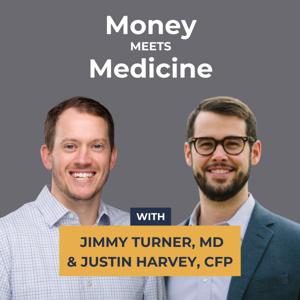

40% of doctors have a side gig — and most are one contract clause away from handing it to their employer. Forty percent of physicians now run a side gig — chart reviews, expert witness work, SaaS tools, real estate, content, consulting. But here's what nobody covered in residency: most are leaving money on the table at tax time, mixing business and personal finances into an unfixable mess, or unknowingly signing away their intellectual property in an employment contract they barely skimmed. In this episode of Money Meets Medicine, Dr. Jimmy Turner and CFP Justin Harvey unpack what physicians actually need to know before they earn their first non-clinical dollar — and what to do once they're already five figures a month in. If you've ever wondered whether you should be an S Corp, whether your hospital can claim your nights-and-weekends project, or whether business ownership is even worth the headache, this one is for you.
Resources:
Episode Summary
An orthopedic surgeon writes in: he's pulling $550K at an academic center and has quietly built an AI-powered prior authorization SaaS now generating five figures a month. What should he be thinking about? Jimmy and Justin use that question as a launchpad into the financial reality of physician non-clinical income — the ups, the downs, and the surprisingly counterintuitive parts.
Jimmy, recently transitioned from 15 years as a W-2 academic anesthesiologist to a 1099 private practice gig, shares why business ownership has been more stressful than running codes — and why he's still glad he did it. He explains why a $30,000 surprise tax bill finally pushed him to bring in a real tax strategy team (not the February-only compliance CPA most physicians settle for), and the difference between the two.
The conversation digs into the Medscape 2025 numbers: 40% of physicians have a side gig, 50% between ages 40 and 50, and 60% say they're doing it for extra income. Most physicians aren't actually trying to leave medicine — they're trying to build enough financial freedom to practice on their own terms. Sometimes a $60,000 side income buys back a day of the week.
Justin pushes on the harder questions: What's your goal? What's the actual ROI once you factor in CPA fees, self-employment tax, and the brain space business ownership demands? Why some physicians thrive in 1099-land and others should sprint back to W-2.
They also walk through the practical setup — the deceptively simple three-step LLC-EIN-bank-account process most physicians overcomplicate or skip entirely — and the contract landmine almost no academic physician thinks about: who actually owns the work you do on nights and weekends. Plus the tax-strategy doors most W-2 doctors don't realize are closed to them: S Corp elections, QBI, solo 401(k)s, cash balance plans, and pass-through entity tax.
If you're already running a side gig or seriously thinking about one, this is the cheat sheet you wish someone had handed you before you started.
What You'll Learn
Hosted by Simplecast, an AdsWizz company. See pcm.adswizz.com for information about our collection and use of personal data for advertising.
 View all episodes
 By Doctor Podcast Network, Jimmy Turner MD

4.7
221221 ratings
40% of doctors have a side gig — and most are one contract clause away from handing it to their employer. Forty percent of physicians now run a side gig — chart reviews, expert witness work, SaaS tools, real estate, content, consulting. But here's what nobody covered in residency: most are leaving money on the table at tax time, mixing business and personal finances into an unfixable mess, or unknowingly signing away their intellectual property in an employment contract they barely skimmed. In this episode of Money Meets Medicine, Dr. Jimmy Turner and CFP Justin Harvey unpack what physicians actually need to know before they earn their first non-clinical dollar — and what to do once they're already five figures a month in. If you've ever wondered whether you should be an S Corp, whether your hospital can claim your nights-and-weekends project, or whether business ownership is even worth the headache, this one is for you.
Resources:
Episode Summary
An orthopedic surgeon writes in: he's pulling $550K at an academic center and has quietly built an AI-powered prior authorization SaaS now generating five figures a month. What should he be thinking about? Jimmy and Justin use that question as a launchpad into the financial reality of physician non-clinical income — the ups, the downs, and the surprisingly counterintuitive parts.
Jimmy, recently transitioned from 15 years as a W-2 academic anesthesiologist to a 1099 private practice gig, shares why business ownership has been more stressful than running codes — and why he's still glad he did it. He explains why a $30,000 surprise tax bill finally pushed him to bring in a real tax strategy team (not the February-only compliance CPA most physicians settle for), and the difference between the two.
The conversation digs into the Medscape 2025 numbers: 40% of physicians have a side gig, 50% between ages 40 and 50, and 60% say they're doing it for extra income. Most physicians aren't actually trying to leave medicine — they're trying to build enough financial freedom to practice on their own terms. Sometimes a $60,000 side income buys back a day of the week.
Justin pushes on the harder questions: What's your goal? What's the actual ROI once you factor in CPA fees, self-employment tax, and the brain space business ownership demands? Why some physicians thrive in 1099-land and others should sprint back to W-2.
They also walk through the practical setup — the deceptively simple three-step LLC-EIN-bank-account process most physicians overcomplicate or skip entirely — and the contract landmine almost no academic physician thinks about: who actually owns the work you do on nights and weekends. Plus the tax-strategy doors most W-2 doctors don't realize are closed to them: S Corp elections, QBI, solo 401(k)s, cash balance plans, and pass-through entity tax.
If you're already running a side gig or seriously thinking about one, this is the cheat sheet you wish someone had handed you before you started.
What You'll Learn
Hosted by Simplecast, an AdsWizz company. See pcm.adswizz.com for information about our collection and use of personal data for advertising.

3,557 Listeners

3,248 Listeners

810 Listeners
5,161 Listeners

2,446 Listeners

896 Listeners

3,056 Listeners

452 Listeners

185 Listeners
278 Listeners

1,424 Listeners

1,621 Listeners

204 Listeners
359 Listeners

1,195 Listeners