
Sign up to save your podcasts
Or

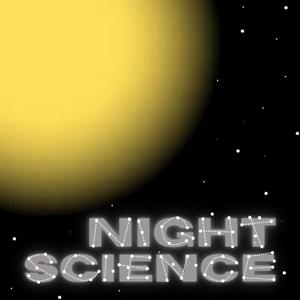

Peter Godfrey-Smith, a Professor of the Philosophy of Science at the University of Sydney, explores with us the differences between creativity in science and philosophy. While philosophers speculate unconstrainedly, scientists must balance creative thinking with the need for empirical testing and within our fields’ paradigms – if you mention the “Lamarck” word at a bar full of geneticists, don’t be surprised if the piano suddenly stops and everybody looks at you in disbelief. We also talk about Thomas Kuhn’s tension between normal and revolutionary science, the risks and rewards of disruptive ideas, and the importance of "middle-class science"—independent labs driving innovation. Peter ends by drawing a parallel between the night science / day science transition and Händel's aria "As Steals the Morn," which describes the transition from dream state to wakefulness.
This episode was supported by Research Theory (researchtheory.org). For more information about Night Science, visit https://www.biomedcentral.com/collections/night-science .
 View all episodes
 By Itai Yanai & Martin Lercher
5
6262 ratings
Peter Godfrey-Smith, a Professor of the Philosophy of Science at the University of Sydney, explores with us the differences between creativity in science and philosophy. While philosophers speculate unconstrainedly, scientists must balance creative thinking with the need for empirical testing and within our fields’ paradigms – if you mention the “Lamarck” word at a bar full of geneticists, don’t be surprised if the piano suddenly stops and everybody looks at you in disbelief. We also talk about Thomas Kuhn’s tension between normal and revolutionary science, the risks and rewards of disruptive ideas, and the importance of "middle-class science"—independent labs driving innovation. Peter ends by drawing a parallel between the night science / day science transition and Händel's aria "As Steals the Morn," which describes the transition from dream state to wakefulness.
This episode was supported by Research Theory (researchtheory.org). For more information about Night Science, visit https://www.biomedcentral.com/collections/night-science .

32,092 Listeners

43,563 Listeners
2,700 Listeners

2,055 Listeners
769 Listeners

152 Listeners
547 Listeners

822 Listeners

6,440 Listeners
12,766 Listeners

364 Listeners

3,756 Listeners
1,343 Listeners
2,031 Listeners
654 Listeners