
Sign up to save your podcasts
Or

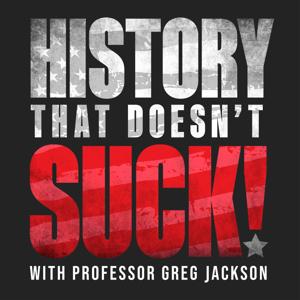

“There’s a good fight coming over the hill. That’s where the big fight is going to be. We’ll not miss that one.”
This is the story of the Battle of the Little Bighorn (or the Greasy Grass).
In 1868, representatives of the US government meet leaders from a few indigenous nations at Fort Laramie to sign a treaty. The agreement creates the boundaries for a Great Sioux Reservation and “unceded” Sioux territory. But the treaty soon falters: With the discovery of gold in the Lakota’s sacred Black Hills, miners and settlers flock to the reservation’s mountain range. Meanwhile, thousands of Lakota, Cheyenne, and Arapaho “non-treaty Indians” refuse to move to the reservation. The US government responds by designating them as “hostile.”
In 1876, three US armies move out to force the now thousands-strong non-treaty village to the reservation. Lt. Col. George Armstrong Custer’s 7th Cavalry finds them first. Will he succeed in forcing them to the reservation? Or will Sitting Bull and Crazy Horse’s village defeat the cavalry and maintain its liberty? It will all come down to a battle on the hills just above the eastern bank of the Little Bighorn River.
____
Connect with us on HTDSpodcast.com and
To learn more about listener data and our privacy practices visit: https://www.audacyinc.com/privacy-policy
Learn more about your ad choices. Visit https://podcastchoices.com/adchoices
 View all episodes
 By Prof. Greg Jackson

4.7
58765,876 ratings
“There’s a good fight coming over the hill. That’s where the big fight is going to be. We’ll not miss that one.”
This is the story of the Battle of the Little Bighorn (or the Greasy Grass).
In 1868, representatives of the US government meet leaders from a few indigenous nations at Fort Laramie to sign a treaty. The agreement creates the boundaries for a Great Sioux Reservation and “unceded” Sioux territory. But the treaty soon falters: With the discovery of gold in the Lakota’s sacred Black Hills, miners and settlers flock to the reservation’s mountain range. Meanwhile, thousands of Lakota, Cheyenne, and Arapaho “non-treaty Indians” refuse to move to the reservation. The US government responds by designating them as “hostile.”
In 1876, three US armies move out to force the now thousands-strong non-treaty village to the reservation. Lt. Col. George Armstrong Custer’s 7th Cavalry finds them first. Will he succeed in forcing them to the reservation? Or will Sitting Bull and Crazy Horse’s village defeat the cavalry and maintain its liberty? It will all come down to a battle on the hills just above the eastern bank of the Little Bighorn River.
____
Connect with us on HTDSpodcast.com and
To learn more about listener data and our privacy practices visit: https://www.audacyinc.com/privacy-policy
Learn more about your ad choices. Visit https://podcastchoices.com/adchoices

23,746 Listeners

1,584 Listeners

3,810 Listeners

2,379 Listeners

4,455 Listeners

779 Listeners

4,043 Listeners
19,258 Listeners

300 Listeners

6,724 Listeners

19,076 Listeners
2,941 Listeners

268 Listeners

85,608 Listeners

107 Listeners

4,187 Listeners

763 Listeners

4,692 Listeners
559 Listeners
917 Listeners
2,820 Listeners

365 Listeners

2,128 Listeners

1,885 Listeners

12,798 Listeners

2,045 Listeners

206 Listeners

1,564 Listeners

85 Listeners

116 Listeners

233 Listeners

785 Listeners
117 Listeners

1,524 Listeners

173 Listeners