
Sign up to save your podcasts
Or

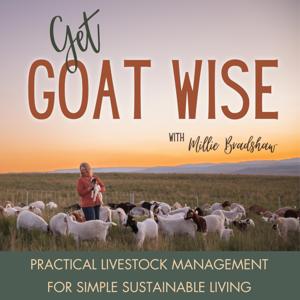

Regenerative agriculture can feel like a buzzword, a badge, or a list of practices you’re supposed to follow. But in real life, and especially in a challenging climate, regeneration is a process of learning, comparing ideas against your own environment, testing small changes, observing what your land and animals are telling you, and adjusting as you go.
In this episode, I’m sharing the decision-making loop we use on our ranch with both goats and cattle, and why I see multi-species grazing as a long-term benefit—even though it adds complexity in the beginning. I also walk through our big-picture goal of reducing supplemental hay by extending the grazing season, and the real constraints we have to work within, like limited moisture, fragile pasture, frozen ground, predators, and wildlife pressure.
You’ll hear how we’re approaching water infiltration and soil building in a dry climate, why we’re testing straw bales to slow runoff first, and what we’ve already observed from years of intensive rotational grazing, chicken tractors, and summer bale grazing. I also explain why certain popular practices don’t translate well to goat management in our conditions—and how we adapt without abandoning the principles.
All the Best,
Disclaimer:
*As an Amazon Associate, I earn from qualifying purchases
 View all episodes
 By Millie Bradshaw - Animal Scientist, Rancher, Homesteader

4.9
6161 ratings
Regenerative agriculture can feel like a buzzword, a badge, or a list of practices you’re supposed to follow. But in real life, and especially in a challenging climate, regeneration is a process of learning, comparing ideas against your own environment, testing small changes, observing what your land and animals are telling you, and adjusting as you go.
In this episode, I’m sharing the decision-making loop we use on our ranch with both goats and cattle, and why I see multi-species grazing as a long-term benefit—even though it adds complexity in the beginning. I also walk through our big-picture goal of reducing supplemental hay by extending the grazing season, and the real constraints we have to work within, like limited moisture, fragile pasture, frozen ground, predators, and wildlife pressure.
You’ll hear how we’re approaching water infiltration and soil building in a dry climate, why we’re testing straw bales to slow runoff first, and what we’ve already observed from years of intensive rotational grazing, chicken tractors, and summer bale grazing. I also explain why certain popular practices don’t translate well to goat management in our conditions—and how we adapt without abandoning the principles.
All the Best,
Disclaimer:
*As an Amazon Associate, I earn from qualifying purchases

4,415 Listeners

2,317 Listeners
972 Listeners
801 Listeners
212 Listeners
1,779 Listeners
2,047 Listeners
122 Listeners

784 Listeners
118 Listeners
75 Listeners
1,012 Listeners
237 Listeners
19 Listeners

11,294 Listeners