
Sign up to save your podcasts
Or

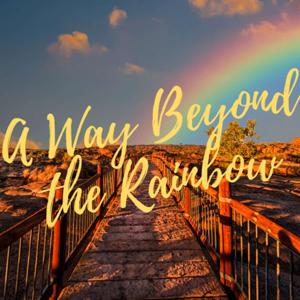


This is part II of a 2-episode series with Sh. Mustafa Umar addressing contemporary issues and Shar'i perspectives related to same-sex attractions and gender identity issues.
Is Islam a "homophobic" or "transphobic" religion? Where do we, as Muslim communities, stand on "LGBT rights" and same-sex marriage? Is it permissible for me to attend a same-sex marriage? How do we deal with "progressive" or "reformist" Muslims pushing pro-LGBT agendas on our communities? How do we deal with Muslim reverts who identify as part of the LGBT community? How do we deal with particular workplace rules and regulations that are pro-LGBT and may be in direct contradiction with our Islamic values? These and other relevant questions are explored in this episode.
Send as an anonymous one-way text message
Smells Like HumansListen on: Apple Podcasts Spotify
This is part I of a 2-episode series with Sh. Mustafa Umar addressing contemporary issues and Shar'i perspectives related to same-sex attractions and gender identity issues.
How can parents, family members and friends support and embrace individuals with same-sex attractions and/or gender dysphoria without compromising their values and Deen? How do we deal with men or women in our families/circle of friends who have "come out" as part of the LGBT community and are living the lifestyle? From an Islamic legal perspective, what are the punishments of same-sex sexual behaviors and some of the common misconceptions surrounding that? Do same-sex sexual acts, the declaration of such acts as halal, or being in a same-sex marriage put one out of the fold of Islam? These and other relevant questions are explored in this episode.
Talks given by Sh. Mustafa Umar:
- Islam and Homosexuality: Drawing the Lines
- What Does Islam Really Say About Homosexuality?
- Teaching Transgender Ideology In California Schools: What Muslims Need to Know
Send as an anonymous one-way text message
Smells Like HumansListen on: Apple Podcasts Spotify
This is part II of a 2-episode series with Br. Mobeen Vaid addressing revisionist arguments pertaining to homosexuality within Islam.
In this episode, Mobeen and I discuss the punishments of sodomy according to Islamic Shari'a, to what extent Islam can be considered a "sex positive" religion, as well as the notions of marriage and celibacy for men and women who experience same-sex attractions. Under what conditions is sodomy punished by Islamic law, and why is there no consensus on this matter? Since a lot of homoerotic prose and poetry were written during the Islamic Golden Age, and we also know of famous Islamic scholars from the past, like Ibn Dāwūd al-Ẓāhirī, Ibn ʿArabī, and Ibn Ḥazm who had homoerotic feelings, wouldn't all of this constitute an acknowledgment and acceptance of homosexuality? Is it fair or just that Islam denies men and women who experience same-sex attractions their rights to sexual fulfillment? These and other questions are explored in this episode.
Resources used and references mentioned in the episode:
- "Can Islam Accommodate Homosexual Acts? Quranic Revisionism and the Case of Scott Kugle" by Mobeen Vaid
Send as an anonymous one-way text message
Smells Like HumansListen on: Apple Podcasts Spotify
This is part I of a 2-episode series with Br. Mobeen Vaid addressing revisionist arguments pertaining to homosexuality within Islam.
In this episode, Mobeen and I discuss the sociocultural backdrop of this kind of revisionism, particularly within Islam, and we address relevant arguments related to terminology as well as the story of the people of Prophet Lut (PBUH). What are the broader assumptions taken for granted by revisionist narratives? Does the Qur'an explicitly and unequivocally prohibit same-sex sexual acts? What were the people of Lut (PBUH) condemned and punished for according to textual proof? Do the themes of "rape" and "consent" have any room in the interpretation of the relevant verses? These and other questions are explored in this episode.
Resources used and references mentioned in the episode:
- "Can Islam Accommodate Homosexual Acts? Quranic Revisionism and the Case of Scott Kugle" by Mobeen Vaid
Send as an anonymous one-way text message
Smells Like HumansListen on: Apple Podcasts Spotify
In this episode, we tackle the notions of toxic masculinity and discuss the waves of opposing feminist movements with their ripple effects on the global community. We also highlight the importance of the Prophetic example in paving the way for God-conscious, healthy masculinity.
What are the "Man Rules" and "Woman Rules" that we take for granted, and how do they contribute to toxic masculinity in our cultures? Are gender differences socially constructed? What does Islam say about the similarities and differences between the male and the female? How can we reclaim our masculinity in light of the Prophet Muhammad (PBUH)'s Sunnah and Divine Revelation? These and other questions are explored in this episode.
References used and resources mentioned in the episode:
- A Man's Way through Relationships: Learning to Love and Be Loved by Dan Griffin
- A Man's Way through the Twelve Steps by Dan Griffin
- Dan Griffin's podcast, "The Man Rules Podcast"
- Helping Men Recover: A Man's Workbook, Special Edition for the Criminal Justice System by Stephanie S. Covington, Dan Griffin and Rick Dauer
- Boys will be Boys - Gender identity issues by Sh. Abdal-Hakim Murad
- Fall of the Family by Sh. Abdal-Hakim Murad
- Islam, Irigaray, and the Retrieval of Gender by Sh. Abdal-Hakim Murad
- "Gender, Sexuality, Morality and Identity" webinar by Dr. Sharif El-Tobgui
- Addressing the Specific Behavioral Health Needs of Men by the Substance Abuse and Mental Health Services Administration (SAMHSA)
- Feminist movements and waves of feminism explained here and here
- “Be a Man!” Constructing Prophetic Masculinity by Yaqeen Institute
- Talks with Gabriel Al-Romaani: The Prophet of Masculinity and How to be a Real Man
Send as an anonymous one-way text message
Smells Like HumansListen on: Apple Podcasts Spotify
This is part II of a 2-episode series that addresses the history and politics of the gay liberation movement, the influence of the LGBT movement on countless aspects of everyday life and how far things have progressed in a few decades.
How has the LGBT movement influenced media outlets, religious discourse, school curricula and global corporations over the past few decades? Why and how did the American Psychological Association (APA) remove homosexuality from its Diagnostic and Statistical Manual of Mental Disorders (DSM)? How did we get to a point where any therapy other than gay- or trans-affirmative therapy is outlawed? How does the trajectory look like moving forward, and what can we do as Muslims and members of faith communities around the world to stay true to our faiths and value systems? These and other questions are explored in this episode.
Resources used and references mentioned in the episode:
- A Queer Thing Happened to America: And What a Long, Strange Trip It's Been by Michael Brown
- "Can Islam Accommodate Homosexual Acts? Quranic Revisionism and the Case of Scott Kugle" by Mobeen Vaid
- Strong Support webinars: Therapeutic Choice with Mike Davidson; Trends in Therapy for Unwanted Same Sex Lust and Q&A with Andrew Rodriguez; Them Before Us with Katy Faust
- Them Before Us: Why We Need a Global Children's Rights Movement by Katy Faust
Additional relevant resources:
- "Where The Rainbow Ends: American Muslims And LGBT Activism" by Mobeen Vaid
- Same-Sex Marriage: Not Best for Children - statements, Amicus briefs, research, press releases and commentaries
- Homosexual Parenting: A Scientific Analysis by the American College of Pediatricians
- No Basis: What the Studies Don’t Tell Us About Same-Sex Parenting by Robert Lerner and Althea K. Nagai
Send as an anonymous one-way text message
Smells Like HumansListen on: Apple Podcasts Spotify
With this episode, we commence the fifth and final season of the podcast which focuses on sociopolitical and religious topics, themes related to gender and transgenderism, as well as broader topics of relevance to the larger community.
The season premieres with a 2-episode series that addresses the history and politics of the gay liberation movement, the influence of the LGBT movement on countless aspects of everyday life and how far things have progressed in a few decades.
How did the gay liberation movement start and progress over the past few decades? In what ways was the book After the Ball foundational in laying out the vision and plans for society's desensitization towards the LGBT community, as well as the acceptance and even celebration of queerness and homosexuality, as part of a fight towards civil rights and integration into mainstream politics? In what ways have the Orwellian themes of Newspeak, thought crimes and thought police become a tangible reality in today's world? These and other questions are explored in this episode.
Resources used in the episode:
- After the Ball: How America Will Conquer Its Fear and Hatred of Gays in the '90s by Marshall Kirk and Hunter Madsen
- A Queer Thing Happened to America: And What a Long, Strange Trip It's Been by Michael Brown
Send as an anonymous one-way text message
Smells Like HumansListen on: Apple Podcasts Spotify
This is part I of a 2-episode series with Sh. Mustafa Umar addressing Shar'i perspectives particular to gender nonconformity, gender dysphoria and transgenderism.
Are gender roles defined by Islam rigid or flexible compared to modern Western notions of gender? If gender roles are, to a degree, socially determined, what are the permissible limits of not conforming to such gender roles? Where do individuals who identify as gender-fluid or gender non-binary fit in the Islamic paradigm? For individuals who imitate the opposite gender, what does imitation involve and what would be considered blameworthy? These and other relevant questions are explored in this episode.
This is part II of a 2-episode series on the topic of self-esteem and becoming more confident in our lives.
In this season finale, Aadam and I discuss imposter syndrome, how to deal with fear of rejection and criticism, as well as practical tips to boosting one's confidence. What are the different kinds of imposter syndrome and how can we overcome them? What's the difference between feedback and criticism, and how can I deal with the latter? How can I stop taking things personally in my life? How can I build my sense of self-confidence on a daily basis? These and other questions are explored in this episode.
References used and resources mentioned in this episode:
- Imposter Syndrome Test (Clance IP Scale)
- "The Surprising Solution to the Imposter Syndrome " TED talk by Lou Solomon
- "7 Psychology Tricks to Build Unstoppable Confidence" video by TopThink
- "How To Improve Self Esteem" video by Marisa Peer
- "How not to take things personally?" TED talk by Frederik Imbo
- "How to Deal with Criticism" - A Monk's Perspective
- "How to Build Self Confidence" TED talk by CeCe Olisa
Send as an anonymous one-way text message
Smells Like HumansListen on: Apple Podcasts Spotify
This is part I of a 2-episode series on the topic of self-esteem and becoming more confident in our lives.
In this episode, Aadam and I introduce self-esteem and self-confidence, touch upon some relevant spiritual themes and dive into the six pillars of self-esteem. How does living consciously contribute to my self-esteem? How can I practice more self-acceptance on a daily basis and take responsibility for my life? How can I become more assertive and stand up for my rights and ideas? How does maintaining integrity in my life contribute to my self-confidence? These and other questions are explored in this episode.
References used and resources mentioned in this episode:
- The Six Pillars of Self-Esteem by Nathaniel Branden
- "What Is Spiritually Centered Confidence?" article on ProductiveMuslim
- "The Prophetic Model of Confidence Webinar" by The Productive Muslim Company
- "The Prophetic Model of Courage & Its Practical Application Today" article on ProductiveMuslim
Send as an anonymous one-way text message
Smells Like HumansListen on: Apple Podcasts Spotify
From the publisher's feed

845 Listeners

2,077 Listeners
885 Listeners
975 Listeners
384 Listeners
338 Listeners
1,986 Listeners
299 Listeners

402 Listeners
197 Listeners
316 Listeners

1,849 Listeners
35 Listeners

114 Listeners
39 Listeners