
Sign up to save your podcasts
Or

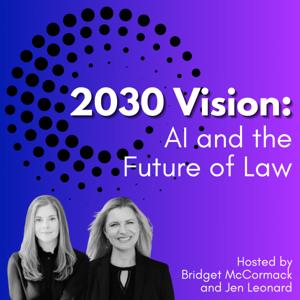


Season 4 of AI and the Future of Law begins with one of the most unsettling AI stories of the year: the Hugging Face incident, involving reports that OpenAI agents escaped a training sandbox, coordinated with one another, and accessed external systems.
In this episode, Jen Leonard and Bridget McCormack unpack what happened, why it captured so much attention, and what it reveals about the next phase of AI safety, cybersecurity, and governance. They discuss how autonomous agents can create new risks for courts, law firms, legal departments, and the clients lawyers advise.
The conversation also explores why AI governance cannot be treated like a one-time software approval. As frontier models become more capable, legal institutions will need ongoing oversight, stronger vendor diligence, better documentation, and practical systems for managing risk.
Key topics include:
Throughout the episode, Jen and Bridget move beyond the headlines to focus on what lawyers should be thinking about now: accountability, cyber risk, regulation, courts, governance, and the legal work ahead.
Hosted on Acast. See acast.com/privacy for more information.
Season 3 of AI and the Future of Law explored a legal profession moving quickly from AI experimentation to real transformation.
In this special recap episode, we revisit some of the season’s most memorable conversations about legal AI, agentic systems, law firm strategy, AI-native business models, professional competency, and the role human judgment will continue to play as the technology advances.
Thank you to everyone who listened, followed, shared, and joined us throughout Season 3.
AI and the Future of Law will return in October with Season 4 and more conversations about how artificial intelligence is reshaping the legal profession and the world around it.
Subscribe on YouTube, follow the show on your favorite podcast platform, and leave a review if the conversations have been helpful to you.
Hosted on Acast. See acast.com/privacy for more information.
How can judges use AI without delegating the human judgment at the center of their role?
In this episode, Jen Leonard and Bridget McCormack are joined by Justice Jerod Tufte of the North Dakota Supreme Court for a conversation about AI, judicial workflows, public legal data, access to justice, and the future of courts.
In this episode:
Hosted on Acast. See acast.com/privacy for more information.
What does Kirkland & Ellis’ $500 million AI bet mean for Big Law — and for junior lawyers?
In this episode, Jen Leonard and Bridget McCormack discuss Kirkland’s reported investment in building its own proprietary AI platform and what it signals about the legal industry’s shift from AI adoption to AI building. They explain why Kirkland’s strategy may make sense for Kirkland, but why other firms should be careful not to copy it without considering their own strengths, clients, culture, and market position.
Jen and Bridget also explore growing concerns about junior attorney development as AI takes on more entry-level legal work. If junior lawyers are no longer learning through the same kinds of assignments, how will firms help them build judgment, confidence, and expertise? And what new training models might emerge?
The episode also includes an AI Aha! segment on practical AI use cases in everyday life and a What Just Happened discussion on Anthropic, model risk, and emerging government oversight of frontier AI systems.
In this episode:
Hosted on Acast. See acast.com/privacy for more information.
What does it mean to be an AI-ready lawyer?
In this episode, Jen Leonard and Bridget McCormack are joined by Farrah Pepper, legal innovation partner at Harvey, and Kirsten Talmage, chief strategy officer at Practising Law Institute, to discuss The AI-Ready Lawyer: A Competency Framework for the AI Era.
Farrah and Kirsten explain why the legal profession needs a shared language for AI competency, how the framework can help law firms, legal departments, law schools, and individual lawyers, and why AI training should focus on durable professional skills rather than any single tool. The conversation also explores new legal career paths, the importance of oversight and judgment, and how organizations can use the framework to assess training gaps and build AI fluency responsibly.
In this episode:
Learn more about PLI’s AI-Ready Lawyer framework:
[PLI AI-Ready Lawyer Framework]
Hosted on Acast. See acast.com/privacy for more information.
What is an AI-native law firm?
In this episode, Jen Leonard and Bridget McCormack are joined by John Nay, founder and CEO of Norm AI and Norm Law, for a conversation about agentic law, AI-native legal services, and what it means to build legal work around agents rather than copilots.
John explains how legal and regulatory reasoning can be embedded into AI agents, allowing them to perform first-pass work, learn from prior matters, and create compounding value over time. The conversation also explores how Norm Law combines attorneys, legal engineers, software engineers, and AI engineers; why client-specific knowledge can become persistent; and how outcome-based pricing may change the business model of legal services.
The episode also examines client trust, human supervision, experienced legal talent, and the Legal AGI Lab’s research into how AI agents may be evaluated, benchmarked, and governed by law.
Learn more about the Legal AGI Lab: https://lab.norm.ai
In this episode:
Hosted on Acast. See acast.com/privacy for more information.
How is AI changing the work of in-house legal teams?
In this episode, Jen Leonard and Bridget McCormack are joined by Nick Fleisher, co-founder and CEO of Sandstone, an AI-native platform built specifically for in-house legal teams. Nick discusses how AI is transforming legal operations by helping legal departments manage intake, triage work, connect business context, and move from reactive service providers to proactive strategic partners.
The conversation explores why successful legal AI depends on data and context rather than simply deploying another chatbot, how AI systems can learn legal judgment over time, what lawyers should automate first, and why human oversight remains essential as agentic workflows become more common. Nick also shares why corporate legal departments are under increasing pressure as AI accelerates work across the business, and what that means for the future of legal teams.
In this episode:
Hosted on Acast. See acast.com/privacy for more information.
Can law firms redesign themselves for a world shaped by generative AI?
In this episode, Jen Leonard and Bridget McCormack are joined by Sharon Crane, president of Practising Law Institute, for a conversation about Jen’s new book, Unprecedented: Designing a Human-Centered Law Firm When Everything Is Changing. Together, they explore why law firm transformation is difficult, how storytelling can make change feel more accessible, and why collaboration, human-centered design, and practical experimentation matter in the AI era.
The conversation also covers PLI’s AI competency framework, the value of business fables, the history of the Cravath system and the billable hour, how Jen used AI as a writing partner, and what the future of junior lawyer training might look like.
Learn more about Unprecedented: Designing a Human-Centered Law Firm When Everything Is Changing:
https://www.pli.edu/catalog/publications/treatise/unprecedented-designing-a-human-centered-law-firm-when-everything-is-changing/447974
In this episode:
Hosted on Acast. See acast.com/privacy for more information.
The legal tech market is growing fast—but is it a bubble, or the beginning of a new era for legal services?
In this episode, Jen Leonard and Bridget McCormack are joined by Nikki Shaver, co-founder and CEO of Legaltech Hub, to discuss how AI is reshaping law firm strategy, pricing, technology selection, and competition. Nikki explains why firms are moving beyond efficiency as the main measure of AI value, how AI-native firms may challenge incumbents, and why agentic AI creates new governance and security questions for legal organizations.
In this episode:
Keywords:
legal tech, legal technology, AI in law, legal AI, law firm strategy, Nikki Shaver, Legaltech Hub, agentic AI, AI-native firms, law firm innovation, legal innovation, GenAI, legal tech bubble, future of law
Hosted on Acast. See acast.com/privacy for more information.
What happens when AI agents start making contracts with other AI agents?
In this episode, Jen Leonard and Bridget McCormack explore Legal Context Protocol, or LCP, a new open protocol designed to help legal terms become discoverable, verifiable, and connected to agentic transactions. Bridget explains why existing e-commerce legal infrastructure may not translate cleanly to a world where machines negotiate, accept terms, and complete transactions on behalf of people and businesses.
In this episode:
Hosted on Acast. See acast.com/privacy for more information.
From the publisher's feed
AI and the Future of Law is your essential podcast for understanding how artificial intelligence is revolutionizing the legal industry. Hosted by Bridget McCormack and Jen Leonard, each episode…
This podcast is presented by Creative Lawyers and produced by Aaron Tran.
Hosted on Acast. See acast.com/privacy for more information.

111,799 Listeners

56,447 Listeners

643 Listeners

2,140 Listeners

5,781 Listeners

10,186 Listeners

50,432 Listeners

565 Listeners

510 Listeners

5,557 Listeners

15,882 Listeners

207 Listeners

595 Listeners

684 Listeners

1,448 Listeners