
Sign up to save your podcasts
Or



We are all wanting our learners to feel successful. Imagine your student saying "I felt incredibly successful. I can now write or speak a mini conversation with someone." This is a case study of a teacher I worked with this year, visiting classes once a term. We worked together on curriculum planning documents, activities and games, scenario practice and assessment. I am proud of the difference we were able to make. Would a visit once a term work for you? Or what would be helpful to you in your context?
"Our work is in schools" means that I am being asked to visit schools. As a teacher I know some of the thoughts and feelings that arise when I have invited a Languages leader into my classroom. Classrooms are messy, often literally. There are many elements that we are continually drawing together to create the best learning environment we can. None of us are perfect, no matter where we might be in our career, or how confident we may come across. There is no judgement. There is simply listening and opening a conversation that you lead around an aspect that interests you. I listen, support and help.
If you are teaching a language, it is very helpful to be able to develop your own language skills. This increases confidence, accuracy and natural language use when helping learners in our schools. These are the reflections of a few of the teachers who were able to use the Languages Maintenance and Development Grant this year. It is inspiring to hear about the progress they made and the confidence they have developed.
Here are a couple of game ideas. The first is similar to Gianfranco Conti's 'False Echo' game, and also Austin's butterfly. It is about accuracy and getting feedback towards greater accuracy. The second is about memorising. I played this game with an Auslan teacher Heulwen Sweet. The next is a version of see saw which I first came across with David Anderson as a reflection tool. The last one is a version of a class post box, which I first saw in early years classrooms.
My journey to becoming a leader has been an evolution of attitude and self-belief. I wasn't always as vivacious and self assured as I might seem now. In this podcast I let you into the little mind shifts that have led to the choices that have led to the me you meet now. I hope that by sharing this it might inspire others to head towards a leadership role, or simply their own best self.
If you have been wanting to listen to all the podcasts at once, without clicking each link separately, then this is for you. I often find that if I am on a long drive or something, it is easier to just turn something on and keep listening. Here is all of the podcasts from term 3 in one big file. Enjoy.
Collective expertise is where together people can achieve something that they would not have been able to do individually. This is a fun classroom activity which is like a language jigsaw puzzle where students need to work with each other to work out how to read and understand something that is new. It is a great way to introduce some new learning and spark curiosity.
I can statements from the Victorian Curriculum Achievement standards are one way to track student progress in Languages. When reporting it is expected that we use a five point scale. This podcast talks through a process for creating a five point scale that is relevant to what you teach and for your cohort of students.
How might we structure the start of a lesson to activate thinking? This idea has been working really well in my lessons to get students thinking about something before I teach it. It activates curiosity and provides a structure where every student starts to generate their own curiosity. It also helps students to start to look into something that might at first seem overwhelming, to start to find bits that might make sense.
Is a 'knowledge rich curriculum' a re-branding of rote learning, or an important focus for effective learning? The ERRR podcast has quite a few episodes focused on knowledge, and generally talks about retrieval practice quite a lot.
From the publisher's feed
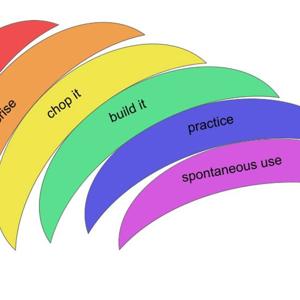
USING a language is the point of Language learning. What can Language teachers do to create the space in our classrooms for students to become confident spontaneous users of Language? This honest,…