
Sign up to save your podcasts
Or

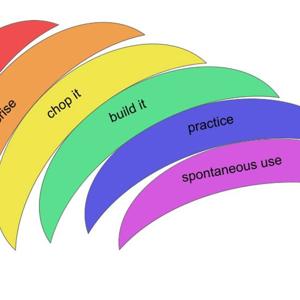


What evidence do we use to make decisions about what to teach to a particular group of students? "Show me what you know" is a written version of what students can recall independently. A quick scan of these shows generally what a cohort might be able to say and gives you a great guide for what to add into future lessons. It does not have to be converted to numerical data and added to a spreadsheet to be called 'evidence'. To help reduce one element of cognitive load for students, I have created visual reminders for students of what they have learnt, with summary words in English such as 'classroom verbs', 'like, want, have', 'my family'.
Evidence based practice is a persuasive term. It comes up in the DOSCEL Learning and Teaching Expert Teacher Practice document several times. This year I plan to explore how 'evidence based practice' relates to Languages. Evidence is from 'evident' which simply means visible or noticeable. So what do teachers notice that informs their teaching choices? The example in this podcast is noticing participation.
Last year Samantha was able to invite me once a term to visit her classes and work with her. We were able to achieve a lot together. I hope you also find inspiration and ideas in Samantha's story.
I was able to visit Kate twice to talk about planning and assessment, and once to visit a classroom. Kate talks about what it felt like, what we did together and what she got out of it. To anyone thinking about inviting me to visit, she says "Give it a go."
I have been able to interview a few teachers about their experiences when I have visited. My hope is that you will also feel inspired to invite me, and I will be swept off my feet driving all over Gippsland. If you are wondering whether or not to invite me, Filomena says "Do it". Also I hope you enjoy the new intro music.
Here are all the term 4 podcasts in one file, so you can turn it on and binge the lot.
Inviting me to visit your school, or visit your class might come with a variety of thoughts and feelings. Listening to the experience of some of the teachers who have invited me, might help you to also feel open to the conversations that could be helpful to you.
Many people tell me that after they have finished studying Languages in school, even to VCE, even with a great ATAR, they feel unprepared to actually use it in the country. I wonder if we are really teaching the skills needed for Language use. That is why I developed the 'scenario practice' idea. James' experience confirms my guesses.
Many teachers come to language teaching from classroom roles or other specialty areas. I often visit these teachers to offer resources such as the TCL websites and co-creating planning or assessment documents. This is a case study of one of these teachers I have been working with recently.
Each school, teacher and class is unique. When I visit I respond to you, in your context with guidance from you about what is most useful. In this case study, I visited a secondary school Languages meeting where I had been asked to consider Blooms Taxonomy and the 10 HITS (high impact teaching strategies) in the context of language learning. We particularly focused on the number 5, Collaborative Learning and some activities that support that.
From the publisher's feed
USING a language is the point of Language learning. What can Language teachers do to create the space in our classrooms for students to become confident spontaneous users of Language? This honest,…