
Sign up to save your podcasts
Or



The Victorian Curriculum 2.0 for Italian, French, Japanese and Chinese is now available. This podcast is simply a familiarization about it's structure.
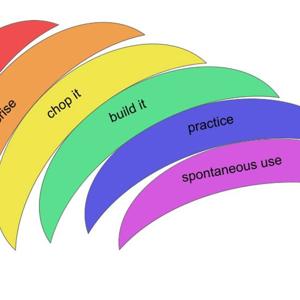
The Independence Rainbow (repeat it, memorise it, chop it, build it, scenario practice, spontaneous use) aligns strongly with the revised Blooms Taxonomy (remember, understand, apply, analyse, evaluate, create). As Blooms seems to be a focus for some schools, this podcasts talks through what sorts of language learning might be demonstrated for each of the Blooms verbs and a possible 'instant' rubric.
Student engagement is sometimes just a tweak of the activity. Here are a bunch of writing activities that are fun at the same time as learning. And they require little to no preparation!
Student engagement is sometimes just a tweak of the activity. Here are a bunch of speaking activities that are fun at the same time as learning. And they require little to no preparation!
The grid is simply the 3 through lines - independence, complexity, variety - set out as a grid. By recording the scores on the grid, and sharing it with students, they can see their growth, their long term goals and choose their short term goals. Being orientated in where they are in their learning, and having some agency on which direction to take next is likely to have a positive impact on student motivation and possibly behaviour.
Writing conferences is one of the Literacy Teaching Toolkits on the DET website. This worked really well in my lessons recently, with great feedback from students. In this podcast I describe how we did it.
Last episode talked about the through lines of increasing independence, complexity and variety. This episode describes how I score a student's scenario practice sample. Although it probably sounds complex when you listen, in fact it only takes about 20 seconds per student.
If what we measure, is what we value, and what we value is creative spontaneous use of language, then how do we measure it? What if we track increasing independence, complexity and variety of the language used?
High Impact Teaching Strategy number 4, is 'worked examples'. We super-charged scenario practice by leveraging the collective expertise of the students. We worked as a whole-grade team to improve one of the scenario practice work samples. Then students applied these ideas to improve their own work.
Student engagement is sometimes just a tweak of the activity. Here are a bunch of reading activities that are fun at the same time as learning. And they require little to no preparation!
From the publisher's feed
USING a language is the point of Language learning. What can Language teachers do to create the space in our classrooms for students to become confident spontaneous users of Language? This honest,…