
Sign up to save your podcasts
Or

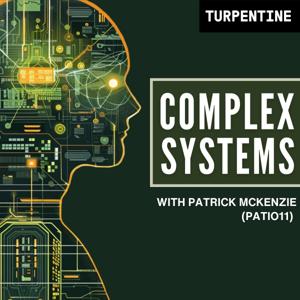

Patrick McKenzie (patio11) reads an essay about "industrial-scale" fraud and why it should be treated as a professional business process rather than a series of isolated accidents. He explains how fraudsters leverage specialized supply chains—shared CPAs, incorporation agents, and "least attentive" banks—to loot public funds. Patrick argues that the government’s "pay-and-chase" model is fundamentally broken and suggests that simple "proof of work" functions, like a 30-second cell phone video of a workspace, could provide the visceral signal that paperwork lacks, and examines the state’s lack of "object permanence" regarding serial fraudsters and how scaled data provides the defense-side advantage needed to catch modern frauds.
–
Full transcript available here: www.complexsystemspodcast.com/fraud-as-infrastructure/
–
Presenting Sponsor: Mercury
Complex Systems is presented by Mercury—radically better banking for founders. Mercury offers the best wire experience anywhere: fast, reliable, and free for domestic U.S. wires, so you can stay focused on growing your business. Apply online in minutes at mercury.com.
Mercury is a fintech company, not an FDIC-insured bank. Banking services provided through Choice Financial Group and Column N.A., Members FDIC.
–
Links:
–
Timestamps:
(00:00) Intro
(05:23) In which we briefly return to Minnesota
(09:26) Common signals, methods, and epiphenomena of fraud
(09:30) Fraudsters are playing an iterated game
(11:29) The fraud supply chain is detectable
(14:27) Investigators should expect to find ethnically clustered fraud
(20:11) Sponsor: Mercury
(21:47) High growth rate opportunities attract frauds
(26:04) Fraudsters find the weakest links in the financial system
(32:35) Frauds openly suborn identities
(35:57) Asymmetry in attacker and defender burdens of proof
(40:13) Fraudsters under-paperwork their epiphenomena
(44:22) Machine learning can adaptively identify fraud
(48:14) Frauds have a lifecycle
(50:34) Should we care about fraud investigation, anyway
 View all episodes
 By Patrick McKenzie

4.9
140140 ratings
Patrick McKenzie (patio11) reads an essay about "industrial-scale" fraud and why it should be treated as a professional business process rather than a series of isolated accidents. He explains how fraudsters leverage specialized supply chains—shared CPAs, incorporation agents, and "least attentive" banks—to loot public funds. Patrick argues that the government’s "pay-and-chase" model is fundamentally broken and suggests that simple "proof of work" functions, like a 30-second cell phone video of a workspace, could provide the visceral signal that paperwork lacks, and examines the state’s lack of "object permanence" regarding serial fraudsters and how scaled data provides the defense-side advantage needed to catch modern frauds.
–
Full transcript available here: www.complexsystemspodcast.com/fraud-as-infrastructure/
–
Presenting Sponsor: Mercury
Complex Systems is presented by Mercury—radically better banking for founders. Mercury offers the best wire experience anywhere: fast, reliable, and free for domestic U.S. wires, so you can stay focused on growing your business. Apply online in minutes at mercury.com.
Mercury is a fintech company, not an FDIC-insured bank. Banking services provided through Choice Financial Group and Column N.A., Members FDIC.
–
Links:
–
Timestamps:
(00:00) Intro
(05:23) In which we briefly return to Minnesota
(09:26) Common signals, methods, and epiphenomena of fraud
(09:30) Fraudsters are playing an iterated game
(11:29) The fraud supply chain is detectable
(14:27) Investigators should expect to find ethnically clustered fraud
(20:11) Sponsor: Mercury
(21:47) High growth rate opportunities attract frauds
(26:04) Fraudsters find the weakest links in the financial system
(32:35) Frauds openly suborn identities
(35:57) Asymmetry in attacker and defender burdens of proof
(40:13) Fraudsters under-paperwork their epiphenomena
(44:22) Machine learning can adaptively identify fraud
(48:14) Frauds have a lifecycle
(50:34) Should we care about fraud investigation, anyway

1,967 Listeners

4,272 Listeners

2,447 Listeners

1,093 Listeners
377 Listeners

2,354 Listeners

99 Listeners

576 Listeners

292 Listeners

143 Listeners

101 Listeners
146 Listeners

403 Listeners

34 Listeners

138 Listeners