
Sign up to save your podcasts
Or

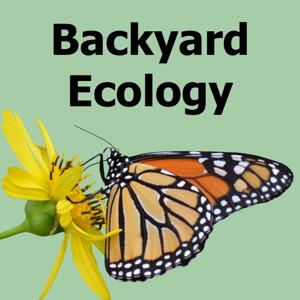


Have you planted a meadow or pollinator planting on your property? Or, do you know someone or some place in your community that has one? If it's on your property then part of the recommended management for it may have been to mow it periodically. Or if it's not on your property then you may have driven by it only to see it being mowed or find that it had recently been mowed.
If you're initial reaction was something along the lines of "Wh…What?!" "Wait!" "Stop!" "No" "Why?" or included feelings of confusion, sadness, anger, or frustration, then you aren't alone. In this episode of the Backyard Ecology podcast, we talk about why people mow meadows and larger pollinator plantings. We also talk about whether it is really necessary. The answers to both of those questions are rooted in the grassland and prairie ecosystems that meadows and larger pollinator plantings are often trying to replicate.
Topics discussed in this episode include:
I hope you've found this episode helpful and that it has encouraged you to think about things. If you're listening to this in January 2023, please don't forget to take our survey.
Until next time, I encourage you to take some time to enjoy the nature in your yard and community.
Related episodes:
Do you want your yard to benefit nature, while also being a place that speaks to you and is somewhere you enjoy spending time? Would you love for your yard to also be a place your neighbors admire and that inspires them to create pollinator and wildlife friendly landscapes? In this episode of the Backyard Ecology podcast, we talk with Larry Weaner about how to achieve both those goals.
Larry is a Landscape Designer and the founder of Larry Weaner Landscape Associates and its educational affiliate, New Directions in the American Landscape, or NDAL. He is also the author of the book, Garden Revolution.
According to Larry, ecology based landscaping or ecological landscaping takes into consideration where and how native plants naturally grow then adapts that knowledge to your property. The goal is to create a landscape that not only benefits nature, but is also a place that speaks to you and is somewhere you enjoy being.
One of the topics that came up several times, and in several different ways, was how we connect and engage with a place. The place-based parts of our conversation included not only personal connections, but also community connections. Community connection is important because if our ecology based landscaping connects with our neighbors, then they may replicate some of those principles on their own properties, thus increasing the ecological benefits.
Another topic that wove its way throughout our conversation was maintaining and managing our landscapes. This topic came up multiple times and in multiple ways. As Larry said, there probably isn't any such thing as a "no maintenance" landscape. Larry also talks about the biggest challenge he sees people face, especially when getting started.
Larry is a wealth of knowledge when it comes to integrating ecological principles and landscape design. His approach is one that really resonates with me and has done so for several years. I encourage anyone who is interested in creating ecology based landscapes to read his book and look into his courses.
Until next week, I encourage you to take some time to explore the nature in your own yard and community.
Guest Links:
Over the past year, we've had some amazing conversations with a variety of highly talented and passionate people. I am very grateful to them for sharing their enthusiasm and knowledge with us. What was your favorite episode of the year, and why? Please let us know in the comments.
For today's episode, I'm going to quickly review the 10 most popular Backyard Ecology episodes that were published between Thanksgiving 2021 and Thanksgiving 2022.
10) 5 Late Summer Blooming Native Plants I Love: https://www.backyardecology.net/5-late-summer-blooming-native-plants-i-love/ (1:42) 9) Light Pollution and Its Impacts on Birds and Other Wildlife: https://www.backyardecology.net/light-pollution-and-its-impacts-on-birds-and-other-wildlife/ (2:38) 8) Getting the Community Involved in Creating Pollinator Habitat: https://www.backyardecology.net/getting-the-community-involved-in-creating-pollinator-habitat/ (3:56) 7) Grasslands and Grassland Birds of the Eastern U.S.: https://www.backyardecology.net/grasslands-and-grassland-birds-of-the-eastern-u-s/ (4:51) 6) Planting for Pollinators: https://www.backyardecology.net/planting-for-pollinators/ (6:00) 5*) Ask a Bumble Bee: What Flowers Do Bumble Bees Prefer?: https://www.backyardecology.net/ask-a-bumble-bee-what-flowers-do-bumble-bees-prefer/ (8:05) 4*) Are Larger Patch Sizes Better When Planting for Pollinators?: https://www.backyardecology.net/are-larger-patch-sizes-better-when-planting-for-pollinators/ (9:30) 3*) A Conversation with Kyle Lybarger from the Native Habitat Project: https://www.backyardecology.net/a-conversation-with-kyle-lybarger-from-the-native-habitat-project/ (10:49) 2) Attracting Ruby-Throated Hummingbirds to Your Yard: https://www.backyardecology.net/attracting-ruby-throated-hummingbirds-to-your-yard/ (11:58) 1) Gardening with Native Plants: https://www.backyardecology.net/gardening-with-native-plants/ (13:00)
* Note: Numbers 3, 4, and 5 were essentially a 3-way tie. There were only 9 downloads separating numbers 3 and number 5. I listed them in the order that they were on the day that I looked at the stats. But I have no doubt that if I had looked at the numbers on a different day, then they could very easily have been in a different order.
Bonus: A Glimpse into the Fascinating World of Cedar Glades: https://www.backyardecology.net/a-glimpse-into-the-fascinating-world-of-cedar-glades/ (14:47)
I hope you enjoyed that review of the most popular episodes published between Thanksgiving 2021 and Thanksgiving 2022. Please help Backyard Ecology continue to grow by telling others about the Backyard Ecology blog, podcast, and YouTube Channel.
I wish you the happiest of holiday seasons and until next week, I encourage you to take some time to explore the nature in your own yard and community.
Links:
The Christmas Bird Count, also known as the CBC, began in 1900. For the past 122 years, volunteer birders of all ages and abilities have gathered together to conduct surveys of the birds found in their areas. The Christmas Bird Count is the longest running, community science or citizen science program in the U.S. and has spread to Canada and many other countries.
The data collected through the Christmas Bird Count are extremely valuable and have been used in numerous scientific papers. Perhaps the most well recognized of those papers in recent years is the one published in 2019 citing the drastic decline in bird populations over the past roughly 50 years.
In this episode of the Backyard Ecology podcast, we are joined by James Wheat. James is the President of the Kentucky Ornithological Society and the Regional Editor for the Christmas Bird Counts in Kentucky. During our conversation, James and I talk about what the Christmas Bird Count is and why it is so important. He also shares with us what happens on a Christmas Bird Count, who can participate (spoiler alert: anyone who enjoys birdwatching), how people can get involved, and some of his favorite CBC experiences.
Just as a quick reminder, every week, I send a short email with links to the most recent Backyard Ecology blog article, podcast episode, and video, as well as, any other news of interest. It's the best way to make sure that you never miss anything in the Backyard Ecology world. You'll also get a free e-booklet as my gift to you when you join my email list. If you haven't signed up, then please do so using the link below.
Until next week, I encourage you to take some time to enjoy the nature in your own yard and community.
Related Links:
The holiday seasons are upon us. This is often a time to gather with family and friends, give thanks, share memories, exchange gifts, and reflect both on what we have and what we hope to achieve in the coming year.
I thought about skipping this episode completely since it will release on Thanksgiving Day and many of us will be involved with holiday activities. But then I decided that instead of skipping the episode, I wanted to take just a few minutes to express my gratitude.
Backyard Ecology is now 2 years old. In that short time, it has grown from a blog, to a blog and podcast, and now a blog, podcast, and YouTube channel. I am eternally grateful for everyone who takes the time to read the blog articles, listen to the podcast episodes, or watch the videos. Thank you so much for allowing Anthony and I to share our love of nature with you.
I am also thankful for those of you who share our content with others. Knowing that you find our articles, podcast episodes, and videos valuable enough to share with your own friends, family, and community members means a lot to us.
Thank you also to those of you who take the time to reach out to us and share your own experiences and observations with us. We love hearing from you and your emails, stories, and questions help us stay inspired and dedicated to putting in the time required to produce all of the free content that we create.
I also want to say an extra special thank you to our monthly supporters on Patreon because their contributions are extremely important and deserve to be recognized. I thank them at the beginning of each episode and on the website, but I really can't thank them enough.
In addition to all of the time and energy Anthony and I invest in producing the Backyard Ecology content, there are also significant financial costs associated with purchasing the necessary equipment and software, paying the monthly fees for hosting the content, and more. Without the financial help of our Patrons, we probably wouldn't be able to continue producing the Backyard Ecology blog, podcast, and videos.
We are extremely grateful to each of our Patrons and are honored that they believe so much in us and our message that they choose to help us make Backyard Ecology freely available to all of our readers, listeners, and viewers.
As we gather around our holiday tables this season and think about the people and things that we are grateful for, please know that each member of the Backyard Ecology audience is in my heart. Thank you for being a part of that audience and for allowing us to be a part of your life. Until next week, don't forget to take some time to enjoy the nature in your own yard and community.
Note: If you would like to help support Backyard Ecology you can make a one-time donation or join our Patrons in making a monthly donation for less than the cost of a cup of coffee or a meal at your favorite fast food place. Links to do so can be found below.
Links:
Wasps are often portrayed as one of "the bad guys" in the insect world. But part of that common misconception comes from a lack of knowledge or understanding about wasps in general and stereotypes that don't apply to most wasp species.
The truth is that wasps are extremely diverse and what most of us think of when we think of a "wasp" makes up only the tiniest percentage of all wasps out there. In fact, there are likely many different species of wasps that haven't even been identified yet. And wasps play an extremely important role in the ecosystem – one that is often overlooked and not well-understood.
In this episode of the Backyard Ecology podcast, we are joined by Louis Nastasi who is a self-proclaimed ambassador for wasps. Louis is a PhD candidate at Penn State's Frost Entomological Museum which is Penn State's research collection of insects and other arthropods. He also founded and is one of the instructors for the Wasp ID Course, which will have its second session in January 2023.
During our conversation, Louis and I dive into the fascinating diversity of wasps, especially parasitoid wasps, and their vital roles in the ecosystem. Louis believes that a lot of the misconceptions around wasps are due to a lack of recognition of just how diverse wasps are. Contrary to popular belief, most wasps aren't capable of stinging people and many are the size of a speck of dust.
Like with the first episode that Louis was on, our conversation takes many twists and turns. We talk a lot about parasitoid wasps and just how amazing it is that many of these parasitoid relationships developed in the first place. (One of the wasps we talk about lays its eggs in diving beetle eggs which are found underwater!) We also discuss how much we don't know about these species and how much there is still to learn. But through it all, Louis's passion for wasps and wasp education shines through.
Links:
Monarch butterflies have become an increasingly hot topic in recent decades, and especially in the last couple of years. Conversations about monarchs often revolve around topics like their migrations, the importance of milkweeds, or other flowers we can plant for monarchs. Rarely do the topics of monarch health or monarch diseases come up. Yet these can also be fascinating and important topics to learn about and discuss.
In this episode of the Backyard Ecology podcast, we are joined by Dr. Sonia Altizer and Kade Donaldson. Sonia is a Professor of Ecology at the University of Georgia and Kade is the Project Manager for Monarch Health which is a community science project based out of the University of Georgia.
Most of our conversation revolves around the tiny protozoan, Ophryocystis elektroscirrha, more commonly referred to by its initials: OE. OE is a parasite of monarch butterflies that has been interacting with monarchs for the past several centuries, at least, and likely for almost as long as there have been monarchs. However, over the last couple of decades, something has changed.
OE has gone from being relatively rare to infecting very high percentages of some monarch populations. Exactly what has changed is still a topic of ongoing research, but the increased prevalence of OE appears to correlate to changes in human activities. The goal, therefore, is to determine what has changed and find ways to keep OE from spreading any more than it would naturally spread.
One of the ways that OE infections are being studied is through Project Monarch Health. Project Monarch Health is a community science project that asks members of the public to help document OE infections throughout the country. Anyone can participate in this project which is based out of the University of Georgia, and we talk about Project Monarch Health quite a bit during our conversation.
Other topics that we discussed are some of the common questions they get through Project Monarch Health. Those questions include ways people can help monarch butterflies and inquiries about raising monarchs. We also talked about how monarchs are only one part of the larger ecosystem. Protecting and conserving monarchs can also help lots of other organisms, but we need to be careful not to get so focused on monarchs that we lose sight of the big picture.
Links:
One of the most common pieces of advice given related to pollinator gardening is to try and have a constant supply of blooms available throughout the growing season. That's easy in the spring. The summer is a little more challenging than the spring, but is still relatively easy. Even early fall isn't too bad thanks to the goldenrods, ironweeds, and other fall flowers.
It's the shoulder seasons that are the most challenging for providing flowers for pollinators. By shoulder seasons I mean the late winter / early spring and the late fall / early winter. For me, that typically corresponds to February / March and October / November. Your shoulder seasons may occur at slightly different times depending on how far north or south you live and your elevation.
One of the reasons that the shoulder seasons are difficult is because the weather is so crazy at that time. Most flowers just can't take the cold temps, frosts, and freezes that are often associated with the shoulder seasons. However, there are a few native plants that can handle the crazy weather of the shoulder seasons. I'm recording this in October, so I'm going to focus on native plants that bloom in the late fall /early winter shoulder season, or the October / November time period.
On a side note, if the weather is good, many of our goldenrods, white fall asters, thoroughworts, and other fall flowers will bloom well into October. However, most of those flowers will be killed off with the first good frosts. The native plants that I'm focusing on in this episode are the ones that typically don't start blooming until around October and that can survive those first frosts after most of the earlier blooming fall flowers are gone.
To make it easier for you to refer back to particular parts of the podcast, here are the plants and the time I start talking about each:
Have you ever found a leaf with weird little balls or spiky things attached to it? Or found a plant with a weird growth on its stem or a dense clump of leaves growing out of an odd place? Chances are those were galls.
Going into this conversation, I knew a little bit about galls, but not much. However, what I knew was pretty interesting. So I wanted to learn more, and I thought you might be interested in learning more about them too. My mind was almost instantly blown. Galls are so much more diverse, interesting, and amazing than I ever dreamed of.
Louis Nastasi joined me for this conversation. Louis is a PhD candidate at Penn State's Frost Entomological Museum which is Penn State's research collection of insects and other arthropods. His research is looking at gall wasps in prairie plants, particularly Silphiums, of the Midwest.
At its most basic level, a gall is a piece of plant tissue that has been modified by the activity of another organism. However, in reality, galls are so much more than that implies. They can be formed by a variety of different organisms, although most of the ones we think about and encounter are formed by different types of insects. They can also be found in a variety of different places on the plant, including hidden inside the stem in such a way that you would never know it was there unless you cut the stem open.
Louis and my conversation touches on all kinds of topics related to galls. We start out talking a little about what galls are and the types of organisms that can form them, then focus more on insect-induced galls. From there our conversation covers topics like why insects might choose to form a gall in this plant over that plant, the importance of galls and the ecosystem, and how little we actually know about galls.
This was a really fun and educational conversation. I learned so much and am completely intrigued. I could have kept discussing and learning more about galls for much longer because they are so much more complex and interesting than I realized. I hope you find the conversation as interesting and educational as I did. I also encourage you to check out the resources that Louis shared with us.
Links:
One of the most common questions I get is, "What should I plant for pollinators?" As you'll hear in today's conversation, I'm not the only one who frequently gets that question. It's probably the most common question asked of anyone who promotes pollinator gardening.
Unfortunately, there isn't a simple answer to that question because lots of different factors go into determining the best plants for any given area or situation. However, research into this topic can give us clues as to what plants might be good ones to consider for our own gardens.
In this episode, we are joined by Dr. Laura Russo. Laura is an Assistant Professor of Ecology and Evolutionary Biology at the University of Tennessee. She and her colleagues have been studying interactions between native plants and flower visiting insects. They recently published a report evaluating pollinator preferences of 18 different native plants in garden settings.
Laura and my conversation covers, not only some of the findings of the study, but also the complexities that go into conducting scientific research like this. There's a lot more to it than simply planting a garden and seeing what visits the flowers. Recognizing those complexities can help us understand why this type of work is so important and why research related to planting for pollinators isn't done as often or cover as many species as many of us might like.
Obviously, with only 18 different species in the study, there are a lot of species that were left out of the study. So, another one of the topics we talked about was their reasons for picking the species they picked for the study. We also discussed the importance of taking into account the gardener's preferences, as well as, the pollinators' preferences when planting for pollinators around our homes.
No project can ever test every single flowering plant out there under every single condition possible, but research like what Laura and her colleagues are doing is still really important. And you don't have to live in east Tennessee for this research to be valuable, especially when you look at this research in conjunction with similar research from other areas.
By looking at projects from a variety of locations, patterns can emerge, such as a genus that is consistently popular among flower visiting insects. These patterns can give us hints as to generalizations that we can make and point us in potential directions to go in the absence of exhaustive research in our exact location.
Links:From the publisher's feed
466 Listeners

1,255 Listeners

222 Listeners
679 Listeners

351 Listeners
567 Listeners

659 Listeners
399 Listeners

1,247 Listeners
1,848 Listeners
545 Listeners
103 Listeners
330 Listeners

878 Listeners

1,249 Listeners