
Sign up to save your podcasts
Or

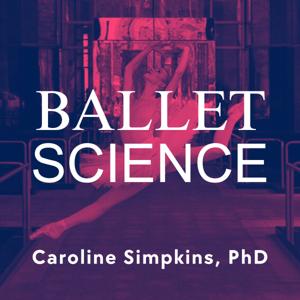


How do ballet dancers balance on their toes in pointe shoes? Learn the science and anatomy of pointe work, including ballet biomechanics, pointe shoe mechanics, and how dancers safely balance their center of mass on their toes in ballet technique.
If you’ve ever tried standing on your toes, you know it feels impossible. But the truth is, it’s not just strong feet or natural talent... it’s physics, biomechanics, and years of neuromuscular training that allow ballerinas to control extreme forces on such a small surface area.In this episode, we break down:
Join the Ballet Science E-mail List
Watch This Video On YouTube
Connect With Ballet Science:
Hosted by Caroline Simpkins, Ph.D., the Ballet Science podcast brings science into the studio to help dancers of all ages and abilities give their best performances both onstage and off, and reveals how the science of ballet can benefit anyone who moves.
Each week, we explore the intersection of science and ballet... from injury prevention and biomechanics to nutrition, mindset, and everything in between. If you enjoyed this episode, please hit the subscribe button, leave a review, and share it with your friends and dance community. You can also follow Ballet Science on social media and visit our website for additional information.
Filming Equipment Affiliate Links:
What if dance could do more than build technique… what if it could change how we connect with others? In this video, we break down scientific research examining how dance impacts individuals with autism spectrum disorder (ASD).
We explore:
Research Publication:
Chen, T., Wen, R., Liu, H., Zhong, X., & Jiang, C. (2022). Dance intervention for negative symptoms in individuals with autism spectrum disorder: A systematic review and meta-analysis. Complementary therapies in clinical practice, 47, 101565.
Join the Ballet Science E-mail List
Watch This Video On YouTube
Connect With Ballet Science:
Hosted by Caroline Simpkins, Ph.D., the Ballet Science podcast brings science into the studio to help dancers of all ages and abilities give their best performances both onstage and off, and reveals how the science of ballet can benefit anyone who moves.
Each week, we explore the intersection of science and ballet... from injury prevention and biomechanics to nutrition, mindset, and everything in between. If you enjoyed this episode, please hit the subscribe button, leave a review, and share it with your friends and dance community. You can also follow Ballet Science on social media and visit our website for additional information.
Filming Equipment Affiliate Links:
What if dance could actually help people with Parkinson’s disease improve their balance... and potentially reduce their risk of falling?
In this episode, I break down one of my own research studies: a systematic review and meta-analysis of 14 randomized controlled trials (612 participants) examining how dance impacts balance in Parkinson’s disease... and the results might surprise you.
We’ll cover:
This isn’t just theory... this is high-level clinical evidence translated into real, practical insights. If you're a dancer, teacher, clinician, or just curious about how movement impacts the body and brain, this episode is for you.
Publication Discussed:
Simpkins, C., & Yang, F. (2023). Do dance style and intervention duration matter in improving balance among people with Parkinson’s disease? A systematic review with meta-analysis. Parkinsonism & related disorders, 106, 105231.
Join the Ballet Science E-mail List
Watch This Video On YouTube
Connect With Ballet Science:
Hosted by Caroline Simpkins, Ph.D., the Ballet Science podcast brings science into the studio to help dancers of all ages and abilities give their best performances both onstage and off, and reveals how the science of ballet can benefit anyone who moves.
Each week, we explore the intersection of science and ballet... from injury prevention and biomechanics to nutrition, mindset, and everything in between. If you enjoyed this episode, please hit the subscribe button, leave a review, and share it with your friends and dance community. You can also follow Ballet Science on social media and visit our website for additional information.
Filming Equipment Affiliate Links:
What if dance could actually change your brain? Not just how you feel... but how your brain functions over time. In this video we break down a systematic review and meta-analysis (one of the highest levels of scientific evidence) to answer a powerful question: Can dance improve cognitive function and help protect against decline as we age?
We’ll cover:
This isn’t just “exercise is good for you.” This is measurable, clinical data on how movement impacts the brain.
Publication Discussed:
Hewston P, Kennedy CC, Borhan S, Merom D, Santaguida P, Ioannidis G, Marr S, Santesso N, Thabane L, Bray S, Papaioannou A. Effects of dance on cognitive function in older adults: a systematic review and meta-analysis. Age Ageing. 2021 Jun 28;50(4):1084-1092. doi: 10.1093/ageing/afaa270. PMID: 33338209.
Join the Ballet Science E-mail List
Watch This Video On YouTube
Connect With Ballet Science:
Hosted by Caroline Simpkins, Ph.D., the Ballet Science podcast brings science into the studio to help dancers of all ages and abilities give their best performances both onstage and off, and reveals how the science of ballet can benefit anyone who moves.
Each week, we explore the intersection of science and ballet... from injury prevention and biomechanics to nutrition, mindset, and everything in between. If you enjoyed this episode, please hit the subscribe button, leave a review, and share it with your friends and dance community. You can also follow Ballet Science on social media and visit our website for additional information.
Filming Equipment Affiliate Links:
What actually happens to your feet after a long day of ballet… and can recovery shoes really help? I sit down with Kunal Moudgil, co-founder of Ance Recovery Sneakers, to break down the science behind recovery footwear, and what it means for dancers.
We talk about:
If you’ve ever come home from ballet with aching feet… or wondered how to support your body for longevity, this video is for you!
Join the Ballet Science E-mail List
Watch This Video On YouTube
Connect With Ballet Science:
Connect with Ance:
Want to try Ance recovery sneakers?
Use this code for a special discount: ballet.science15
Hosted by Caroline Simpkins, Ph.D., the Ballet Science podcast brings science into the studio to help dancers of all ages and abilities give their best performances both onstage and off, and reveals how the science of ballet can benefit anyone who moves.
Each week, we explore the intersection of science and ballet... from injury prevention and biomechanics to nutrition, mindset, and everything in between. If you enjoyed this episode, please hit the subscribe button, leave a review, and share it with your friends and dance community. You can also follow Ballet Science on social media and visit our website for additional information.
Filming Equipment Affiliate Links:
Recently, a comment circulated online from actor Timothée Chalamet claiming that “no one cares about ballet.”
Whether the remark was serious or joking, it sparked a lot of conversation in the dance world. Instead of debating the comment itself, this video asks a deeper question: Why should people care about ballet?
When you look at ballet through the lenses of art, science, culture, and human movement, it becomes clear that ballet is much more than a niche performance genre. Ballet sits at a fascinating intersection of storytelling, music, athleticism, neuroscience, and human expression.
In this episode of the Ballet Science Podcast, we explore why ballet matters not just to dancers... but to society as a whole.
Topics include:
Ballet has endured for centuries because it connects art, movement, music, and emotion in a uniquely human way. And when societies support the arts... whether it's dance, film, theater, or music... they invest in creativity, imagination, and shared cultural experiences.
Join the Ballet Science E-mail List
Watch This Video On YouTube
Connect With Ballet Science:
Hosted by Caroline Simpkins, Ph.D., the Ballet Science podcast brings science into the studio to help dancers of all ages and abilities give their best performances both onstage and off, and reveals how the science of ballet can benefit anyone who moves.
Each week, we explore the intersection of science and ballet... from injury prevention and biomechanics to nutrition, mindset, and everything in between. If you enjoyed this episode, please hit the subscribe button, leave a review, and share it with your friends and dance community. You can also follow Ballet Science on social media and visit our website for additional information.
Filming Equipment Affiliate Links:
Have you ever left ballet class feeling mentally exhausted... even if it wasn’t the most physically intense class? That’s not random!
In this episode, we discuss the neuroscience behind ballet training and why your brain thrives on it.
We explore:
Ballet isn’t just muscle training. It’s neural pathway training.
From coordination and rhythm to memory and spatial awareness, ballet challenges multiple brain systems simultaneously, which is exactly why it can feel so mentally demanding.And across the lifespan? That complexity matters!
Join the Ballet Science E-mail List
Watch This Video On YouTube
Connect With Ballet Science:
Hosted by Caroline Simpkins, Ph.D., the Ballet Science podcast brings science into the studio to help dancers of all ages and abilities give their best performances both onstage and off, and reveals how the science of ballet can benefit anyone who moves.
Each week, we explore the intersection of science and ballet... from injury prevention and biomechanics to nutrition, mindset, and everything in between. If you enjoyed this episode, please hit the subscribe button, leave a review, and share it with your friends and dance community. You can also follow Ballet Science on social media and visit our website for additional information.
Filming Equipment Affiliate Links:
Backstage is a Ballet Science bonus series featuring short reflections on lessons learned as a professional ballerina and ballet teacher, and how biomechanics and research later helped explain them. Quick insights at the intersection of studio experience and science.
If ballet obviously improves balance… why do we need to study it in research?
This is a question I receive often, especially when discussing research on ballet, balance, and fall prevention. Honestly, I understand the reaction. If you’ve trained in ballet or watched dancers move, the benefits can feel self-evident.
In this episode, I explain why “obvious” isn’t the same as evidence... and why dance science research is essential if we want ballet to be respected in healthcare, injury prevention, aging research, and beyond.
We cover:
As both a former professional ballerina and a PhD in biomechanics, I’ve lived on both sides... the studio and the lab. I truly believe ballet deserves a seat at the scientific table.
Join the Ballet Science E-mail List
Watch This Video On YouTube
Connect With Ballet Science:
Hosted by Caroline Simpkins, Ph.D., the Ballet Science podcast brings science into the studio to help dancers of all ages and abilities give their best performances both onstage and off, and reveals how the science of ballet can benefit anyone who moves.
Each week, we explore the intersection of science and ballet... from injury prevention and biomechanics to nutrition, mindset, and everything in between. If you enjoyed this episode, please hit the subscribe button, leave a review, and share it with your friends and dance community. You can also follow Ballet Science on social media and visit our website for additional information.
Filming Equipment Affiliate Links:
Logo Photo: Richard Calmes
What if ballet class is training more than your turnout?
In this episode, Dr. Caroline Simpkins (former professional ballerina and PhD in biomechanics) breaks down the cardiovascular physiology of ballet.
We explore:
Ballet isn’t just aesthetic training. It challenges the musculoskeletal, neuromuscular, and cardiovascular systems simultaneously. Whether you're 16 or 60, your heart is adapting every time you step into class.
Join the Ballet Science E-mail List
Watch This Video On YouTube
Connect With Ballet Science:
Hosted by Caroline Simpkins, Ph.D., the Ballet Science podcast brings science into the studio to help dancers of all ages and abilities give their best performances both onstage and off, and reveals how the science of ballet can benefit anyone who moves.
Each week, we explore the intersection of science and ballet... from injury prevention and biomechanics to nutrition, mindset, and everything in between. If you enjoyed this episode, please hit the subscribe button, leave a review, and share it with your friends and dance community. You can also follow Ballet Science on social media and visit our website for additional information.
Filming Equipment Affiliate Links:
A commercial airline pilot… and an adult ballet student!
In today’s episode, I’m joined by Captain Christopher Marici to talk about his life in aviation, how he discovered adult ballet, and why he believes ballet is one of the most powerful long-term investments you can make for your body and brain.
We discuss:
If you enjoyed this episode, please like, subscribe, and share with an adult dancer (or someone who’s been thinking about trying ballet)!
Join the Ballet Science E-mail List
Watch This Video On YouTube
Connect With Ballet Science:
Connect with Christopher Marici:
Hosted by Caroline Simpkins, Ph.D., the Ballet Science podcast brings science into the studio to help dancers of all ages and abilities give their best performances both onstage and off, and reveals how the science of ballet can benefit anyone who moves.
Each week, we explore the intersection of science and ballet... from injury prevention and biomechanics to nutrition, mindset, and everything in between. If you enjoyed this episode, please hit the subscribe button, leave a review, and share it with your friends and dance community. You can also follow Ballet Science on social media and visit our website for additional information.
Filming Equipment Affiliate Links:
From the publisher's feed

90,452 Listeners
267 Listeners

112,266 Listeners
19 Listeners
153 Listeners

85,574 Listeners
2 Listeners

2,041 Listeners
149 Listeners

7,620 Listeners

10,773 Listeners
95 Listeners
24 Listeners
12 Listeners

12,342 Listeners