
Sign up to save your podcasts
Or

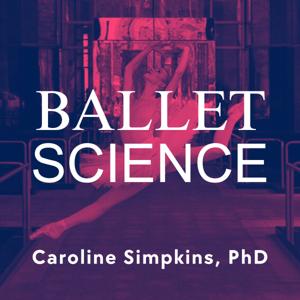


Why do ballerinas destroy brand new pointe shoes before dancing in them? In this episode, we explore the fascinating science, biomechanics, and artistry behind breaking in pointe shoes.
From bending the shank and crushing the box to darning, rosin, jet glue, and sewing ribbons with dental floss, professional ballet dancers completely customize their shoes to match their feet and performance needs. What looks like destruction is actually a highly specialized process that transforms a stiff, generic shoe into a personalized high-performance tool.
We discuss:
Whether you’re a dancer, ballet parent, teacher, or simply curious about the science of ballet, this episode reveals the engineering and anatomy behind one of ballet’s most iconic traditions.
Join the Ballet Science E-mail List
Watch This Video On YouTube
Connect With Ballet Science:
Hosted by Caroline Simpkins, Ph.D., the Ballet Science podcast brings science into the studio to help dancers of all ages and abilities give their best performances both onstage and off, and reveals how the science of ballet can benefit anyone who moves.
Each week, we explore the intersection of science and ballet... from injury prevention and biomechanics to nutrition, mindset, and everything in between. If you enjoyed this episode, please hit the subscribe button, leave a review, and share it with your friends and dance community. You can also follow Ballet Science on social media and visit our website for additional information.
Filming Equipment Affiliate Links:
Logo photo: Richard Calmes
What is it really like to train at one of the most prestigious ballet schools in the world? In this video, I sit down with Joy Womack (the first American woman to graduate from the Bolshoi Ballet Academy) to discuss the realities of elite ballet training, injury, mental health, body image, performance pressure, and the physical demands of professional dance.
Joy shares her incredible journey from early training in the United States to studying in Russia at just 15 years old, dancing professionally across multiple countries and ballet systems, and eventually building a freelance career and nonprofit organization in France.
We also discuss:
Whether you are a dancer, teacher, parent, healthcare professional, or simply fascinated by human performance, this is an incredibly insightful and honest conversation about the realities of ballet at the highest level.
Join the Ballet Science E-mail List
Watch This Video On YouTube
Connect With Ballet Science:
Connect with Joy Womack:
Hosted by Caroline Simpkins, Ph.D., the Ballet Science podcast brings science into the studio to help dancers of all ages and abilities give their best performances both onstage and off, and reveals how the science of ballet can benefit anyone who moves.
Each week, we explore the intersection of science and ballet... from injury prevention and biomechanics to nutrition, mindset, and everything in between. If you enjoyed this episode, please hit the subscribe button, leave a review, and share it with your friends and dance community. You can also follow Ballet Science on social media and visit our website for additional information.
Filming Equipment Affiliate Links:
Logo photo: Richard Calmes
Have you ever watched a ballerina perform a flawless pirouette and wondered how it’s even possible? In this episode, we break down the fascinating physics behind ballet turns... from angular momentum and torque to spotting, balance, friction, and fouettés.
You’ll learn how dancers use the same physical principles that govern figure skaters, tornadoes, and spinning planets to create speed, control, and stability during turns. From the initial push-off to the iconic passé position, every pirouette is a masterclass in biomechanics and physics.
Topics Covered:
Join the Ballet Science E-mail List
Watch This Video On YouTube
Connect With Ballet Science:
Hosted by Caroline Simpkins, Ph.D., the Ballet Science podcast brings science into the studio to help dancers of all ages and abilities give their best performances both onstage and off, and reveals how the science of ballet can benefit anyone who moves.
Each week, we explore the intersection of science and ballet... from injury prevention and biomechanics to nutrition, mindset, and everything in between. If you enjoyed this episode, please hit the subscribe button, leave a review, and share it with your friends and dance community. You can also follow Ballet Science on social media and visit our website for additional information.
Filming Equipment Affiliate Links:
Logo photo: Richard Calmes
Why are ballet dancers so flexible? Is it genetics… or training? In this video, we break down the real science behind flexibility. Learn how dancers develop incredible range of motion, why the nervous system plays such a major role in stretching, and how strength and flexibility work together in ballet training.
This episode covers:
Whether you’re a ballet dancer, adult beginner, teacher, athlete, or simply curious about how the body works, this episode explains flexibility in a way that is practical, evidence-based, and accessible.
Join the Ballet Science E-mail List
Watch This Video On YouTube
Connect With Ballet Science:
Hosted by Caroline Simpkins, Ph.D., the Ballet Science podcast brings science into the studio to help dancers of all ages and abilities give their best performances both onstage and off, and reveals how the science of ballet can benefit anyone who moves.
Each week, we explore the intersection of science and ballet... from injury prevention and biomechanics to nutrition, mindset, and everything in between. If you enjoyed this episode, please hit the subscribe button, leave a review, and share it with your friends and dance community. You can also follow Ballet Science on social media and visit our website for additional information.
Filming Equipment Affiliate Links:
What if one of the biggest predictors of injury in ballet isn’t weak ankles or poor technique... but your brain?
In this episode, we dive into the science of mental fatigue in ballet dancers and how it impacts performance, learning, and injury risk. Based on recent research on professional ballet dancers, this episode explores how cognitive overload, choreography demands, and sustained focus contribute to fatigue, and why that may lead to injuries like sprained ankles.
Key topics covered:
Research publication:
Wirdnam, M., Ferrar, K., Mayes, S., MacMahon, C., Cook, J., & Rio, E. (2024). “A sprained ankle is the biggest sign of mental fatigue”: A qualitative study of the perceptions and experiences of mental fatigue in professional ballet. Physical therapy in sport, 65, 154-161.
Join the Ballet Science E-mail List
Watch This Video On YouTube
Connect With Ballet Science:
Hosted by Caroline Simpkins, Ph.D., the Ballet Science podcast brings science into the studio to help dancers of all ages and abilities give their best performances both onstage and off, and reveals how the science of ballet can benefit anyone who moves.
Each week, we explore the intersection of science and ballet... from injury prevention and biomechanics to nutrition, mindset, and everything in between. If you enjoyed this episode, please hit the subscribe button, leave a review, and share it with your friends and dance community. You can also follow Ballet Science on social media and visit our website for additional information.
Filming Equipment Affiliate Links:
Ballet looks effortless... but if you’ve ever tried it, you know that’s far from the truth. So why is ballet so hard… and why is it harder than it looks? In this video, we break down the science behind ballet technique, including biomechanics, balance, motor control, and strength. From controlling your center of mass to managing a high cognitive load, ballet challenges both your body and your brain in ways most people don’t realize.
You’ll learn:
Join the Ballet Science E-mail List
Watch This Video On YouTube
Connect With Ballet Science:
Hosted by Caroline Simpkins, Ph.D., the Ballet Science podcast brings science into the studio to help dancers of all ages and abilities give their best performances both onstage and off, and reveals how the science of ballet can benefit anyone who moves.
Each week, we explore the intersection of science and ballet... from injury prevention and biomechanics to nutrition, mindset, and everything in between. If you enjoyed this episode, please hit the subscribe button, leave a review, and share it with your friends and dance community. You can also follow Ballet Science on social media and visit our website for additional information.
Filming Equipment Affiliate Links:
How do ballet dancers balance on their toes in pointe shoes? Learn the science and anatomy of pointe work, including ballet biomechanics, pointe shoe mechanics, and how dancers safely balance their center of mass on their toes in ballet technique.
If you’ve ever tried standing on your toes, you know it feels impossible. But the truth is, it’s not just strong feet or natural talent... it’s physics, biomechanics, and years of neuromuscular training that allow ballerinas to control extreme forces on such a small surface area.In this episode, we break down:
Join the Ballet Science E-mail List
Watch This Video On YouTube
Connect With Ballet Science:
Hosted by Caroline Simpkins, Ph.D., the Ballet Science podcast brings science into the studio to help dancers of all ages and abilities give their best performances both onstage and off, and reveals how the science of ballet can benefit anyone who moves.
Each week, we explore the intersection of science and ballet... from injury prevention and biomechanics to nutrition, mindset, and everything in between. If you enjoyed this episode, please hit the subscribe button, leave a review, and share it with your friends and dance community. You can also follow Ballet Science on social media and visit our website for additional information.
Filming Equipment Affiliate Links:
What if dance could do more than build technique… what if it could change how we connect with others? In this video, we break down scientific research examining how dance impacts individuals with autism spectrum disorder (ASD).
We explore:
Research Publication:
Chen, T., Wen, R., Liu, H., Zhong, X., & Jiang, C. (2022). Dance intervention for negative symptoms in individuals with autism spectrum disorder: A systematic review and meta-analysis. Complementary therapies in clinical practice, 47, 101565.
Join the Ballet Science E-mail List
Watch This Video On YouTube
Connect With Ballet Science:
Hosted by Caroline Simpkins, Ph.D., the Ballet Science podcast brings science into the studio to help dancers of all ages and abilities give their best performances both onstage and off, and reveals how the science of ballet can benefit anyone who moves.
Each week, we explore the intersection of science and ballet... from injury prevention and biomechanics to nutrition, mindset, and everything in between. If you enjoyed this episode, please hit the subscribe button, leave a review, and share it with your friends and dance community. You can also follow Ballet Science on social media and visit our website for additional information.
Filming Equipment Affiliate Links:
What if dance could actually help people with Parkinson’s disease improve their balance... and potentially reduce their risk of falling?
In this episode, I break down one of my own research studies: a systematic review and meta-analysis of 14 randomized controlled trials (612 participants) examining how dance impacts balance in Parkinson’s disease... and the results might surprise you.
We’ll cover:
This isn’t just theory... this is high-level clinical evidence translated into real, practical insights. If you're a dancer, teacher, clinician, or just curious about how movement impacts the body and brain, this episode is for you.
Publication Discussed:
Simpkins, C., & Yang, F. (2023). Do dance style and intervention duration matter in improving balance among people with Parkinson’s disease? A systematic review with meta-analysis. Parkinsonism & related disorders, 106, 105231.
Join the Ballet Science E-mail List
Watch This Video On YouTube
Connect With Ballet Science:
Hosted by Caroline Simpkins, Ph.D., the Ballet Science podcast brings science into the studio to help dancers of all ages and abilities give their best performances both onstage and off, and reveals how the science of ballet can benefit anyone who moves.
Each week, we explore the intersection of science and ballet... from injury prevention and biomechanics to nutrition, mindset, and everything in between. If you enjoyed this episode, please hit the subscribe button, leave a review, and share it with your friends and dance community. You can also follow Ballet Science on social media and visit our website for additional information.
Filming Equipment Affiliate Links:
What if dance could actually change your brain? Not just how you feel... but how your brain functions over time. In this video we break down a systematic review and meta-analysis (one of the highest levels of scientific evidence) to answer a powerful question: Can dance improve cognitive function and help protect against decline as we age?
We’ll cover:
This isn’t just “exercise is good for you.” This is measurable, clinical data on how movement impacts the brain.
Publication Discussed:
Hewston P, Kennedy CC, Borhan S, Merom D, Santaguida P, Ioannidis G, Marr S, Santesso N, Thabane L, Bray S, Papaioannou A. Effects of dance on cognitive function in older adults: a systematic review and meta-analysis. Age Ageing. 2021 Jun 28;50(4):1084-1092. doi: 10.1093/ageing/afaa270. PMID: 33338209.
Join the Ballet Science E-mail List
Watch This Video On YouTube
Connect With Ballet Science:
Hosted by Caroline Simpkins, Ph.D., the Ballet Science podcast brings science into the studio to help dancers of all ages and abilities give their best performances both onstage and off, and reveals how the science of ballet can benefit anyone who moves.
Each week, we explore the intersection of science and ballet... from injury prevention and biomechanics to nutrition, mindset, and everything in between. If you enjoyed this episode, please hit the subscribe button, leave a review, and share it with your friends and dance community. You can also follow Ballet Science on social media and visit our website for additional information.
Filming Equipment Affiliate Links:
From the publisher's feed

90,778 Listeners
265 Listeners

111,831 Listeners
19 Listeners
153 Listeners

85,577 Listeners
19 Listeners

2,035 Listeners
149 Listeners

7,343 Listeners

10,652 Listeners
94 Listeners
24 Listeners
12 Listeners

12,418 Listeners