
Sign up to save your podcasts
Or

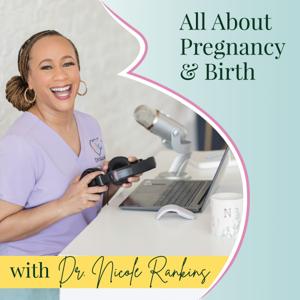


In today’s episode you’re going to learn 9 tips for having an unmedicated birth. This is an episode I initially did over 3 years ago. From time to time I like to go back and revisit older episodes as new information comes out or I learn new things. So we are revisiting those 9 things with some additional tidbits of advice.
Why do I say unmedicated instead of natural? Well, because that’s what it is! It’s giving birth without medication (most often people mean without an epidural). All birth is natural - procreation, continuing the species, that’s natural. The way that you manage pain doesn’t affect whether it’s natural or not.
In this Episode, You’ll Learn About:-What are some questions you should ask yourself before committing to an unmedicated birth
-Why unmedicated birth requires a commitment
-Why you need to communicate your wishes to your support team in advance
-What makes preparation so vital to an unmedicated birth
-Why it’s a good idea to stay home as long as possible
-How to know when it’s time to go to the hospital
-Why you want to stay with the pain instead of fighting it
-What are the advantages of seeking out a nurse who has experience with unmedicated birth
Full website notes: drnicolerankins.com/episode160
Check out The Birth Preparation Course
Register for the class How to Create a Birth Plan the Right Way
Take a quick, fun labor pain quiz
Learn more about donating your cord blood and get up to $100 Amazon gift card! --> thecordbloodgroup.com/drnicole
Sydni had her son at 19 and is now 25. Even though Sydni’s story is from a few years ago, there’s still a lot to learn from it. She had her baby a little early at 36 weeks and you’ll hear about how, after a slower start, things went super fast - so fast it shocked her mother and caused her to faint at the hospital!
She had her baby at a young age and although it forced her to step up, her partner at the time didn’t necessarily do the same. She also found out that some of her friends weren’t necessarily true friends. But now Sydni’s getting ready to get married, she’s in school and happy and doing well. You really do become a new person after you have a baby and Sydni was really intentional about becoming a better version of herself which is amazing.
In this Episode, You’ll Learn About:-How rotating through all of the doctors at the practice made Sydni feel comfortable giving birth with whomever was on staff
-What made Sydni opt for an epidural after having planned for an unmedicated birth
-What it was like to jump from 6cm to 9 ½cm in five minutes
-Why it’s ok to prioritize your wishes and needs over what your friends and family might want
-How and why she plans to do things differently with the next baby
-Who stayed in her life and who didn’t after she became a mom
-How she shifted her life from being a teen to being a parent
-How her baby inspired her to change for the better
Full website notes: drnicolerankins.com/episode159
Check out The Birth Preparation Course
Register for the class How to Create a Birth Plan the Right Way
Take a quick, fun labor pain quiz
Learn more about donating your cord blood and get up to $100 Amazon gift card! --> thecordbloodgroup.com/drnicole
The earlier you can start thinking about the postpartum period, the better. Just like all other parts of birth, everyone’s postpartum experience will be different. There are both physical and mood disorders that can affect some people. Oftentimes even experienced care providers can overlook planning for this crucial period and that’s why Nicole Makowka is here today. Nicole is a licensed marriage and family therapist and an expert in early childhood development. She is also the Head of Education & Wellbeing at LOOM - an online platform for sexual and reproductive wellbeing. She has developed postpartum curricula for LOOM and has a lot of wonderful insight into how to be better prepared for what comes after pregnancy and birth.
In this Episode, You’ll Learn About:-Why you should talk to your doctor about postpartum care beforehand
-What are some common emotions people can feel postpartum
-How common is postpartum ambivalence and why it’s completely ok
-Where is the line between what is tolerable and what is something that needs clinical attention
-What a “collective care map” is and why it’s a good idea to create one
-Why you should feel empowered to ask those around you for help
-What is LOOM and how is it helping birthing people
Full website notes: drnicolerankins.com/episode158
Check out The Birth Preparation Course
Register for the class How to Create a Birth Plan the Right Way
Take a quick, fun labor pain quiz
Learn more about donating your cord blood and get up to $100 Amazon gift card! --> thecordbloodgroup.com/drnicole
This episode is about racial disparities in ob/gyn and its release coincides with Black maternal health week. Founded and led by the Black Mamas Matter Alliance, BMHW is a week of awareness, activism, and community building intended to deepen the national conversation about Black maternal health in the US.
To be honest I’m actually a bit tired of talking about disparities. The problems and root causes are well documented yet things are getting worse. People don’t want to talk about racism or are actively trying to suppress efforts to talk about race. But not talking about it doesn’t make the underlying issues go away. Helping address this problem starts with LISTENING. So especially if you are not Black, take a moment and listen (I explain why I say this in the episode). I hope that by the end you have some empathy and the ability to understand and share the feelings of another.
Also - if you are a Black woman, it’s ok to skip this episode. I understand that it can be traumatizing to repeatedly hear about these disparities.
In this Episode, You’ll Learn About:-What does disparity mean
-What are the statistics on racial disparities in healthcare
-What are the causes of these disparities
-How racism affects care and outcomes
-What does the term weathering refer to
-How I have been personally treated differently on the basis of race
-Why it matters if you speak up about race in your own community
-How you can help (donate to the groups linked below!)
Full website notes: drnicolerankins.com/episode157
Check out The Birth Preparation Course
Register for the class How to Create a Birth Plan the Right Way
Take a quick, fun labor pain quiz
Learn more about donating your cord blood and get up to $100 Amazon gift card! --> thecordbloodgroup.com/drnicole
In this episode we’re talking about headaches in pregnancy. Headaches are common in general and also in pregnancy so I thought I’d tackle this topic. We will be focusing on primary headache syndromes today. A “primary headache” is when the headache itself is the disorder, whereas a “secondary headache” refers to one that is a symptom of an underlying issue. I do talk about when it’s time to take a headache seriously and talk to your doctor.
Primary headaches can be pre-existing (i.e., they began before pregnancy) or can occur for the first time during pregnancy, postpartum, or breastfeeding. Depending on what kind of headaches you suffer from, pregnancy may make the condition more or less severe. Both headache treatments and the headaches themselves can have an effect on your pregnancy so it’s important to learn about your options and make informed decisions.
In this Episode, You’ll Learn About:-How common are headaches
-What are the different types of primary headaches
-What are the characteristics of the most common primary headaches
-How headaches can affect pregnancy outcomes
-What are some medication and non-medication treatments
-What are some preventative measures you can take
-What medications are safe to use while breastfeeding
-How to tell when a headache might be a sign of a more serious problem
Full website notes: drnicolerankins.com/episode156
Check out The Birth Preparation Course
Register for the class How to Create a Birth Plan the Right Way
Take a quick, fun labor pain quiz
Learn more about donating your cord blood and get up to $100 Amazon gift card! --> thecordbloodgroup.com/drnicole
I needed to take a little break this week but will be back next week with a brand new episode!
In the meantime DM me on Instagram with the word REST and I'll send you a coupon code to get a discount on The Birth Preparation Course! I'm on instagram @drnicolerankins.
Take some time to REST if you need to and I'll see you next week!
Bad news, everyone: losing sleep is part of having a baby. However, the good news is that there are things you can do to help your baby (and you!) catch more of that oh-so-important shut eye. You can stick to a sleep schedule or have a special bedtime routine so your baby knows when it’s time to wind down. And for some, products may help, as well.
Tara Willaims is a mom of four and the founder and CEO of Dreamland Baby. When she could not find a weighted blanket that her six-month-old could safely wear to help him sleep, she decided to create her own. The result was a doctor-approved, evenly-weighted, wearable sleep sack. Now, of course there is no one-size-fits-all sleep solution, but Tara created her company because it helped her baby sleep and it just might help your little one, too!
In this Episode, You’ll Learn About:-Why Tara started Dreamland Baby
-What is a sleep sack, what is a sleep swaddle, and what is the difference
-Why might it be helpful to use a sleep sack or a sleep swaddle
-Why might it be helpful to use a weighted sleep product
-What did Dreamland Baby do to ensure their product is safe
-What are some tips that new parents can use to promote better sleep for their newborns
-How to protect your sleep during the newborn period
Full website notes: drnicolerankins.com/episode155
Check out The Birth Preparation Course
Register for the class How to Create a Birth Plan the Right Way
Take a quick, fun labor pain quiz
Just because an outcome is unlikely doesn’t mean it isn’t going to happen. Birth stories are entertaining and heart-warming, but don’t forget that they are also educational. Learning about other people’s births will expose you to different possibilities. And that’s exactly what today’s guest, Karrah, did.
A self proclaimed “podcast junkie,” Karrah filled the time during her pregnancy with long walks while listening to birth stories - stories she heard on this podcast, actually! Even though her pregnancy went smoothly, she knew she couldn’t only plan for the birth that she wanted - she needed to think about all kinds of labor experiences. And it’s a good thing she did because her simple pregnancy ended in a very difficult labor.
In this Episode, You’ll Learn About:-Why Karrah decided to go the OB route for her prenatal care
-How The Birth Preparation Course helped Karrah get ready for her birth
-Why you should consider all complications a possibility for you
-What methods Karrah tried in order to induce labor at home
-How hospital staff made her feel empowered
-How she used movement to ease labor pain
-What chorioamnionitis is and what it felt like for Karrah
-How difficult the process of healing from a third degree tear is
-How isolated Karrah felt in her experience with a physically and emotionally traumatic birth
Full website notes: drnicolerankins.com/episode154
Check out The Birth Preparation Course
Register for the class How to Create a Birth Plan the Right Way
Take a quick, fun labor pain quiz
Learn more about donating your cord blood and get up to $100 Amazon gift card! --> thecordbloodgroup.com/drnicole
Today you’ll learn about what happens if your baby is breech. I originally talked about this three years ago and it came to mind because recently I did a surprise vaginal breech birth and after that I had folks saying they wanted to come to me with their breech babies so they could have a vaginal birth. I’d love to be able to see everyone who asked but breech birth is not that simple.Now what does breech mean? Breech is when a baby’s butt is closer to the vagina than the head. It’s quite common in early pregnancy, however it’s actually a very small percentage of babies that are breech at term. Most breech babies are normal, however there are some malformations and mild deformations that can result. There are signs you and your doctor can look out for so you can choose the right management options. From turning the baby to cesarean, one way or another your birth team can help you have a happy and healthy baby.
In this Episode, You’ll Learn About:-What is breech presentation
-How common is it
-What risk factors can increase the chances of having a breech baby
-What are the different types of breech presentation and why do they matter
-How to tell if your baby is breech
-What are the treatment options for managing a breech pregnancy
-What are some alternative methods you could try in order to turn your baby
-What happens after a breech birth
Full website notes: drnicolerankins.com/episode153
Check out The Birth Preparation Course
Register for the class How to Create a Birth Plan the Right Way
Take a quick, fun labor pain quiz
Learn more about donating your cord blood and get up to $100 Amazon gift card! --> thecordbloodgroup.com/drnicole
Pregnancy doesn’t mean putting your fitness on pause. MacKenzie Rowand is a new mom and exercise specialist with 9Round. She has an extensive background in wellness and there’s a lot to learn from her personal journey with fitness and pregnancy. She continually had to change the way she ate and exercised during all parts of pregnancy and through recovery. Flexibility and meeting yourself where you are is the key to staying fit during pregnancy.
Your wellness during pregnancy is so personal. Don’t compare yourself to anyone else. Remember that you’re growing a whole person inside of you and give yourself some grace. What matters is that you get moving.
In this Episode, You’ll Learn About:-How pregnancy changed MacKenzie’s exercise routine
-How her fitness helped in her labor, birth, and recovery
-When she decided it was time to get back to exercise after giving birth
-What her workout routine looked like postpartum
-How she felt about her new postpartum body
-How exercise can help with pregnancy, both mentally and physically
-Which exercises to do (and which exercises to avoid) during pregnancy
-Why you should listen to your body when exercising during and after pregnancy
-What are some nutrition recommendations for during and after pregnancy
Full website notes: drnicolerankins.com/episode152
Check out The Birth Preparation Course
Register for the class How to Create a Birth Plan the Right Way
Take a quick, fun labor pain quiz
Learn more about donating your cord blood and get up to $100 Amazon gift card! --> thecordbloodgroup.com/drnicole
From the publisher's feed
Birth With Power is the go-to podcast for expecting mothers who want to take charge of their birth experience.
Hosted by Dr. Nicole Calloway Rankins, a practicing, board-certified OB/GYN with…
Through solo episodes, guest interviews, and inspiring birth stories, you’ll get the tools to navigate pregnancy, labor, and postpartum with calm and confidence.
Whether you’re planning your first birth or your fourth, Birth With Power will help you approach the journey feeling strong, prepared, and empowered.
Subscribe today and take charge of your birth!

2,168 Listeners

915 Listeners

451 Listeners
1,035 Listeners

481 Listeners

1,106 Listeners
729 Listeners
1,298 Listeners
551 Listeners
196 Listeners
665 Listeners
246 Listeners

224 Listeners
207 Listeners
197 Listeners