
Sign up to save your podcasts
Or



Based on Podcast App listening data
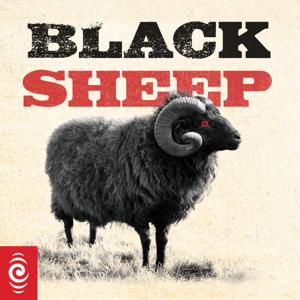
Pākehā settlers in Taranaki knew John Bryce as "Honest John" but Taranaki Māori called him "Bryce Kōhuru" - Bryce the Murderer. Black Sheep investigates the life of the infamous Native Affairs Minister who led the assault on Parihaka.
Pākehā settlers in Taranaki knew John Bryce as "Honest John" but Taranaki Māori had another nickname. They called him "Bryce Kōhuru" - Bryce the Murderer. In this episode of Black Sheep William Ray investigates the life of the infamous Native Affairs Minister.
John Bryce has gone down in history as an arrogant sometimes brutal man, with harsh attitudes towards Māori, even for his time.
But nobody is born racist, so where did it come from? The earliest hint comes when Bryce was just six years old, living in Glasgow in 1839.
John Bryce's mother had recently died from tuberculosis and his father decided to take the family from their home in Scotland to New Zealand. While they were waiting to depart on their ship this poem by Poet Laureate, Robert Southey was read:
On Zealand's hills, where tigers steal along,
And the dread Indian chants a dismal song,
Where human fiends on midnight errands walk,
And bathe in brains the murderous tomahawk.
Along with that slightly bloodcurdling poem, six-year old John Bryce would have heard the passengers and crew telling stories of the Boyd massacre, where around 60 Europeans were killed and eaten by Māori at Whangaroa.
Bryce and his fellow passengers were among the very first colonists to settle in the Wellington region at Pito-one (now called Petone) under the protection of a local rangatira, Puakawa. But, just three weeks after the settlers arrived in Petone, Puakawa was killed in a raid by followers of Te Rauparaha from the Kapiti Coast.
When he turned 13 John Bryce had another foundation experience of Māori. 1846 saw the outbreak of the Hutt War, between Māori and Pākehā in the Wellington region.
50 years later John Bryce related the story of Bugler William Allen a young man who, according to popular legend, spotted a raid and continued to sound the alarm despite axe wounds to both arms. The story goes that he held the bugle between his knees and kept blowing until he was struck in the head and killed.
This incident "made a lasting impression on Bryce," says historian Moyra Cooke, who researched John Bryce for her masters thesis.
A few years after the end of the Hutt War John and his older brother went to Australia to become diggers in the Victorian gold rush. They must have struck a good lode because when they returned they were rich enough to buy land for farming at Brunswick, near Whanganui…
Go to this episode on rnz.co.nz for more details
Roy Courlander was a New Zealand soldier who joined Nazi Germany's infamous SS during WWII. He participated in propaganda efforts trying to turn more allied soldiers to the Nazi cause. So why did he decide to turn traitor?
On ANZAC day New Zealanders remember the heroism and sacrifice of those killed in war, but not all soldiers have legacies worth celebrating. Case in point: Roy Courlander, a NZ Army Private who volunteered to join Nazi Germany's infamous Waffen SS.
Roy Courlander's early years are hard to trace. He was born in London in 1914 and was raised by his mother, Edith Carter and his stepfather, Leonard Courlander. He never knew his biological father.
In his late teens Courlander went to work on his stepfather's plantations in Vanuatu. He then came to New Zealand in 1938 and got a job with the Inland Revenue Department.
"Then in mid-1939 he's in trouble because in Napier he's arrested after a burglary," says New Zealand Defence Force Historian John Crawford.
This burglary was quite a serious incident. A young woman came home to find three men, including Courlander, inside her house. They assaulted her but she screamed and neighbours came to her rescue. The men were all caught and prosecuted.
"Courlander and two other men were eventually caught and prosecuted for their parts in this crime," John says.
Roy Courlander was still on probation for the robbery on September 3rd, 1939 when war was declared by Britain and by extension New Zealand, on Nazi Germany.
He signed up with the Second NZ Expeditionary Force and was assigned to 18th Infantry Battalion. He was deployed to Egypt where he volunteered to serve with battalion intelligence and began teaching himself German.
In 1941 Roy Courlander was one of thousands of British and Commonwealth troops swept up in the disastrous Greek campaign.
He was separated from his unit and eventually captured in Kalamata. When on a train bound for a prisoner of war camp in Yugoslavia, he and a fellow soldier saw a chance for escape. After the war ended he wrote this account of what happened:
"On the night of June 1941, I and Private Kedsell succeeded in escaping through the window of the cattle truck that was taking us to Germany. The train stopped and the Germans started firing at us as we ran amongst the bushes along the railway track. Private Kedsell was hit and I was recaptured early the next morning. I received a beating up, was trussed up with barbed wire and taken to Germany." - Roy Courlander
This account is backed up by witnesses and is generally considered reliable. But John Crawford doubts Courlander really was "trussed up with barbed wire"…
Go to this episode on rnz.co.nz for more details
Kimble Bent was one of a tiny handful of Europeans who switched sides during the New Zealand Wars, who deserted the British army to join Māori "rebels" in Taranaki and reportedly witnessed a famous incident of kai tangata (cannibalism) in the wake of a battle against colonial forces.
It's reasonably common knowledge that large numbers of Māori fought on the side of the government during the New Zealand Wars. We even have a name for them, kūpapa Māori.
A less well-known story is the handful of Europeans who went in the other direction - Pākehā soldiers who deserted the British army and joined the cause of Māori "rebels".
Most of these people are poorly documented, but there is one exception: Kimble Bent.
June, 1865. A Ngāti Ruanui chief, Tito Hanataua, was riding his horse along a track near the bank of the Tangahoe river. He was there to scout a nearby British army fort.
To his astonishment he came face-to-face with a soldier wearing a dripping wet scarlet uniform. That soldier was a 25-year-old American, Kimble Bent.
Decades later, Bent recalled the conversation that followed to historian James Cowan, who published it in a book, The Adventures of Kimble Bent.
Tito Hanataua: "Here you Pākehā! Go back quick! Haere atu, haere atu! Go away back to the soldiers. I shoot you suppose you no go! Hoki atu!
Kimble Bent: Shoot away, I won't go back. I'm running away from the soldiers. I want to go to the Māoris. Take me with you!
Tito Hanataua: You tangata kuware! You Pākehā fool, go back! The Māori kill you, my word! You look out!
Kimble Bent: I don't care if they do, I tell you I want to live with the hauhaus.
Tito Hanataua: E pai ana (it is well). All right, you come along. But you look out for my tribe - they kill you.
- The Adventures of Kimble Bent
The events which led Kimble Bent to that life-changing meeting with Tito Hanataua began five years earlier, when he travelled from his home in Eastport, Maine, to the United Kingdom.
He quickly burned through the money which had been given to him by his father for the trip, and was left stranded with no way to return to the United States.
While he was drowning his sorrows at a pub, Bent's eye was drawn to the smart uniform of a British Army recruiting sergeant. Bent had formerly served in the United States Navy as a teen, and he decided to sign up.
It was the worst decision of his life.
"The discipline and parade ground drilling was a far cry from the rather more relaxed US Navy way of doing things. Floggings were common," said Chris Grosz, who wrote a graphic novel on Bent's story: Kimble Bent Malcontent…
Go to this episode on rnz.co.nz for more details
A cottage burns down, three mutilated bodies are found inside and there are fears the whole city of Auckland could be at risk. In this episode of Black Sheep, William Ray investigates the story of the first European to be judicially executed in New Zealand history.
October 10th, 1847. The brutal murder of a Devonport family leaves Auckland fearing an invasion of vengeful Māori. But when that threat fails to materialise the police are left trying to solve New Zealand's first ever whodunnit...
It began just after midnight, when lookouts on the HMS Dido spot flames rising from the house of Lieutenant Robert Snow.
The sailors rush ashore and extinguish the blaze but after, find the badly mutilated bodies of Lt. Robert Snow, his wife Hannah and their four year old daughter, Mary.
Pieces of flesh had been cut from all three bodies. The sailors know what that means... Cannibalism.
The New Zealander (one of Aotearoa's very first newspapers) is quick to lay blame for the murder of the Snow family:
"There can be no doubt that the natives were perpetrators of this foul deed. Our native police pronounced the wounds to be Maori handiwork at once. The mutilation of the bodies, from all three of which large pieces of flesh had been cut by knives, and the parts from whence they were cut, is conclusive evidence."
The only controversy is whether the Māori killers were motivated by personal revenge against Snow, or if this is a precursor to a wider attack on Auckland itself.
As The New Zealander put it: "If the matter be political, this act, according to Maori custom, is a declaration of war."
Most of the prominent Māori chiefs who live near Auckland are equally convinced the murders were committed by Māori and are even more anxious than the European colonists to find the perpetrators.
"Chief Patuone over on the North Shore was very friendly towards Pakeha and chief Te Whero Whero in the Northern Waikato was also" says Terry Carson, author of The Axeman's Accomplice - a book about the Snow family murders. "They were quite keen that nothing interfere with the relationship" he explains.
Māori leaders assure the colonists that they will track down the person responsible and at first they have some success. A few weeks after the murders a group of prominent chiefs from Ngāti Maru and Waikato-Tainui arrive in Auckland with a prisoner; a man called Mamuku, who they say killed the Snows.
Mamuku is publicly interrogated on the veranda of Government House, but the questioning quickly reveals he knows nothing about the murders.
Police and Māori are stumped. But then, a break; the killers give themselves away…
Go to this episode on rnz.co.nz for more details
In 1981 Dunedin teenager Chris Lewis tried to shoot Queen Elizabeth. Then, at least according to some, authorities tried to cover it up. In this collaboration with Stuff.co.nz journalist Hamish McNeilly, Black Sheep looks into Chris Lewis's bizarre life story.
On October 14th, 1981 Dunedin teenager Chris Lewis tried to shoot Queen Elizabeth. Then (at least according to some) the authorities tried to cover it up. In this collaboration with Stuff.co.nz journalist Hamish McNeilly, RNZ's Black Sheep podcast looks into Lewis's bizarre life story.
For more on Chris Lewis you can read Hamish McNeilly's series The Snowman and the Queen.
Go to this episode on rnz.co.nz for more details
It's 1871 and the city of Auckland is being terrorised by a string of major fires. Fears are raised that a gang of anarchist fanatics could be responsible but the real culprit turns out to be a well known businessman with an axe to grind against Auckland high society.
Cyrus Haley burned down several of the most famous buildings in 19th century Auckland and tried to kill the family of a prominent businessman. To this day we still don't know why...
Music in this episode courtesy of Chris Priestly.
THE CHASE
January 27th, 1872. Auckland's chief of police, Inspector Broham, is hot on the trail of a fugitive who'd been terrorising the city.
Over the previous year, this mysterious figure had burned down five major buildings and sent threatening letters to newspapers. He claimed to be the leader of a group that had vowed to "destroy £100,000 worth of property and to take 5 of the lives of the most obnoxious persons."
Things got even more serious on January 22nd, 1872. The mystery man fired eight shots into the home of New Zealand's most prominent businessman, Thomas Russell (who featured in a previous Black Sheep episode).
But then the criminal slipped up. Returning to Russell's home a few days after the shooting, he set two haystacks on fire. The police were quickly alerted and Inspector Broham spotted a man trying to leave the scene.
The New Zealand Herald described the chase:
"In the pursuit Mr. Broham had to leap a massive stone wall, cross through an orchard, and again over an hawthorn fence, following up the chase over some very rough ground, across ditches, and through thick scrub. The man was still considerably ahead, as he also proved a swift runner: yet the pace of Mr. Broham told at last, and every minute the distance between the two lessened."
Finally, the shadowy figure realised there was no escaping Inspector Broham who the Herald described as "remarkably swift of foot".
The man turned on Inspector Broham, raised a gun, and pointed it directly at the police chief.
"But before he can fire he trips and falls," says historian Mark Derby. " subdues the man... and by the moonlight he recognises him."
To everyone's shock the man who'd been terrorising the city was a well known figure in Auckland's commercial scene - an investor and engineer called Cyrus Haley.
BAD BEGINNINGS
Cyrus Haley was 28 when he arrived in New Zealand in 1870 with his wife Emily and their two children.
The couple came from relatively wealthy backgrounds and were determined to rise in Auckland's elite social circles. At first, they tried to make a splash in the art scene…
Go to this episode on rnz.co.nz for more details
From the publisher's feed

12 Listeners

1 Listeners
1 Listeners
28 Listeners
1 Listeners
1,219 Listeners

1 Listeners
42 Listeners

102 Listeners

40 Listeners

1 Listeners
156 Listeners

7 Listeners

56 Listeners

43 Listeners

4 Listeners
3 Listeners

0 Listeners

16 Listeners

32 Listeners

0 Listeners

4 Listeners
78 Listeners
367 Listeners

172 Listeners

4 Listeners

15 Listeners

2 Listeners
0 Listeners
3 Listeners

2 Listeners
115 Listeners
2 Listeners

0 Listeners
1 Listeners