
Sign up to save your podcasts
Or

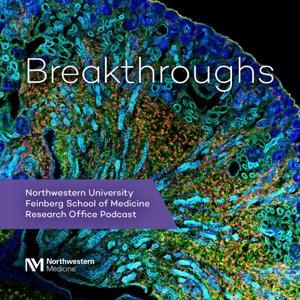


What do we know about the effectiveness of COVID-19 boosters, and how might they better protect us from new variants such as omicron? Alexis Demonbreun, PhD, assistant professor of Pharmacology, offers insight. She is the author of a new study that shows COVID-19 boosters seem to supercharge antibody response.
Millions of molecular proteins are swimming through our body's cells and many studies have discovered that these proteins are the main drivers of all human diseases. Scientists are now mapping proteins the way the Human Genome Project mapped genes. Northwestern's Neil Kelleher is at the forefront of the Human Proteoform Project and explains how it could lead to more targeted and effective diagnostics and treatments for diseases.
Regenerative nanomedicine is being used to develop new therapies for devastating conditions such as severe spinal cord injuries. Northwestern's Dr. Samuel Stupp is a pioneer in the field of regenerative nanomedicine and recently published a paper in the journal Science that details how a new injectable therapy uses synthetic nanofibers to reverse severe spinal cord injuries in animals and how this therapy could soon be used in humans.
Northwestern Medicine scientists have discovered one of the earliest signs of Parkinson's disease, proving that damaged neuronal mitochondria alone can cause symptoms of the disease, according to a study published in Nature. Senior author D. James Surmeier, chair of the Feinberg department of Neuroscience, who has over 30 years of experience in the field, explains the importance of these findings for future Parkinson's research and therapeutics.
People who are Black make up the largest group of minorities in need of an organ transplant. In 2019, Northwestern Medicine launched the African American Transplant Access Program to help address this problem. Founding director of the program Dinee Simpson, MD, talks about the barriers to organ transplant for Black patients and how she is working to bring down those barriers in Chicago with innovative outreach, community-engaged research and more.
People who are Black make up the largest group of minorities in need of an organ transplant. That's according to the Office of Minority Health at the U.S. Department of Health and Human Services. In 2019, Northwestern Medicine launched the African American Transplant Access Program to help address this problem.
Dinee Simpson, MD, is the founding director of the program and an Assistant Professor of Surgery in the Division of Organ Transplantation at Feinberg. She talks about the barriers to organ transplant for Black patients and how she is working to bring down those barriers here in Chicago with innovative outreach, community-engaged research and more.
While there are more treatments now than ever before for neuromuscular diseases like muscular dystrophy, patients who have very specific gene mutations associated with these diseases have few options. Dr. Elizabeth McNally says a discovery in her lab could lead to a new therapy for muscular dystrophy, including its rare forms.
As the Delta variant of SARS-CoV-2 is causing breakthrough infections in some vaccinated people around the world, scientists at Northwestern Medicine are developing and studying potential next-generation COVID-19 vaccines that could be more effective at preventing and clearing breakthrough infections. Pablo Penaloza-MacMaster, assistant professor of Microbiology-Immunology at Feinberg, discusses recent studies from his lab that aim to improve current COVID-19 vaccines.
As heart conditions like arrhythmia become increasingly common, heart monitoring is becoming an even more important tool for disease prevention and treatment. Northwestern Medicine cardiac electrophysiologist Rod Passman, MD, who has over three decades of experience in the field, reviews the history of cardiac monitoring and looks to the future. He details his pioneering use of implantable heart monitors for arrhythmia in stroke patients and his partnership with a consumer electronics company to bring wearable cardiac monitors to patients.
From the publisher's feed

90,525 Listeners

21,773 Listeners

43,358 Listeners
90 Listeners

6,430 Listeners

112,026 Listeners
5 Listeners

56,533 Listeners

0 Listeners

10,244 Listeners

33 Listeners

3,035 Listeners

8,140 Listeners

28,971 Listeners

1,586 Listeners

4,230 Listeners
7 Listeners

610 Listeners

12,543 Listeners