
Sign up to save your podcasts
Or

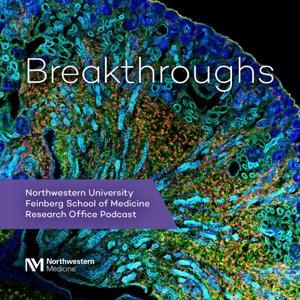


Uniting scientists and harnessing the power of the immune system to fight disease is at the heart of the new Center for Human Immunobiology at Northwestern University Feinberg School of Medicine.
Stephanie Eisenbarth, MD, PhD is leading the new center, she is also the new chief of Allergy and Immunology in the Department of Medicine.
She discusses the variety of immunology research taking place within the new center and its goal of bringing a community of immunologists together to discover and translate innovative science into cures for immune-related diseases.
In recent years, Feinberg has launched several initiatives to augment human expertise with computational methods and advance the science of human health. Theresa Walunas, PhD, explains how she is using big data from electronic medical records in a variety of projects at Feinberg, from improving quality of care to identifying patients who could develop debilitating autoimmune diseases.
A celebrated molecular neuroscientist, Jeremy Nathans, MD, PhD, is responsible for landmark discoveries that have changed our understanding of how humans see the world. He is an investigator of the Howard Hughes Medical Institute and professor at Johns Hopkins University School of Medicine.
Cardiovascular disease (CVD) is the number one cause of death globally, and nearly half of all U.S. adults are currently at risk for heart attack and stroke. Hossein Ardehali, MD, PhD, is working to understand the role of iron and metabolic processes in cardiovascular disease and develop new therapies that target iron accumulation in people with CVD and many other chronic diseases.
Alfred George, Jr., MD, is a pioneer in understanding the mechanisms by which ion channel mutations cause a variety of inherited disorders, such as genetic epilepsy. He discusses his recent breakthroughs in the field and his optimism for future RNA therapeutics to treat rare genetic diseases.
Cell and Developmental Biology is a field that's integral to finding new therapies for a wide variety of diseases. At Feinberg, Lusia Iruela-Arispe, PhD, a vascular biologist, leads the Department of Cell and Developmental Biology as chair. In this episode, talks about her research and the future of cell-based treatments for diseases.
Providing evidence-based medical care to transgender and gender nonconforming youth has been a challenge in the past, as trans-related healthcare has long been understudied. Robert Garofalo, MD, MPH, discusses how gender-affirming care can improve the overall health and well-being of transgender and gender diverse children and adolescents. He also discusses his research on the short-term and long-term outcomes of gender-affirming medical treatments.
Nearly half of all patients with heart failure have preserved ejection fraction, or HFpEF, yet there is much that is unknown about HFpEF and how to best prevent it and treat it. Northwestern Medicine cardiologist, Sanjiv Shah, MD, leads the world's first clinical program dedicated to the study of heart failure with HFpEF. He discusses latest discoveries on the mechanisms of HFpEF and identifying therapeutic targets for it.
From the publisher's feed

90,525 Listeners

21,773 Listeners

43,358 Listeners

90 Listeners

6,430 Listeners

112,026 Listeners

5 Listeners

56,533 Listeners

0 Listeners

10,244 Listeners

33 Listeners

3,035 Listeners
8,140 Listeners

28,971 Listeners

1,586 Listeners

4,230 Listeners
7 Listeners

610 Listeners

12,543 Listeners