
Sign up to save your podcasts
Or

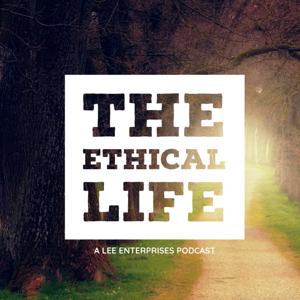

Episode 211: In an era when misinformation spreads faster than facts, what does it mean to live truthfully — and why does it matter?
Hosts Richard Kyte and Scott Rada discuss the complicated role of truth in public life, personal relationships and digital spaces.
The conversation, inspired by Kyte’s new lecture series, “The Search for Meaning,” begins with a look at how truth has been understood since the time of Socrates. The Greek philosopher famously urged his followers to “know yourself,” warning that an unexamined life is not worth living. Kyte argues that the practice of questioning — and being questioned — is more essential than ever in a society awash in self-deception and confirmation bias.
But the discussion doesn’t stay in the ancient world. Rada and Kyte turn to today’s headlines, examining the turmoil at the Centers for Disease Control and Prevention, where political pressures and conflicting claims about vaccines have left many Americans unsure who to trust.
“We should be able to figure out who’s right,” Kyte says. “But too often, we can’t.” The result, they argue, is a dangerous erosion of confidence in institutions central to democracy.
The episode also considers how technology magnifies the problem. Social media algorithms, designed to keep users engaged, may serve up baseball highlights to fans harmlessly enough. But when those same mechanisms steer people toward partisan content, politics becomes entertainment — with cheering and booing replacing thoughtful engagement.
“That’s not a spectator sport,” Kyte said. “It’s people’s lives.”
 View all episodes
 By Scott Rada and Richard Kyte


3.8
2323 ratings
Episode 211: In an era when misinformation spreads faster than facts, what does it mean to live truthfully — and why does it matter?
Hosts Richard Kyte and Scott Rada discuss the complicated role of truth in public life, personal relationships and digital spaces.
The conversation, inspired by Kyte’s new lecture series, “The Search for Meaning,” begins with a look at how truth has been understood since the time of Socrates. The Greek philosopher famously urged his followers to “know yourself,” warning that an unexamined life is not worth living. Kyte argues that the practice of questioning — and being questioned — is more essential than ever in a society awash in self-deception and confirmation bias.
But the discussion doesn’t stay in the ancient world. Rada and Kyte turn to today’s headlines, examining the turmoil at the Centers for Disease Control and Prevention, where political pressures and conflicting claims about vaccines have left many Americans unsure who to trust.
“We should be able to figure out who’s right,” Kyte says. “But too often, we can’t.” The result, they argue, is a dangerous erosion of confidence in institutions central to democracy.
The episode also considers how technology magnifies the problem. Social media algorithms, designed to keep users engaged, may serve up baseball highlights to fans harmlessly enough. But when those same mechanisms steer people toward partisan content, politics becomes entertainment — with cheering and booing replacing thoughtful engagement.
“That’s not a spectator sport,” Kyte said. “It’s people’s lives.”

91,241 Listeners
21,941 Listeners

43,847 Listeners

38,511 Listeners

43,589 Listeners

38,892 Listeners

27,055 Listeners
10,340 Listeners

7,696 Listeners
12,734 Listeners

113,475 Listeners

2,390 Listeners

16,488 Listeners
14,347 Listeners
10 Listeners

48 Listeners

16,571 Listeners
8 Listeners
4 Listeners

11 Listeners
9 Listeners