
Sign up to save your podcasts
Or

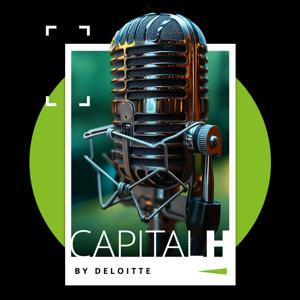


As the world grapples with the continued impacts of COVID-19, human capital leaders are at the helm, navigating their organizations through murky waters. As they face uncharted territory, they're banding together—for support, to share stories, and to strengthen their networks. In this episode, we take a closer look at how organizations are responding to the coronavirus, based on the stories our Bersin members are sharing with us, and with each other. Bersin analysts Pete DeBellis and Julie Duda join us to weigh in on what they're hearing from the front lines—including how to work effectively in a remote environment, how to handle performance management, and how to think about rewards in the face of a likely economic downturn.
Who do you trust? In this episode, we take a closer look the psychology underpinning perceptions and decisions related to trust, morality, and ethics with David Pizarro, Associate Professor of Psychology at Cornell University and Chief Science Officer at BEWorks. In a keynote address originally delivered at Nudgeapalooza 2019, David shares key findings from his research. He walks us through several real-world ethical dilemmas that uncover what makes us tick—and underscore the nuanced considerations that today's leaders face when making and communicating tough decisions.
Employee burnout is more than just work stress. Left unchecked, it can impact retention, organizational performance, and personal health and safety. In this week's episode, we sit down with Elizabeth Linos, Assistant Professor of Public Policy at the Goldman School of Public Policy, University of California Berkeley. Elizabeth shares key findings from her behavioral science research on the rise and repercussions of employee burnout. She also explains how practical interventions based on affirmation and social belonging can drive down burnout and absenteeism—and ratchet up engagement, decision making, and service delivery.
You may have heard of "calm technology"—the idea that technology should capture one's attention only in the periphery, with minimal invasive disruptions. But what happens when the concept is applied to learning? In this week's episode, we look at calm learning through two lenses, the individual and the organizational. Laurie Cameron, author of "The Mindful Day: Practical Ways to Find Focus, Calm, and Joy," discusses practical tips for creating calm learning conditions that can help us thrive in a variety of work environments. Our Deloitte Roundtable Panel keeps the conversation going by exploring the techniques and technologies organizations can use to bring calm learning into the "flow of work"—to boost performance and drive new opportunities.
The Capital H podcast is back—with fresh insights on putting humans at the center of work. In season four, our hosts David Mallon and Burt Rea continue their discussions with inspiring executives, thought leaders, and researchers who are at the forefront of change in work, the workforce, and the workplace. We'll explore the evolving trends driving the future of work, including the role of learning, disruptive leadership, and diversity and inclusion. We'll also step back to focus on our individual well-being, covering topics such as how to prevent burnout and why it's important to cultivate calmness in the midst of our busy lives. Join us each week as we explore the world of work from all its angles!
As the future of work continues to evolve, how can leadership orchestrate workforce and technology initiatives to support the organization's long-term strategic goals—while creating value for workers? The answer lies in redesigning jobs today while redefining work for tomorrow. In this special episode, we talk with Jeff Schwartz, Deloitte's US Future of Work leader, about the research we're conducting on this topic with MIT Sloan Management Review. Then, John Hagel and Maggie Wooll from Deloitte's Center for the Edge join to discuss three significant shifts that can redefine work—and explain why cultivating workforce capabilities like curiosity, creativity, and empathy could be the key that unlocks new value for organizations and employees alike.
The rise of technology is rapidly creating a new future of work. Not only are jobs being redefined, but entire professions are transforming as technology enables humans and machines to work together in new ways, giving rise to the "exponential professional." As this exciting future unfolds, the role of the actuary is changing dramatically with opportunities to take on dynamic new business roles. In this week's episode, Shawn Loftus, USAA Life Insurance Company's Chief Actuary and Senior Vice President, helps us explore the effects of these changes on the professionals themselves, and explains what skills an "exponential actuary" needs. Our Deloitte Roundtable keeps the conversation going by breaking down what an "exponential professional" looks like across industries, and the skillsets required to thrive in the fourth industrial revolution.
Learning was rated the top challenge in Deloitte's 2019 Global Human Capital Trends Report. How are universities aligning their curriculums with the learning needs of the future workforce? How are organizations reinventing their learning and development approach to promote learning in the flow of work? During this week's episode, we explore these questions and more. We're joined by Prashant Malaviya, senior associate dean of MBA programs and associate professor of marketing at Georgetown University. Later in the episode, you'll hear from Amy Titus, who leads Deloitte's Government and Public Services Learning Solutions practice, and Erin Clark, a managing director in Deloitte's Human Capital practice who focuses on learning.
Learning was rated the top challenge in Deloitte's 2019 Global Human Capital Trends Report. How are universities aligning their curriculums with the learning needs of the future workforce? How are organizations reinventing their learning and development approach to promote learning in the flow of work? During this week's episode, we explore these questions and more. We're joined by Prashant Malaviya, senior associate dean of MBA programs and associate professor of marketing at Georgetown University. Later in the episode, you'll hear from Amy Titus, who leads Deloitte's Government and Public Services Learning Solutions practice, and Erin Clark, a managing director in Deloitte's Human Capital practice who focuses on learning.
What is the relationship between macro-level labor trends and micro-level skills and workplace trends? How is the world of work being transformed by the rapid increase of cognitive technologies, such as artificial intelligence? These are among the questions we asked this week's guest, Morgan Frank, a postdoctoral associate at MIT's Media Lab. Frank shares insights from his research on the socio-economic consequences of technological change and discusses how the change will influence society and workers today. He calls out common misconceptions about the role of cognitive technology in today's world and weighs in on whether cognitive technologies could help resolve socioeconomic issues such as income inequality.
From the publisher's feed

385 Listeners

5,525 Listeners

1,455 Listeners
1,577 Listeners

138 Listeners
108 Listeners

111,764 Listeners

56,420 Listeners

33,561 Listeners
104 Listeners
81 Listeners

55 Listeners

57,791 Listeners

15,403 Listeners