
Sign up to save your podcasts
Or

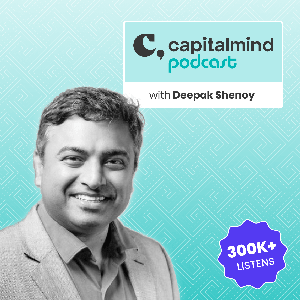


What happens when a company goes bankrupt? Why do investors buy their stocks that are headed to zero? In this episode, we explore how the Insolvency and Bankruptcy Code (IBC) has changed the game. Deepak explains the many nuances of current regulations and how they've evolved. We dive into examples such as Bhushan Steel, Sintex and Ruchi Soya - which we hope will give you clarity. Listen in and decide. Would you stay the hell away from such stocks, or start hunting for bargains?
---
Understanding Bankruptcy
Businesses are tough and the best ones survive. There are ample failure points for a business that can drive it to bankruptcy. One or a combination of factors such as economical, social, regulatory, political, geographical, etc can drive a business suddenly to the ground or induce a slow death. Such companies eventually stare at bankruptcy. We discuss -
- What is bankruptcy?
- Does everyone lose money when companies go bankrupt?
- Who gets what when the company is sold for parts?
---
Learnings from the Sintex saga
Sintex Industries, the Ahmedabad-based company, that boasts of tanks covering the skyline of most cities of India, was dragged to bankruptcy courts after it defaulted on a meager payment of ~15.4 crores towards principal and interest on its NCDs. This was the final nail in the coffin for the firm that had mismanaged its finances for too long. We discuss -
- What Sintex does as a business
- How the company was re-structured (through demerger)
- How its issues snowballed to lead the company into IBC
Eventually, the IBC ( Insolvency and Bankruptcy Code) tribunal was able to keep the company running and also got a successful bidder to buy out the stressed company. That's good news for almost all of its stakeholders. Except for its shareholders who will lose all of their equity in the company. So they get nothing. Zero.
---
So How does IBC work? Why do existing shareholders lose everything?
The short answer: Because existing shareholders contribute nothing to the upcoming growth of the company, they get nothing. The company that these existing shareholders bought into eventually went bankrupt. So the story for existing shareholders ends here with a big zero in their hands. Sounds unfair but that's how it is. We discuss -
- How does the IBC process work?
- Every existing stakeholder (debtors, employees, vendors) gets some part of the new entity. The current shareholders should also get a piece no?
- What actually happened to Sintex shares?
- How did things use to happen before the IBC?
There are a lot of examples discussed in this section that explain different aspects of the bankruptcy process and also highlight how each bankruptcy case is different.
---
But, existing shares of Ruchi Soya went up "to the moon" while it was going through bankruptcy
All bankruptcies are different and unique. Ruchi Soya was trending on social media recently because the company came back strongly from bankruptcy and its investor (Patanjali) seems to have made a killing on its investment. There's lots more to the whole revival story. Deepak explains -
- How regulatory rules change impacted the Ruchi Soya bankruptcy process
- The bidding by Adani and Patanjali
- Interestingly, they kept 1% of the company listed. Why?
- How does Patanjali make Ruchi Soya operating cash flow positive?
- The positive impact of Covid
- Why is a company that makes only 800 Crores has a market cap of 31000 crores?
---
Does investing in distressed companies work?
We all love investing at its theoretical best - buy extremely low and sell high. We also keep repeating Buffett's quotes like "Buy when there is blood on the street". Distressed companies feel like a value buy all time but they are almost always value traps or falling knives or whatever. We briefly touch upon this before we wind up the podcast -
- A quick reference to Buffett's investing in the Salomon brothers
- Brookfield & Hotel Leela deal - distress investing
Let us know if you enjoyed our podcasts on Twitter or write to us at premium [at] capitalmind [dot] in!
There is a lot to unpack about this new digital currency RBI is talking about. Deepak and Shray built up the discussion by pondering over successive questions. Deepak takes us through how cryptocurrencies currently work. This sets up the context to the current ways of handling digital currencies and we move on to discuss the RBI-backed digital currency - Central Bank Digital Currency (CBDC).
Key Points
As Indians, we discuss Inflation only during elections which makes it less of transient and more of seasonal!
But, as investors, we discuss inflation a little more. The latest reason for it is the hammering of growth stocks across markets which is blamed squarely on inflation.
In this podcast, we understand the practical concept of Inflation with examples, its impact on your investments, its impact on our daily lives, and how it impacts different people differently.
We promise, thinking of inflation in this podcast will be much more interesting than what you experienced in your economics class.
How do High Net Worth Investors invest SO much in IPOs? Nykaa's IPO saw Rs. 1,00,000 crores invested by the well heeled Indian investors. But not much of it is their own money - they borrow it. In this episode, Deepak and Shray unravel the dynamics of an IPO application for HNIs. From the rules of allocation, the big business of IPO funding, how HNIs can borrow 100X their money, systemic risks, how grey market premium (GMP) works, the role of regulators and the road ahead. Read more here
On today's show, Shray asks Deepak about how to make sense of the past two years in the markets, macroeconomics, and the seeming irrationality of it all. They also talk about how to look at the year ahead.
Highlights
Read more at https://capitalmind.in
With technology comes great responsibility, says SEBI, as it attempts to regulate the algorithmic trading markets that have just started to evolve in India. The concept of "API" trading, through Application Programming Interfaces is the standard in the web and app-based world, but SEBI doesn't want you to manage your own money programmatically. Or, worse, to give it to someone else who is "unregulated" to manage your money through an algorithm either.
In this episode we discuss SEBI's recent consultation paper on algorithmic trading and how it impacts you. What roles do algorithms play in managing your money and will a program be investing on your behalf in the near future.
Read more at https://capitalmind.in!
How does P2P lending work in India? How safe is P2P lending? Deepak and Shray explore how the industry works, the risks involved and whether the returns are enough to justify the risks.
Summary
Read the full transcript.
Episode 41 - Deepak sits down with returning guest Ruchir Kanakia, the founder of the insurance distribution company OneAssure to discuss our favorite insurance product - term insurance.
Summary:Click here for the full transcript.
Episode 40 and we're speaking to the fintech firm that just raised 40 Million dollars last week - Smallcase! Deepak sits down with co-founders Vasanth and Anugrah to talk about creating a new way to invest in stocks, investment lessons from the pandemic and what's up next from the Smallcase team.
From the publisher's feed

156 Listeners

11 Listeners

55 Listeners

38 Listeners

14 Listeners
1,067 Listeners

681 Listeners
193 Listeners
10 Listeners
94 Listeners

0 Listeners

4 Listeners
10 Listeners
3 Listeners

0 Listeners