
Sign up to save your podcasts
Or

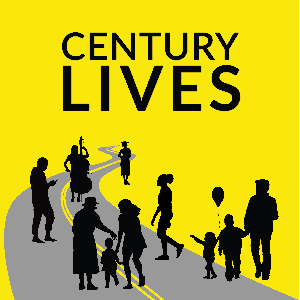


In our last two episodes of the season, we explore the challenges of concentrated urban poverty, and the depressive effects it has on health and life expectancy. And we examine two different approaches that might remedy it.
In episode 5, we tell a story about staying. We visit Woodlawn, a neighborhood in Birmingham, Alabama, that is literally on the wrong side of the tracks. We learn how health improves when a community that long suffered from disinvestment comes together to rebuild from within.
Do the ladies of the Quilt Guild, the short order cooks at the City Pool Hall, and “Pumpkin Joe” hold the secrets to longer life? In episode 4 of Century Lives: Place Matters, we travel to Eastern Kentucky: a region marked by drug use, job loss, and life expectancy decline. But these folks live in Wayne County, a bright spot where life expectancy exceeds that of neighboring counties by four years. In this episode, we investigate the role of weak ties and social cohesion in community health.
What could housing possibly have to do with life expectancy? Quite a bit, actually. In episode 3 of Century Lives: Place Matters, we travel to the Bronx: the least healthy county in New York. But an affordable, working class community there called Co-op City has among the highest life expectancies in the entire city. Co-op City is also the nation’s biggest NORC, or naturally occurring retirement community. Join us as we explore the connections between affordable housing and health, and investigate why the residents of Co-op City continue to stay there, even as they age.
If there's one thing we know about life expectancy in the US, it's that wealthy communities have long life expectancies and poorer communities have shorter life expectancies. But some poor communities far exceed their peers in terms of health outcomes and length of life. Experts will tell you that “place matters"—but they can’t tell you exactly why.
In episode 2 of Century Lives: Place Matters, we explore the recent history of life expectancy in America. The United States is exceptional, and not in a good way: we are one of the wealthiest nations in the world, but our life spans lag far behind our economic-peer nations. In ”American Exceptionalism,” we consider reasons that life spans in the U.S. aren’t as long as they could be—and consider ways we can all live longer.
If there's one thing we know about life expectancy in the US, it's that wealthy communities have long life expectancies and poor communities have shorter life expectancies. But some poorer communities far exceed their peers in terms of health outcomes and length of life. Experts will tell you that “place matters"—but they can’t tell you exactly why.
In Episode 1 of Century Lives: Place Matters, we visit Presidio County, Texas. It’s one of the poorest places in America and one of the top ten longest-lived counties in the nation. We explore the extraordinary story of Presidio—how the community flourishes despite its poverty and distance from health care, and what the rest of us can learn from its longevity.
Do you own a smart device? You know: an Android, an Alexa, an Apple Watch? If you do, you’re a part of the Internet of Things—and you’re going to need computer scientist Bashima Islam. A 2022 recipient of Forbes 30 Under 30 in Science, she focuses on making batteries more energy efficient: crucial work as smart devices increasingly creep into our lives. In the final episode of Century Lives: the Next 50, Bashima sits down with host Ken Stern to discuss the trillion devices in our future, the state of women in science in her native Bangladesh, and, of course, what she’d bring into her afterlife.
Half of Generation Z—people who are now between 10 and 25 years old—could live to be 100. Their extended futures are shrouded by climate change, pandemics, and racial and social disparities. But according to recent polling from the Pew Research Center, Gen Z is the most optimistic generation yet. In “Century Lives: the Next 50,” host Ken Stern talks to inspirational leaders in their 20s and 30s about what they’ve learned from previous generations, how they’re working to improve the world they’ve inherited, and how they imagine their super-sized futures will unfold.
In Episode 4, we meet water engineer and environmental justice advocate Siddhartha Roy. Now a research scientist at the University of North Carolina’s Water Institute, Siddhartha was an integral part of exposing the Flint water crisis in 2015. He chats with host Ken Stern about growing up in India, the future of water equity, and his real-life fight with the Hulk.
Half of Generation Z—people who are now between 10 and 25 years old—could live to be 100. Their extended futures are shrouded by climate change, pandemics, and racial and social disparities. But according to recent polling from the Pew Research Center, Gen Z is the most optimistic generation yet. In “Century Lives: the Next 50,” host Ken Stern talks to inspirational leaders in their 20s and 30s about what they’ve learned from previous generations, how they’re working to improve the world they’ve inherited, and how they imagine their super-sized futures will unfold.
Half of Generation Z—people who are now between 10 and 25 years old—could live to be 100. Their extended futures are shrouded by climate change, pandemics, and racial and social disparities. But according to recent polling from the Pew Research Center, Gen Z is the most optimistic generation yet. In “Century Lives: the Next 50,” host Ken Stern talks to inspirational leaders in their 20s and 30s about what they’ve learned from previous generations, how they’re working to improve the world they’ve inherited, and how they imagine their super-sized futures will unfold.
In Episode 2, we meet Sophie Beren: the founder of the online platform The Conversationalist. There, members of Gen Z with divergent opinions gather to discuss political and social issues. It’s a tall task but, as a self-described “unifier,” Sophie is up to it. She chats with host Ken Stern about growing up as an outsider in Kansas, finding common ground on paramount issues…and salad.
Tune in to Century Lives: the Next 50 to hear more!
Half of Generation Z—people who are now between 10 and 25 years old—could live to be 100. Their extended futures are shrouded by climate change, pandemics, and racial and social disparities. But according to recent polling from the Pew Research Center, Gen Z is the most optimistic generation yet. In “Century Lives: the Next 50,” host Ken Stern talks to inspirational leaders in their 20s and 30s about what they’ve learned from previous generations, how they’re working to improve the world they’ve inherited, and how they imagine their super-sized futures will unfold.
In Episode 2, we meet Dr. Raven Baxter, also known as “Dr. Raven the Science Maven.” She’s a molecular biologist and a science communicator. More specifically, she’s a science rapper. She chats with Ken about following in her grandparents’ footsteps to increase representation in science—and how she makes the field more accessible through her hip hop music videos.
Tune in to “Century Lives: the Next 50” to hear more!
Up to 50% of Gen Z—people who are now between 10 and 25 years old—could live to be 100. Their extended futures are shrouded by climate change, pandemics, and racial and social disparities. But according to recent polling from the Pew Research Center, Gen Z is the most optimistic generation yet. In “Century Lives: the Next 50,” host Ken Stern talks to inspirational leaders in their 20s and 30s about what they’ve learned from previous generations, their efforts to improve the world they’ve inherited, and how they imagine their super-sized futures will unfold.
In Episode 1, we meet Justin Brezhnev—also known as “Hacker Cat.” He’s the founder and executive director of Hacker Fund: a non-profit that connects underserved students with computer programmers, so kids can learn to code. Justin chats with Ken about how he’s broken down barriers to education, the drastic changes within his family over recent generations, and what it means to live a worthy life.
Tune in to “Century Lives: the Next 50” to hear more!
From the publisher's feed

32,046 Listeners

30,701 Listeners

43,359 Listeners

11,616 Listeners
3,154 Listeners

87,116 Listeners

111,799 Listeners
9,070 Listeners

8,001 Listeners
6,068 Listeners
3,612 Listeners
2,018 Listeners

15,882 Listeners

595 Listeners
1,620 Listeners