
Sign up to save your podcasts
Or

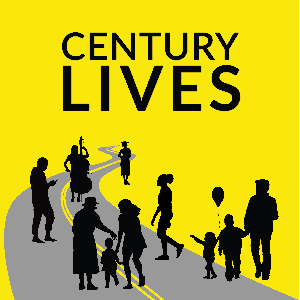


People 55+ are reinventing life post-retirement, from its traditional image to a time for exploring second chapters and, especially, opportunities that bring meaning, purpose, and community. What does this new phase of the work experience look like and how can more of us find inspiration as we work longer?
People 55+ are remaking what it means to "retire" without following the traditional roadmap. Instead of rest and relaxation, they are pursuing new channels to build on their skills, grow their experiences and contribute to their communities in a meaningful way. In this episode of Century Lives: The 60-Year Career, we examine how this generation - one that's living longer, staying active and determined to ignore the old roadmap - is redefining this phase of life. We talk with people who have thought about and are living post-retirement careers including an art gallery director who found a second calling as a letter writer for people at end of life and the founder of a nonprofit supporting “encore careers.” Guests are: Aaron Benanav, Postdoctoral Researcher at Humboldt-Universitat zu Berlin; Frish Brandt, President and Partner at the Fraenkel Gallery; David Blustein, Professor of Counseling Psychology at Boston College; Marc Freedman, Founder and CEO of Encore.org; and Sandra Harris, President of AARP Massachusetts.
More than three-quarters of older workers experience ageism in the workplace, yet changing demographics and tight labor markets make this employee base increasingly critical to American businesses. We examine the obstacles faced by older workers and how some companies are trying to connect with them.
If longer careers truly are our future, then American business will need to overcome its aversion to older workers. Our demographic course is already set: Due to increased longevity and declines in birth rate, older workers will become essential to the economy in the coming years. Yet according to AARP, 78% of workers 50+ saw or experienced ageism in 2020 and countless more didn’t even get that first interview. In this episode of Century Lives: The 60-Year Career, we examine how this undervalued segment of the workforce will be a key building block of the economy of the future and highlight innovative company-based solutions to embrace them. Guests are: Ashton Applewhite, activist and author of This Chair Rocks, A Manifesto Against Ageism; Lena Barkley, Operations Manager of Workforce Initiatives at CVS Health; Ronald Lee, Professor of the Graduate School in Demography and Economics at University of California Berkeley; Barbara Spitzer, Managing Director at Accenture; and Elizabeth White, aging solutions advocate and author of 55, Underemployed, and Faking Normal.
Over 100 million Americans - 62% - pursue careers without having a college degree; for them, landing good-paying, stable jobs has become increasingly difficult. What's behind employers' increasing demand for a diploma, what are new alternative pathways for these workers to secure employment and how do we ensure that they have more opportunities for longer, successful career equality?
When exploring longer lives and longer careers, it can be easy to focus solely on white-collar careers and the benefits that come with those opportunities. Yet nearly 2/3 of Americans are seeking work without the credentials of a college degree – a career track that often translates to low pay, job instability and persistent inequality, a situation made worse with the pandemic. The majority of new jobs added to the American economy over the past two decades have required a degree: Is the knowledge acquired in college so critical or are employers taking a cheap, easy way to identify workplace skills that can be learned elsewhere? In this episode of Century Lives, we examine the forces that have created this environment, alternative pathways to a good job and how more people can access careers that will provide them security through later life. Guests are: Birkti Asmerom, Software Development Student at Year Up D.C.; Anthony Carnevale, Director of the Georgetown University Center on Education and Workforce; Gerald Chertavian, Founder and CEO of Year Up; Nicole Escuadro, Director of Academics at Year Up D.C; and Derrick Ramsey, Former Secretary of Education and Workforce for the State of Kentucky.
Gig-based work has exploded over the last decade, accounting for almost all of America’s job growth. Is it a more flexible, personalized work experience or cost-cutting, exploitation tactic? And what should change so it’s fair to all?
Gig-based work represents virtually all of America’s job growth in the last decade. To some, it’s a solution for a more flexible, personalized work experience providing more time for other commitments. To others, however, it’s a means for companies to shed costs and exploit workers. In this episode, Century Lives: The 60-Year Career explores the many sides of this work phenomenon and, if it’s sticking around, what can be changed so that greater flexibility doesn’t come at too high of a price. Guests are: Sergio Avedian, Senior Contributor at the Rideshare Guy; Veena Dubal, Professor of Law, University of California, Hastings College of the Law; Paul Oyer, Professor of Economics, Stanford Business School; and Alexandrea Ravenelle, Assistant Professor of Sociology, University of North Carolina, Chapel Hill and author of Hustle and Gig.
With job tenures declining and job search technology booming, the traditional career ladder has vanished. How the new culture of job-hopping has created challenges and opportunities for workers and employers.
The days of the decades-long single-employer career ladder are largely gone, a victim of factors ranging from aggressive job cutting by employers and the decline in union protections to reducing company loyalty and a thriving online job search industry fueled by technology. The defined career path has been replaced by a squiggly one. In this episode of Century Lives, we explore the reality of the 25-job career faced by Gen Z and Millennial workers by talking with economists, job seekers and recruiters; we even eavesdrop on a career counseling session. Guests include Sarah Ellis, podcaster and career coach; Jack Kelly, CEO of Wecruitr; Julia Pollak, chief economist at ZipRecruiter; and Timothy Taylor, managing editor at the Journal of Economic Perspectives.
Why do Americans work so much - more than their counterparts in almost every other developed country - and with the pandemic sparking a national crisis of purpose, how can we redefine our work/life balance to be healthier?
Americans spend more than 90,000 hours working over a lifetime - 10% more than our Canadian neighbors and 25% more than workers in Germany. How did this happen, why did our national assumptions and beliefs around work crash during the pandemic and what can we do to create a different work/life balance that's healthier? In our second episode of the season, we dive into America's history to understand how this work ethic emerged and why it is suddenly undergoing unprecedented change. From the Puritans to Horatio Alger, we navigate the cultural phenomena leading us to modern day. We also examine the decline in economic mobility that challenged this national mindset, and how we can now build different yet viable relationships with work. Guests are David Blustein, Boston University; Jared Rubin, Chapman University; and Aaron Benanav, Humboldt-Universitat zu Berlin.
What's the future of work if you're a college grad about to embark on a 60-year career? How to navigate the “big messy process” of charting a future in an uncertain world and the unique program that offers a strategic approach for all ages.
Longer lives means longer careers. The second season of Century Lives looks at the arc of the new work lifespan and how to make it better. In the new season's first episode, we’ll hear students' thinking about and planning for their future careers as they consider the shifting landscape of work and the likelihood of an unprecedented number of years in the workforce. We explore the idea behind Bill Burnett’s innovative Stanford course Design Your Life, which encourages design thinking as a tool to approach career questions and viable for any age, particularly in periods of transition and uncertainty.
In the final installment of our four-episode bonus series, we head to Germany to get a glimpse of America’s demographic future. Germany is now one of a small number of “super-aged” societies in which more than 20% of the population is 65 and older, but many other countries, including the US, are expected to join the ranks of the super-aged by the end of this decade. Many years ago, Germany recognized the coming “demographic time bomb” and its implications for its labor force. Over the last quarter century, both the national government and many companies, such as BMW, have retooled to better support a more age diverse workforce. To find out more about Germany’s efforts to support older workers, we spoke with Ulrich Walwei, vice director of Germany’s Institute for Employment Research, and with Hannes Zacher, chair for work and organizational psychology at Leipzig University. Together, they lay out a road map for how the United States might better address its increasing problems with losing older, experienced workers from the workforce.
The math is unavoidable: an aging country needs to attract, support, and retain aging workers. But burdened by workplace ageism and an inconsistent response to the Covid criss, the U.S. is losing much needed older workers at a record pace. In the third installment of our four-episode bonus series, we tackle this problem head-on by looking at Singapore’s strategy for providing pathways for longer careers. We speak with Aubeck Kam, Permanent Secretary of the Ministry of Manpower in Singapore, about the country's reemployment system. We also talk to Kung Teong Wah, cluster general manager at two Singapore luxury hotels, about the details of employing and retaining older workers.
As the pandemic recedes, a battle is slowly brewing in American companies: bosses want their employees back in person, and workers are resisting a return to the office. Is that dynamic happening in other countries? Not in Finland, a country that has long fostered a highly flexible work culture. In the second installment of our four-episode bonus series, we speak with Hertta Vuorenmaa, Research Director for the Future of Work program at Aalto University, and Tuomas Syrjanen, co-founder of the Finland-based digital innovation company Futurice, in an effort to discover the connection between Finland’s working culture and its status as the happiest nation on earth.
From the publisher's feed

32,046 Listeners

30,701 Listeners

43,359 Listeners

11,616 Listeners
3,154 Listeners

87,116 Listeners

111,799 Listeners
9,070 Listeners

8,001 Listeners
6,068 Listeners
3,612 Listeners
2,018 Listeners

15,882 Listeners

595 Listeners
1,620 Listeners