
Sign up to save your podcasts
Or



2021 may be remembered as the year of the Great Resignation, when almost 48 million Americans left their jobs. The Great Resignation is not solely an American phenomenon, but while the pandemic hit every country, the Great Resignation did not. We wanted to find out why not.
Our second season is premiering on May 4th, but every two weeks until then we will be releasing a bonus episode. During this four-episode arc, we will travel around the world to explore different approaches to work and different reactions to the pandemic. First up is Iceland, home of glaciers, the Northern Lights, and the first widely embraced shortened work week. Jack Kellam, co-author of the report “Going Public: Iceland’s Journey to a Shorter Working Week,” tells us about the impact of this change.
Ever heard of a 3-stage life? Chances are you’ve been seeking to live it: education in the first quarter of your life, then work for 40 years, and finally a blissful retirement. But Andrew Scott, an Economist at London Business School, says that’s likely not the model most of us will be using anymore. Welcome to the multi-stage life, where yes–you work for closer to 60 years–but you get more choices: pick from education, work and rest at any stage in your life, and have the flexibility to define what work means for you.
After WWII, four-year college education became democratized and over the years the four-year degree has increasingly become the defining educational requirement for many careers.. But is a degree we’re meant to earn in our early 20s really equipped to set us up for life? In this episode we hear from Mitchell Stevens, a professor of Education at Stanford University, about the importance of lifelong learning in an era of longer career, and how higher education should be redefined to be more effective and more equitable.
Before COVID, virtually all medicine in this country was practiced face-to-face, but the pandemic has upended, at least temporarily, where and how we interact with our doctors. Nirav Shah, a professor at Stanford Medicine, tells us how this change in practice could be the beginning of a healthcare revolution, one in which technology provides the basis for a preventative culture of medicine and one that provides broader and more equitable access to care.
In America, we’re taught to love our families, but not too much. For decades, we’ve held up the nuclear family as an idyllic model. But as we live longer, could our extended families hold the secret to maintaining our quality of life? Donna Butts, Executive Director of Generations United tells us why that might be the way of the future… and even of the present.
Why in some sections of Chicago does life expectancy easily exceed that of Japan, the longest lived country on earth, while just a few neighborhoods over, life expectancy matches that of Equatorial Guinea, one of the shortest lived societies on earth? Steven Wolf, a professor at Virginia Commonwealth University and an expert in the social determinants of health, tells us how our cities should be reengineered for longer, healthier and more equitable lives. And he also tells us why highways matter.
Over the last century, life expectancy in the US has increased by 25 years, but many of our rules around work, learning, and retirement remain unchanged over that time. Laura Carstensen, the founding director of the Stanford Center on Longevity, joins us to talk about a New Map of Life and how a new, more flexible, life course could better support longer, healthier and more productive lives. We are also joined by three generations of the Rarey family: Dick, age 100, Rich age 60, and Adam age 22, as they talk about how life has changed just over the span of three generations and how it might change for the next three.
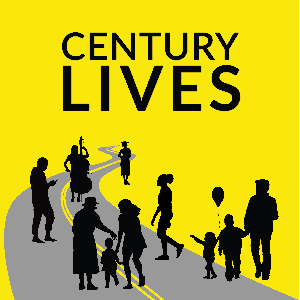
Do rules created when most people lived only to 50 or 60 still make sense when more and more people live to 100? Longer lives are, at once, among the most remarkable achievements in all of human history and the greatest challenge of the 21st century. How can we ensure that our lives are not just longer, but healthy and rewarding as well? From the Stanford Century on Longevity, Century Lives is here to start the conversation. In our first season we ask how COVID-19 has changed the way we live...and how that impacts our longevity. Join us as we venture into the world of education, work, healthcare and more to see how our future as a population of centenarians has already started.
From the publisher's feed

32,046 Listeners

30,701 Listeners

43,359 Listeners

11,616 Listeners
3,154 Listeners

87,116 Listeners

111,799 Listeners
9,070 Listeners

8,001 Listeners
6,068 Listeners
3,612 Listeners
2,018 Listeners

15,882 Listeners

595 Listeners
1,620 Listeners