
Sign up to save your podcasts
Or



Maria was watching the Benito Bowl when an unexpected artist came on: the one and only Ricky Martin. He sang one of Bad Bunny’s most political, anti-colonial anthems. Maria knew this was a touchstone moment — the artist who most represented the ‘90s Latin Boom wasn’t performing to a white audience for recognition or acceptance; he was singing a song of resistance, in Spanish. And then Maria’s 11-year-old son said, “Who’s that???”
Today, Maria revisits the importance of the queer icon’s career and life, and how he had to live “La vida loca” so that Bad Bunny could do “Lo que le da la gana.”
Follow Muy Excited with Maria Garcia for more episodes.
See omnystudio.com/listener for privacy information.
The 1960s brings social and political change to the world and to New York City, where a young Johnny Pacheco keeps people dancing with his orchestra and charanga music. The Dominican musician is also going through a divorce and his lawyer, Jerry Masucci, happens to be a fan of Johnny’s music. The two form a music partnership that will forever change music. They call their music label Fania Records.
Listen to Our Thing: The Birth of Salsa in Nueva York out now wherever you listen to podcasts.
See omnystudio.com/listener for privacy information.
The Men’s World Cup is coming to our continent – and to this country. So we’re using this huge event to dive deep into what soccer means in the United States with a new podcast called “American Futbol.” We hear from immigrants all across the country for whom soccer is a touchstone, but who’ve also woven the sport into American culture and life. And we go back to the 90’s, to the very first time the World Cup came to the United States. There was Oprah, there was O.J., and it changed soccer in the U.S. forever. FollowAmerican Futbol and listen to new episodes every Wednesday.
See omnystudio.com/listener for privacy information.
The Futuro Studios podcast, La Brega, returns for its third season. In Season 3, La Brega shares stories of Puerto Rico’s champions. They take us to the ballfields and cultural battlegrounds where carrying the flag takes on even more meaning. You’ll meet fighters who have represented Puerto Rico in courtrooms and in boxing rings, and icons who have worn Puerto Rico on their sashes and their jerseys. La Brega asks: What do we learn about Puerto Ricanness by spending time with our champions?
La Brega: Season 3 is out everywhere on 2/3. New episodes every Tuesday on the La Brega: Campeones feed.
See omnystudio.com/listener for privacy information.
Candido was working at a car wash when ICE agents pulled up in white vans, blocked all the entrances, and took him and his coworkers. The agents collected their phones but didn’t notice Candido’s Apple Watch right away. He used it to call his family, who otherwise wouldn't have known what happened to him.
We hear his story, and then, Maria Hinojosa speaks with Cal Matters investigative reporter Sergio Olmos about a new tool that exposes ICE’s targeted strategy of terror against Latinos in California.
Latino USA is the longest-running news and culture radio program in the U.S., centering Latino stories and hosted by Pulitzer Prize-winning journalist Maria Hinojosa.
Follow the show to get every episode.
Follow us on TikTok and YouTube. Subscribe to our newsletter.
See omnystudio.com/listener for privacy information.
In the final episode this season, Peniley reflects on the throughline of the Elián story: family separation.
In an extended interview with Cuban American historian Ada Ferrer, we share her family’s story of separation and reunification. Her mom left Cuba when she was pregnant with Ada in 1963, soon after the revolution. They left behind her 9-year old brother, Poly, or Hipólito, playing in the yard without telling him they wouldn’t be returning. She tells us how years later he would eventually come to the U.S. too, and be reunited, but that the wound of abandonment would prove deep.
To read Ada's family story, here is her New Yorker article, My Brother's Keeper.
This season's cover art by Ranfis Suárez Ramos.
See omnystudio.com/listener for privacy information.
After taking you through the Elián González story, we’re sharing some reporting and interview content that didn’t make it into our narrative series.
This week, Peniley and producer, Tasha Sandoval, sit down to reflect on their experiences reporting on this project, particularly through their perspectives as Cubans: Peniley, a Cuban who grew up in Cuba, and Tasha, a second-generation Cuban-American.
During the Elian saga, the Cuban American community in Miami gained a negative reputation as “crazy,” something that came up in several interviews. We hear from writer Vanessa Garcia and former Executive Director of the Cuban American National foundation, Joe Garcia, to reflect on how this perception of “Crazy Cubans” and that the community lost the narrative, may have reverberations to this day.
This season's cover art by Ranfis Suárez Ramos.
See omnystudio.com/listener for privacy information.
Peniley tells us the story of Elián after he returned to Cuba, where he studied engineering, fell in love and had a daughter. Back in his country, Elián became a favorite of Fidel Castro, much to the chagrin of Miami Cubans. Peniley reflects on Elián's journey and her own relationship with Cuba. She speaks to her children about her and Elián's Cubanismo.
This season's cover art by Ranfis Suárez Ramos.
Original Material Appeared In:
Al Jazeera English
AP Archive
Belly of The Beast
CNN's "Elián: The Remarkable Story of A Cuban Boy's Journey to America"
CNN
Fidel Castro Ruz, Soldado de las Ideas
La Caja de Pandora
See omnystudio.com/listener for privacy information.
Elián and his dad went back to Cuba in June 2000, just four months before the US Presidential election between George W. Bush and Al Gore. Miami Cubans, hurt and angered by President Bill Clinton’s handling of the Elián case, resolved to vote against the Democrats and for the Republicans in what was called el voto castigo — the punishment vote.
To understand the political influence of Cuban-Americans, the stakes, and lasting impact of this moment, producer Tasha Sandoval takes the mic. We meet Tasha’s grandmother, an 87-year-old Miami Cuban, and learn how her story as a first wave Cuban exile informs her perspective.
This season's cover art by Ranfis Suárez Ramos.
Thanks to These Archival Sources:
Lynn and Louis Wolfson II Florida Moving Image Archives
Original Material Appeared In:
ABC News
AP Archive
CBS News
CNN Evening News
C-SPAN
Democracy Now!
HBO's "537 Votes"
Museum of the Moving Image
National Archives
NBC Evening News
NBC News
PBS NewsHour
Retro Report
The New York Times
Voice of America
YouTube/Plopsmom
See omnystudio.com/listener for privacy information.
In the aftermath of the raid, agents brought Elián to Washington D.C. where father and son would finally reunite. But Elián and his dad were stuck in the United States while the court case played out — and while Miami burned with rage at what many Cuban Americans saw as a deep betrayal by the federal government.
Peniley reflects on the power of reunions. As Elián was reunited with his father, his cousin Marisleysis was in despair. And in April 2000, Peniley had just turned 13 years old, still separated from her own father as a result of US and Cuban policies.
This season's cover art by Ranfis Suárez Ramos.
Thanks to These Archival Sources:
Lynn and Louis Wolfson II Florida Moving Image Archives
Original Material Appeared In:
ABC Evening News
AP Archive
Belly of The Beast
CNN Evening News
CNN's "Elián: The Remarkable Story of A Cuban Boy's Journey to America"
Cubadebate
C-SPAN
MSNBC
NPR's "All Things Considered"
See omnystudio.com/listener for privacy information.
From the publisher's feed
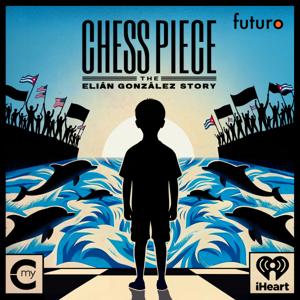
At the turn of the millennium, a five-year-old boy from Cuba found off the Florida coast on Thanksgiving became the most talked about child in America. Elián González had left Cuba with his mom and a dozen other migrants, trying to make it to the U.S. but on the way, the boat capsized. Elián’s mother drowned. Before she did, she tied her child to an inner tube, saving his life.
Relatives in Miami — Cuban exiles — took the boy in. His father in Cuba wanted him back. The ensuing international custody battle over Elián González became its own mini Cold War, pitting Cuban exiles in Miami against supporters of Castro’s regime on an island just 90 miles away.
The fight over Elián’s future came down to neighbor against neighbor, family against family. Now, 25 years later — we revisit his story through the voices of people who lived it firsthand.
________________
Want to support our independent journalism? Join Futuro + for exclusive episodes, sneak peaks and behind-the-scenes chisme on all our latest podcasts. www.futuromediagroup.org/joinplus.

37,658 Listeners

19,038 Listeners

10,425 Listeners

369,618 Listeners

15,370 Listeners
282 Listeners

27,290 Listeners

46,901 Listeners

4,560 Listeners

4,370 Listeners
1,554 Listeners

100 Listeners
123 Listeners

113 Listeners
3,424 Listeners

2,020 Listeners

250 Listeners
191 Listeners

8,387 Listeners

1,400 Listeners
5,397 Listeners
27 Listeners

507 Listeners
130 Listeners

284 Listeners
20 Listeners

8 Listeners

87 Listeners
45 Listeners

475 Listeners

22 Listeners

2 Listeners
8 Listeners

1,754 Listeners