
Sign up to save your podcasts
Or

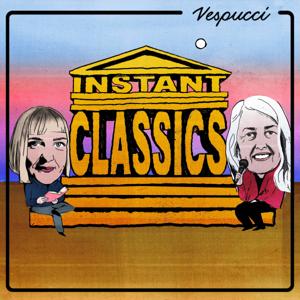

For many years, Cleopatra and Mark Antony lived a life of extravagance and passion - or so we’re told. In this episode, Mary and Charlotte look at what happened next. Mark Antony, with Cleopatra, met their enemy Octavian in a sea battle off the coast of Greece - and lost. The Battle of Actium was a turning point for Rome. After this moment, Octavian rebranded himself as Emperor Augustus, bringing an official end to many centuries of republican rule.
Rather than face capture and humiliation, both Antony and Cleopatra took their lives. The story of their final days survives through Plutarch, but how much of this official Roman version can we trust? Was Cleopatra really an exotic temptress who seduced Mark Antony into treason? And did she really kill herself with a poisonous snake? Accounts of her death are so tied up in the wider propaganda legitimising Augustus’ rise to Emperor that it’s impossible to know what really happened.
Soon after her death, she began to haunt the imagination of writers and artists. Mary and Charlotte believe she probably inspired the figure of Dido of Carthage in Virgil’s Aeneid, written only a decade or so later. The North African queen who takes her life for love of a Roman. But Virgil was by no means the last to take inspiration from her story, as we will be discovering in the next episode….
Mary and Charlotte recommend some further reading:
The poem by Horace is his Odes 1.37 (Nunc est bibendum, “Now is the time for drinking”) with a decent translation online.
(Charlotte's school song, oddly based on this poem, began “Nunc canendum, nunc laetandum” – “Now is the time for singing, now is the time for rejoicing,” all prime examples of gerundives of obligation, for the Latin nerds)
Maria Wyke (who we will meet later in this Cleopatra series, talking about Cleopatra movies) explores the propaganda of the emperor Augustus and the figure of Cleopatra in this article available online: https://discovery.ucl.ac.uk/id/eprint/10143408/1/Augustan%20Cleopatras.pdf
And more on Augustan propaganda: https://cleopatradigitized.wordpress.com/cleopatra-and-augustan-propaganda-after-the-battle-of-actium/
The links between Dido and Cleopatra are discussed here: https://womeninantiquity.wordpress.com/2020/11/16/cleopatra-and-dido/
@instaclassicpod for Insta, TikTok and YouTube
@insta_classics for X
email: [email protected]
Instant Classics handmade by Vespucci
Producer: Jonty Claypole
Video Editor: Jak Ford
Theme music: Casey Gibson
Learn more about your ad choices. Visit podcastchoices.com/adchoices
 View all episodes
 By Vespucci

4.9
153153 ratings
For many years, Cleopatra and Mark Antony lived a life of extravagance and passion - or so we’re told. In this episode, Mary and Charlotte look at what happened next. Mark Antony, with Cleopatra, met their enemy Octavian in a sea battle off the coast of Greece - and lost. The Battle of Actium was a turning point for Rome. After this moment, Octavian rebranded himself as Emperor Augustus, bringing an official end to many centuries of republican rule.
Rather than face capture and humiliation, both Antony and Cleopatra took their lives. The story of their final days survives through Plutarch, but how much of this official Roman version can we trust? Was Cleopatra really an exotic temptress who seduced Mark Antony into treason? And did she really kill herself with a poisonous snake? Accounts of her death are so tied up in the wider propaganda legitimising Augustus’ rise to Emperor that it’s impossible to know what really happened.
Soon after her death, she began to haunt the imagination of writers and artists. Mary and Charlotte believe she probably inspired the figure of Dido of Carthage in Virgil’s Aeneid, written only a decade or so later. The North African queen who takes her life for love of a Roman. But Virgil was by no means the last to take inspiration from her story, as we will be discovering in the next episode….
Mary and Charlotte recommend some further reading:
The poem by Horace is his Odes 1.37 (Nunc est bibendum, “Now is the time for drinking”) with a decent translation online.
(Charlotte's school song, oddly based on this poem, began “Nunc canendum, nunc laetandum” – “Now is the time for singing, now is the time for rejoicing,” all prime examples of gerundives of obligation, for the Latin nerds)
Maria Wyke (who we will meet later in this Cleopatra series, talking about Cleopatra movies) explores the propaganda of the emperor Augustus and the figure of Cleopatra in this article available online: https://discovery.ucl.ac.uk/id/eprint/10143408/1/Augustan%20Cleopatras.pdf
And more on Augustan propaganda: https://cleopatradigitized.wordpress.com/cleopatra-and-augustan-propaganda-after-the-battle-of-actium/
The links between Dido and Cleopatra are discussed here: https://womeninantiquity.wordpress.com/2020/11/16/cleopatra-and-dido/
@instaclassicpod for Insta, TikTok and YouTube
@insta_classics for X
email: [email protected]
Instant Classics handmade by Vespucci
Producer: Jonty Claypole
Video Editor: Jak Ford
Theme music: Casey Gibson
Learn more about your ad choices. Visit podcastchoices.com/adchoices

5,520 Listeners

3,223 Listeners

488 Listeners

393 Listeners

4,785 Listeners
1,425 Listeners

3,177 Listeners
139 Listeners
3,370 Listeners

15,592 Listeners
1,895 Listeners
2,062 Listeners

3,336 Listeners

1,092 Listeners

176 Listeners