
Sign up to save your podcasts
Or

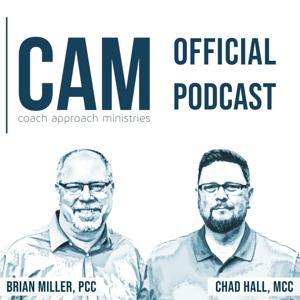

Coaching isn't just useful for discipleship—it may be the missing skill set for making disciple-makers. The conversation is candid, funny, and quietly sharp: COVID exposed shallow formation, and the church's "information-first" approach is often producing people who can pass the quiz but can't live the life.
What this episode is really aboutHow coaching skills turn discipleship from "content delivery" into "life transformation," and why that matters if you want disciples who can actually reproduce—aka spiritual grandchildren.
The main arcCOVID as an x-ray: Tracy says the pandemic revealed weakness and shallowness in churches—faith wasn't helping people through reality as much as we assumed.
Disciples vs. disciple-makers: Lots of systems can "disciple" people. The breakdown comes when those people are supposed to disciple others…and don't.
Coaching as the bridge: Listening, powerful questions, Holy Spirit awareness, concise observations, encouragement—these are the exact "soft skills" disciple-makers need.
Ownership beats compliance: If a person doesn't own the next step, they won't do it. Coaching helps them name it, choose it, and commit to it.
"Checkbox Christianity": Brian compares conversion to clicking "I agree" on software terms you didn't read…until life hits and you realize you never actually understood what you signed up for.
David wearing Saul's armor: What works for the discipler isn't automatically the right "rule of life" for the disciple. Customization matters.
Your gallbladder parable: ER doc assumed you wouldn't change ("you'll be back; let's take it out"). Family doctor assumed change is possible and coached you toward it—so you kept your gallbladder. That becomes the whole discipleship point: do we assume people can change?
"Pastor, what should I do?" → "You should ask Jesus." (Brian notes how rare that response is—and how coaching questions push people into hearing God, not outsourcing their spiritual life to professionals.)
Listen to locate, not to reload. Disciple-making isn't "me talking, you listening." It's listening to where someone actually is, then drawing them out.
Ask questions that create awareness: Jesus-style questions show up ("Who do you say I am?"). Good disciple-makers ask, not just tell.
Use observations (concise messages), not advice-dumps:
"When you quoted that verse, something lit up in you."
"It sounds like Scripture reading hasn't been life-giving lately." Observations invite reflection without taking over.
Offer resources when the gap is real: You can't "pull out" what isn't there. Tracy's prayer example: discover she knows only one way to pray → offer a resource → let her choose what resonates → she owns it.
10-month micro-group discipleship (max four people, weekly, relational, life-on-life).
Participants lead segments early so development is "doing," not just learning.
After 10 months, they go through CAM 501, then get released to disciple 2–3 people.
Tracy continues coaching them monthly to review progress—very "Jesus: watch me → do it → debrief → do it again."
The church often assumes discipleship = more information.
But Scripture itself pushes toward transformation + obedience:
"Teaching them to observe/do…"
James: don't merely listen and deceive yourselves.
D.L. Moody: Bible wasn't given to increase information, but to transform life.
Coaching helps close the gap between knowing and doing.
A disciple-making movement in his local church built on coaching-enabled disciple-makers.
Cohorts of pastors in the fall to redesign discipleship in their contexts using coaching skills as the method, regardless of the curriculum.
They land the plane with contact info (and more "Brian vs. Bryan" banter), then Brian ties it to Romans 12: transformation through renewed thinking—exactly the kind of change coaching is designed to catalyze.
 View all episodes
 By Coach Approach Ministries

4.9
3232 ratings
Coaching isn't just useful for discipleship—it may be the missing skill set for making disciple-makers. The conversation is candid, funny, and quietly sharp: COVID exposed shallow formation, and the church's "information-first" approach is often producing people who can pass the quiz but can't live the life.
What this episode is really aboutHow coaching skills turn discipleship from "content delivery" into "life transformation," and why that matters if you want disciples who can actually reproduce—aka spiritual grandchildren.
The main arcCOVID as an x-ray: Tracy says the pandemic revealed weakness and shallowness in churches—faith wasn't helping people through reality as much as we assumed.
Disciples vs. disciple-makers: Lots of systems can "disciple" people. The breakdown comes when those people are supposed to disciple others…and don't.
Coaching as the bridge: Listening, powerful questions, Holy Spirit awareness, concise observations, encouragement—these are the exact "soft skills" disciple-makers need.
Ownership beats compliance: If a person doesn't own the next step, they won't do it. Coaching helps them name it, choose it, and commit to it.
"Checkbox Christianity": Brian compares conversion to clicking "I agree" on software terms you didn't read…until life hits and you realize you never actually understood what you signed up for.
David wearing Saul's armor: What works for the discipler isn't automatically the right "rule of life" for the disciple. Customization matters.
Your gallbladder parable: ER doc assumed you wouldn't change ("you'll be back; let's take it out"). Family doctor assumed change is possible and coached you toward it—so you kept your gallbladder. That becomes the whole discipleship point: do we assume people can change?
"Pastor, what should I do?" → "You should ask Jesus." (Brian notes how rare that response is—and how coaching questions push people into hearing God, not outsourcing their spiritual life to professionals.)
Listen to locate, not to reload. Disciple-making isn't "me talking, you listening." It's listening to where someone actually is, then drawing them out.
Ask questions that create awareness: Jesus-style questions show up ("Who do you say I am?"). Good disciple-makers ask, not just tell.
Use observations (concise messages), not advice-dumps:
"When you quoted that verse, something lit up in you."
"It sounds like Scripture reading hasn't been life-giving lately." Observations invite reflection without taking over.
Offer resources when the gap is real: You can't "pull out" what isn't there. Tracy's prayer example: discover she knows only one way to pray → offer a resource → let her choose what resonates → she owns it.
10-month micro-group discipleship (max four people, weekly, relational, life-on-life).
Participants lead segments early so development is "doing," not just learning.
After 10 months, they go through CAM 501, then get released to disciple 2–3 people.
Tracy continues coaching them monthly to review progress—very "Jesus: watch me → do it → debrief → do it again."
The church often assumes discipleship = more information.
But Scripture itself pushes toward transformation + obedience:
"Teaching them to observe/do…"
James: don't merely listen and deceive yourselves.
D.L. Moody: Bible wasn't given to increase information, but to transform life.
Coaching helps close the gap between knowing and doing.
A disciple-making movement in his local church built on coaching-enabled disciple-makers.
Cohorts of pastors in the fall to redesign discipleship in their contexts using coaching skills as the method, regardless of the curriculum.
They land the plane with contact info (and more "Brian vs. Bryan" banter), then Brian ties it to Romans 12: transformation through renewed thinking—exactly the kind of change coaching is designed to catalyze.
16,086 Listeners
8,698 Listeners
10,788 Listeners
2,287 Listeners
41,393 Listeners

3,108 Listeners
675 Listeners
204 Listeners

7,188 Listeners
1,433 Listeners
1,131 Listeners
678 Listeners

368 Listeners
372 Listeners
761 Listeners