
Sign up to save your podcasts
Or



Based on Podcast App listening data
Most ambition advice is about how to reach the top of the mountain. Luke Burgis points out that many of us have an upstream problem: we’re climbing a mountain we don’t actually care about. Michael and Megan sit down with Burgis, a Wall Street suit turned entrepreneur turned philosopher, father, and author of several books on desire. They unpack why not all desires are created equal, how to unearth the ones that lead to real satisfaction, and what the monastic tradition offers those of us who will never be monks. This conversation gives you a way to separate what you actually want from the noise of mimetic desire.
Memorable Quotes
Key Takeaways
Resources
This episode was produced by Sarah Vorhees Wendel of VW Sound
Chaos always prompts us to search for something solid. Confronted by the upheaval of economic reckoning, ecological exhaustion, and existential uncertainty, our souls are reaching for anything tangible and true. We want what’s real. That’s the core message of Ryan Levesque, a seven-time Inc. 5000 CEO who walked away from his former life to move with his family to a farm in Vermont. He joins Michael and Megan to talk about his book Return to Real and how we can respond wisely to the hunger felt in our souls and in the marketplace within an artificial, digital age. He unpacks how we can craft moments—at work and at home—that reward what makes us uniquely human. Because that’s what we’re all longing and looking for.
Memorable Quotes
Key Takeaways
Resources
This episode was produced by Sarah Vorhees Wendel of VW Sound
Most of us know we’re moving too fast, but can’t figure out how to stop. In this episode, journalist and author Carl Honoré joins Michael and Megan to explain how we got addicted to speed, what we’re missing out on as a result, and why slowing down is a skill that requires practice. They dig into the warning signs that you’re living too fast and the hidden math that makes quick fixes more expensive than slow ones. Our world moves fast. The good news is, you don’t have to.
Memorable Quotes
Key Takeaways
Resources
This episode was produced by Sarah Vorhees Wendel of VW Sound
This episode was produced by Sarah Vorhees Wendel of VW Sound
This episode was produced by Sarah Vorhees Wendel of VW Sound
This episode was produced by Sarah Vorhees Wendel of VW Sound
This episode was produced by Sarah Vorhees Wendel of VW Sound
This episode was produced by Sarah Vorhees Wendel of VW Sound
This episode was produced by Sarah Vorhees Wendel of VW Sound
It's no secret that machine intelligence is evolving by the day. But what if there's a uniquely human intelligence that's altogether different? In this episode, neuroscientist, researcher, and Special Ops consultant Angus Fletcher joins Michael and Megan to explore our uniquely human contribution to the world. They unpack why children are more creative than AI, what intuition truly is (it's not pattern recognition), and how embracing your inner child can make you a better entrepreneur.
They also delve into human relationships, examining why mystery and curiosity are the engines of lasting love and how three simple practices helped turn around a 90% divorce rate among Army Special Forces operatives.
Memorable Quotes
Key Takeaways
Resources
Watch on YouTube at: https://youtu.be/7w38CL5iX2Y
This episode was produced by Sarah Vorhees Wendel of VW Sound
From the publisher's feed
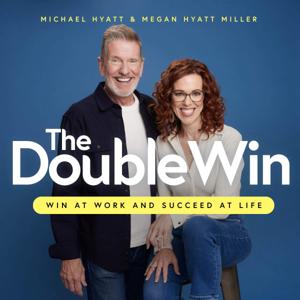
Work-life balance isn’t a myth—it’s a mission. At The Double Win Podcast we believe that ambitious, high-growth individuals can experience personal and professional fulfillment simultaneously.…
The Double Win Podcast features insightful weekly conversations with thought leaders, executives, and entrepreneurs sharing fascinating personal stories and actionable ideas for balancing professional success with personal well-being. Whether you're looking for motivation to achieve your goals or strategies to harmonize your career and life, The Double Win Podcast provides the perspectives and tools you need.
Michael and Megan focus on the nine domains of life—body, mind, and spirit, love, family, community, money, work, and hobbies—offering practical advice to help you thrive. Discover how to integrate purposeful productivity and overall wellness into your daily routine, stay motivated, and experience a life of joy and significance. Hit subscribe and embark on your journey to winning at work and succeeding at life.
Ranked by our users in the last 21 days
2,265 Listeners
10,764 Listeners
2,265 Listeners

720 Listeners

1,935 Listeners
1,114 Listeners
265 Listeners

3,200 Listeners

1,202 Listeners
376 Listeners
2,430 Listeners

1,122 Listeners
627 Listeners
1,433 Listeners
362 Listeners