
Sign up to save your podcasts
Or

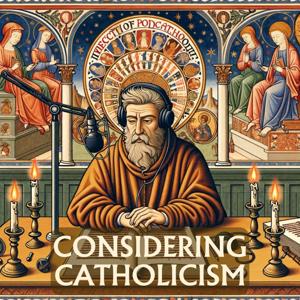


In Episode 2 of the series Mary in the Dock: Ordinary or Extraordinary?, host Greg Smith puts the Catholic doctrine of Mary as Mother of God (Theotokos) on trial. Many modern evangelicals recoil at the title, calling it blasphemous or idolatrous and unknowingly echoing the ancient Nestorian heresy that split Christ in two. Greg gives the strongest Protestant objections a full, fair hearing — the lack of an explicit Bible verse, the risk of deifying Mary, and the historical cautions from Calvin — then delivers a robust Catholic defense rooted in Luke 1:43 (“mother of my Lord”), the Council of Ephesus (431 AD), and the affirmations of classical Reformers like Luther (“she is rightly called… the Mother of God”), Zwingli, and the Anglican Articles. Far from Marian excess, the doctrine safeguards the full reality of the Incarnation and the infinite value of Christ’s atonement. Listeners serve as the jury in this conversational yet intellectually sharp courtroom discussion that asks the key question: is Mary simply an ordinary woman God used for a moment, or the extraordinary God-bearer the Church has proclaimed for two thousand years? Perfect for curious non-Catholics, Protestant pastors investigating Catholicism, and cradle Catholics deepening their faith.
SUPPORT THIS SHOW Considering Catholicism is 100% listener-supported. If this podcast has helped you on your journey, please become a patron today! For as little as $5/month you get: • Every regular episode ad-free and organized into topical playlists • Exclusive bonus content (extra Q&As, Deep-Dive courses, live streams, and more) • My deepest gratitude and a growing community of like-minded listeners
➡️ Join now: https://patreon.com/consideringcatholicism (or tap the Patreon link in your podcast app)
One-time gift: Donate with PayPal!
CONNECT WITH US • Website & contact form: https://consideringcatholicism.com • Email: [email protected] • Leave a comment on Patreon (I read every one!)
RATE & REVIEW If you enjoy the show, please leave a rating (and even better, a review) on Apple Podcasts, Spotify, or wherever you listen — it really helps new listeners find us.
SHARE THE SHOW Know someone who’s curious about Catholicism? Send them a link or share an episode on social media. Thank you!
Christus vincit, Christus regnat, Christus imperat.
In the powerful opening episode of the new series Mary in the Dock: Ordinary or Extraordinary?, host Greg Smith puts the Catholic practice of Marian devotion on trial. Are prayers like the Hail Mary and the Rosary, asking for Mary’s intercession, and venerating her images really idolatry — or are they biblical, Christ-centered honor for the Mother of our Lord? Greg gives the strongest Protestant objections a full, fair hearing (sola scriptura, the one-mediator objection, and claims of late pagan corruption), then delivers a robust Catholic defense rooted in Scripture, the Greek of the New Testament, and the earliest Church Fathers — including evidence of Marian prayers from the third century, long before Constantine. Listeners serve as the jury in this conversational yet intellectually sharp courtroom-style discussion that tackles one of the most common stumbling blocks for Protestants investigating Catholicism. Whether you’re a curious non-Catholic, a Protestant pastor wrestling with these issues, or a cradle Catholic wanting to explain the faith more clearly, this episode will challenge you to decide: is Mary simply an ordinary woman, or the extraordinary New Eve the Church has always proclaimed?
SUPPORT THIS SHOW Considering Catholicism is 100% listener-supported. If this podcast has helped you on your journey, please become a patron today! For as little as $5/month you get: • Every regular episode ad-free and organized into topical playlists • Exclusive bonus content (extra Q&As, Deep-Dive courses, live streams, and more) • My deepest gratitude and a growing community of like-minded listeners
➡️ Join now: https://patreon.com/consideringcatholicism (or tap the Patreon link in your podcast app)
One-time gift: Donate with PayPal!
CONNECT WITH US • Website & contact form: https://consideringcatholicism.com • Email: [email protected] • Leave a comment on Patreon (I read every one!)
RATE & REVIEW If you enjoy the show, please leave a rating (and even better, a review) on Apple Podcasts, Spotify, or wherever you listen — it really helps new listeners find us.
SHARE THE SHOW Know someone who’s curious about Catholicism? Send them a link or share an episode on social media. Thank you!
Christus vincit, Christus regnat, Christus imperat.
In this unscripted, freewheeling conversation recorded at the secret compound, Ed shares the profound shift happening in his heart as he prepares to enter OCIA and come into full communion with the Catholic Church. He reflects on how years of Protestant experience left him with a flattened faith — where baptism, communion, and even basic Christian practices became optional or merely symbolic — and how rediscovering mystery has brought wonder, weight, and meaning back into his life.
Greg and Ed explore the difference between modern “mystery” as unsolved puzzle and the New Testament mysterion — the transcendent, supernatural realities that point to realities beyond what we can measure or fully explain. They discuss the enchanted universe of medieval Catholicism, the flattening effect of the Enlightenment, and how stripping away divine mystery leaves a void that gets filled with everything from simulation theory to razor blades under pyramids.
Along the way they touch on cathedrals, real presence in the Eucharist, marriage as sacrament, C.S. Lewis, Owen Barfield, Chesterton, and why so many today are hungry for a Christianity that is big, bold, substantial, and deeply rooted in the supernatural. If you’ve ever felt that modern life (and modern Christianity) has lost its magic, this episode will speak to that ache and point toward the ancient answer.
SUPPORT THIS SHOW Considering Catholicism is 100% listener-supported. If this podcast has helped you on your journey, please become a patron today! For as little as $5/month you get: • Every regular episode ad-free and organized into topical playlists • Exclusive bonus content (extra Q&As, Deep-Dive courses, live streams, and more) • My deepest gratitude and a growing community of like-minded listeners
➡️ Join now: https://patreon.com/consideringcatholicism (or tap the Patreon link in your podcast app)
One-time gift: Donate with PayPal!
CONNECT WITH US • Website & contact form: https://consideringcatholicism.com • Email: [email protected] • Leave a comment on Patreon (I read every one!)
RATE & REVIEW If you enjoy the show, please leave a rating (and even better, a review) on Apple Podcasts, Spotify, or wherever you listen — it really helps new listeners find us.
SHARE THE SHOW Know someone who’s curious about Catholicism? Send them a link or share an episode on social media. Thank you!
Christus vincit, Christus regnat, Christus imperat.
Pope Leo XIV released his first encyclical today — Magnifica Humanitas — addressing the dignity of the human person in the age of artificial intelligence, transhumanism, and rapid technological change. In this short update episode, Greg reflects on the long anticipation for this document (echoing Leo XIII’s Rerum Novarum), shares what we’ve already covered on the podcast and in our adult education academy, and explains why he’s choosing to read, mark up, and prayerfully reflect on the full 42,000-word text before offering in-depth thoughts in a couple of weeks.
He also gives important show updates: switching to interactive Zoom webinars for supporters, plans to resume regular Patreon content, and a sneak peek at the upcoming new podcast The History of Christendom.
If you want to join the live webinars walking through the encyclical together, become a Patreon or PayPal supporter today — links below. Thanks for your patience and support during a busy season!
SUPPORT THIS SHOW Considering Catholicism is 100% listener-supported. If this podcast has helped you on your journey, please become a patron today! For as little as $5/month you get: • Every regular episode ad-free and organized into topical playlists • Exclusive bonus content (extra Q&As, Deep-Dive courses, live streams, and more) • My deepest gratitude and a growing community of like-minded listeners
➡️ Join now: https://patreon.com/consideringcatholicism (or tap the Patreon link in your podcast app)
One-time gift: Donate with PayPal!
CONNECT WITH US • Website & contact form: https://consideringcatholicism.com • Email: [email protected] • Leave a comment on Patreon (I read every one!)
RATE & REVIEW If you enjoy the show, please leave a rating (and even better, a review) on Apple Podcasts, Spotify, or wherever you listen — it really helps new listeners find us.
SHARE THE SHOW Know someone who’s curious about Catholicism? Send them a link or share an episode on social media. Thank you!
Christus vincit, Christus regnat, Christus imperat.
Greg dives into a surprising pattern that keeps surfacing in Catholic-Protestant conversations: why so many objections to Catholicism quickly circle back to sex, sexuality, and gender. From the intense pushback on Mary’s perpetual virginity and clerical celibacy, to contraception, the male-only priesthood, divorce, and the endless cultural tropes about “sexy nuns,” repressed priests, and naughty Catholic schoolgirls, these issues generate unusually visceral reactions. Greg asks the provocative question: Does this fixation tell us more about certain Protestant assumptions about the human body than it does about Catholic teaching? He traces how a quiet but seismic shift during the Reformation—and the cultural currents that followed—created two genuinely different visions of what it means to be embodied, sexual, male-and-female creatures made for communion. The result is a fascinating, charitable look at why these flashpoints keep dominating the conversation and what the Catholic vision of the body actually offers in a world that’s more confused than ever about sex, marriage, and human flourishing.
SUPPORT THIS SHOW Considering Catholicism is 100% listener-supported. If this podcast has helped you on your journey, please become a patron today! For as little as $5/month you get: • Every regular episode ad-free and organized into topical playlists • Exclusive bonus content (extra Q&As, Deep-Dive courses, live streams, and more) • My deepest gratitude and a growing community of like-minded listeners
➡️ Join now: https://patreon.com/consideringcatholicism (or tap the Patreon link in your podcast app)
One-time gift: Donate with PayPal!
CONNECT WITH US • Website & contact form: https://consideringcatholicism.com • Email: [email protected] • Leave a comment on Patreon (I read every one!)
RATE & REVIEW If you enjoy the show, please leave a rating (and even better, a review) on Apple Podcasts, Spotify, or wherever you listen — it really helps new listeners find us.
SHARE THE SHOW Know someone who’s curious about Catholicism? Send them a link or share an episode on social media. Thank you!
Christus vincit, Christus regnat, Christus imperat.
In the final part of this three-part series, Greg takes the philosophical foundation from Episode 1 and the moral schematics from Episode 2 and applies them directly to four very ordinary, everyday situations: money lending and usury, lying versus legitimate deception, disciplining children (including spanking), and gambling. Using the categories of intrinsically evil acts, prudential judgment, and authentic development of doctrine, he walks through concrete examples—medieval usury versus modern payday loans, the Nazis-at-the-door dilemma and broad mental reservation, parental decisions about spanking, and state-sponsored gambling—so you can see exactly how the object of the act, the privation of the good, and the virtue of prudence work in real life.
You’ll come away with clear, practical tools for reasoning through complex moral questions with the mind of the Church instead of slogans or partisan talking points. Whether you’re a Protestant pastor sorting through moral theology, a curious investigator exploring Catholicism, or a Catholic wanting to think more precisely about everyday decisions, this episode shows how the Church’s two-thousand-year habit of careful moral reasoning equips us to love God and neighbor with both clarity and charity.
SUPPORT THIS SHOW Considering Catholicism is 100% listener-supported. If this podcast has helped you on your journey, please become a patron today! For as little as $5/month you get: • Every regular episode ad-free and organized into topical playlists • Exclusive bonus content (extra Q&As, Deep-Dive courses, live streams, and more) • My deepest gratitude and a growing community of like-minded listeners
➡️ Join now: https://patreon.com/consideringcatholicism (or tap the Patreon link in your podcast app)
One-time gift: Donate with PayPal!
CONNECT WITH US • Website & contact form: https://consideringcatholicism.com • Email: [email protected] • Leave a comment on Patreon (I read every one!)
RATE & REVIEW If you enjoy the show, please leave a rating (and even better, a review) on Apple Podcasts, Spotify, or wherever you listen — it really helps new listeners find us.
SHARE THE SHOW Know someone who’s curious about Catholicism? Send them a link or share an episode on social media. Thank you!
Christus vincit, Christus regnat, Christus imperat.
In the second part of this three-part series, Greg builds directly on the foundation laid in “The Anatomy of Evil” and moves into the practical schematics the Church has spent two thousand years refining. He walks through the key categories of Catholic moral reasoning: universal, unchanging principles rooted in human dignity and the natural law; intrinsically evil acts whose object is always disordered; positive obligations that call us to active love and justice; the virtue of prudence that guides real-world application; and the legitimate space for prudential judgment where faithful Catholics of good will can disagree in good faith. You’ll also explore the idea of authentic development of doctrine—Newman-style organic growth that deepens without reversing—and what it means when the Magisterium declares something “inadmissible” in light of the Gospel.
SUPPORT THIS SHOW Considering Catholicism is 100% listener-supported. If this podcast has helped you on your journey, please become a patron today! For as little as $5/month you get: • Every regular episode ad-free and organized into topical playlists • Exclusive bonus content (extra Q&As, Deep-Dive courses, live streams, and more) • My deepest gratitude and a growing community of like-minded listeners
➡️ Join now: https://patreon.com/consideringcatholicism (or tap the Patreon link in your podcast app)
One-time gift: Donate with PayPal!
CONNECT WITH US • Website & contact form: https://consideringcatholicism.com • Email: [email protected] • Leave a comment on Patreon (I read every one!)
RATE & REVIEW If you enjoy the show, please leave a rating (and even better, a review) on Apple Podcasts, Spotify, or wherever you listen — it really helps new listeners find us.
SHARE THE SHOW Know someone who’s curious about Catholicism? Send them a link or share an episode on social media. Thank you!
Christus vincit, Christus regnat, Christus imperat.
In a world of loud moral arguments and social-media slogans, real precision often gets lost. In this three-part series, Greg unpacks one of the most attractive features of Catholic moral theology: its remarkable clarity around evil as a privation (not a substance), intrinsically evil acts, prudential judgment, and authentic development of doctrine.
Episode 1, “The Anatomy of Evil,” explores how human actions are good in their being yet can be morally disordered in their object—drawing on Aquinas, C.S. Lewis’s “bent” imagery, and concrete examples like homosexual activity and direct abortion.
Episode 2 lays out the practical schematics the Church has refined for two thousand years: universal principles, absolute norms, positive obligations, prudence, and Newman-style development (including the language of “inadmissible”).
Episode 3 applies those tools to four relatable everyday cases—money lending and usury, lying versus legitimate deception, disciplining children (spanking), and gambling—showing exactly how Catholics can reason faithfully through complex situations with both intellectual honesty and pastoral charity.
SUPPORT THIS SHOW Considering Catholicism is 100% listener-supported. If this podcast has helped you on your journey, please become a patron today! For as little as $5/month you get: • Every regular episode ad-free and organized into topical playlists • Exclusive bonus content (extra Q&As, Deep-Dive courses, live streams, and more) • My deepest gratitude and a growing community of like-minded listeners
➡️ Join now: https://patreon.com/consideringcatholicism (or tap the Patreon link in your podcast app)
One-time gift: Donate with PayPal!
CONNECT WITH US • Website & contact form: https://consideringcatholicism.com • Email: [email protected] • Leave a comment on Patreon (I read every one!)
RATE & REVIEW If you enjoy the show, please leave a rating (and even better, a review) on Apple Podcasts, Spotify, or wherever you listen — it really helps new listeners find us.
SHARE THE SHOW Know someone who’s curious about Catholicism? Send them a link or share an episode on social media. Thank you!
Christus vincit, Christus regnat, Christus imperat.
In this special conversation episode, Greg sits down with his friend and longtime collaborator Cory to mark the 10th anniversary of the night they both entered the Catholic Church together at the Easter Vigil in 2016. They share what they’re most grateful for after a decade—everything from the life-shaping rhythm of the sacraments and liturgical year, the communion of saints, the beauty that feeds the soul, and the simple joy of feeling truly “at home” in any Catholic parish on earth, to the doctrinal clarity and sense of vocation that have steadied their families. Greg also offers candid thoughts from his unique vantage point as a former Protestant pastor: the things that turned out even richer than he expected (deeper prayer and devotion, the dedication of our priests, the Church’s surprising integrity and resilience) and a few honest challenges he’s seen along the way. With warmth, gratitude, and zero sugar-coating, this episode is an encouraging look at what it really means to live the Catholic faith over the long haul. Whether you’re still investigating the Church or you’ve been in it your whole life, you’ll walk away refreshed and reminded why the one, holy, catholic, and apostolic Church is worth everything.
SUPPORT THIS SHOW Considering Catholicism is 100% listener-supported. If this podcast has helped you on your journey, please become a patron today! For as little as $5/month you get: • Every regular episode ad-free and organized into topical playlists • Exclusive bonus content (extra Q&As, Deep-Dive courses, live streams, and more) • My deepest gratitude and a growing community of like-minded listeners
➡️ Join now: https://patreon.com/consideringcatholicism (or tap the Patreon link in your podcast app)
One-time gift: Donate with PayPal!
CONNECT WITH US • Website & contact form: https://consideringcatholicism.com • Email: [email protected] • Leave a comment on Patreon (I read every one!)
RATE & REVIEW If you enjoy the show, please leave a rating (and even better, a review) on Apple Podcasts, Spotify, or wherever you listen — it really helps new listeners find us.
SHARE THE SHOW Know someone who’s curious about Catholicism? Send them a link or share an episode on social media. Thank you!
Christus vincit, Christus regnat, Christus imperat.
In this candid monologue, Greg retraces his own path from campus-ministry apologetics at a liberal university into the tight, intellectually satisfying world of Calvinism—training in a Calvinist seminary, embracing TULIP, and finding real comfort in the doctrine of Total Depravity. He walks through what made that system feel so compelling at the time: its logical clarity, its honest reckoning with human sin, and its God-centered awe. But as he circled back to the medieval Catholic thinkers he’d first glimpsed years earlier, and then encountered the big, colorful, sacramental fullness of Catholicism, that earlier framework began to feel incomplete. Greg contrasts the Calvinist view of a totally corrupted human nature with the Catholic teaching—rooted in Scripture and two millennia of tradition—that original sin wounds us profoundly but does not destroy the image of God within us. The result is a far more hopeful vision of grace that heals, elevates, and invites real cooperation in the lifelong work of sanctification.
SUPPORT THIS SHOW Considering Catholicism is 100% listener-supported. If this podcast has helped you on your journey, please become a patron today! For as little as $5/month you get: • Every regular episode ad-free and organized into topical playlists • Exclusive bonus content (extra Q&As, Deep-Dive courses, live streams, and more) • My deepest gratitude and a growing community of like-minded listeners
➡️ Join now: https://patreon.com/consideringcatholicism (or tap the Patreon link in your podcast app)
One-time gift: Donate with PayPal!
CONNECT WITH US • Website & contact form: https://consideringcatholicism.com • Email: [email protected] • Leave a comment on Patreon (I read every one!)
RATE & REVIEW If you enjoy the show, please leave a rating (and even better, a review) on Apple Podcasts, Spotify, or wherever you listen — it really helps new listeners find us.
SHARE THE SHOW Know someone who’s curious about Catholicism? Send them a link or share an episode on social media. Thank you!
Christus vincit, Christus regnat, Christus imperat.
From the publisher's feed

4,976 Listeners

5,716 Listeners

4,009 Listeners

809 Listeners

6,750 Listeners
7,679 Listeners

1,353 Listeners

2,615 Listeners

1,517 Listeners

2,640 Listeners
926 Listeners

1,276 Listeners

1,214 Listeners

779 Listeners

443 Listeners