
Sign up to save your podcasts
Or

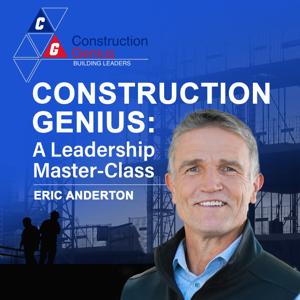


Based on Podcast App listening data
Suffolk and MIT just released a white paper on AI in construction. It estimates 17 to 20% in potential cost savings and 22 to 25% on schedule. In this solo episode, Eric Anderton reads it for a contractor running a $25 to $500 million company and pulls out the applications worth testing now. He also explains where those numbers came from before you expect them on your next job.
Takeaways:
Many field production problems get locked in during design, months before the crew shows up
Design changes hit quantities, purchasing and installation. AI could get those effects onto the schedule sooner
A contractor is using AI to turn hundreds of schedule activities into a three-week look-ahead with a risk list
Tie your procurement log and lead times to the schedule so a late delivery flags the work it puts at risk
None of it works without accurate project data and someone who owns the decision
Connect with Eric Anderton: https://www.linkedin.com/in/andertoneric
Read the report: Construction in the Age of AI, from Suffolk and MIT
https://suffolk.com/wp-content/uploads/2026/09/Suffolk_MIT_AI_Whitepaper_FINAL.pdf
A $20 million project lands in your lap with three or four red flags attached. You want the revenue. You want the backlog. In this solo episode, Eric Anderton walks through the three-for-three test he uses with his coaching clients: right client, right project, right location. He also tackles a harder problem. What do you do with a technically excellent superintendent whose behavior no longer matches your company's values? Two decisions, and Eric shows you exactly how they can start reinforcing each other if you let them.
Takeaways:
- Why profit history matters more than revenue when deciding which projects to take again
- The three-for-three test for qualifying clients, projects, and locations
- How to define a seat by its outcomes and behaviors before judging the person in it
- The three real options for a values mismatch: train, move, or fire
- Why the size of the number never fixes the size of the risk
Connect with Eric Anderton:
https://www.linkedin.com/in/andertoneric
If you want the full niche analysis spreadsheet Eric uses with his coaching clients, email [email protected] with "Niche Analysis" in the subject line.
Your WIP shows today. Your backlog shows what's booked. Neither tells you where your cash and crews are headed. That's what projections do, and most contractors either do them badly or skip them.
In Part 8 of the series, CPA Kathe Barrington shows construction owners how to build projections that actually predict trouble early.
What you'll take away:
Why projections belong to your CFO, and where owners still need to stay involved
How far out to project (18 months internally, fiscal year-end for the bank)
The job-cost bell curve, and how to plan cash, billings, and manpower around the peak
Why cushion in your estimates can hurt your credibility with bank and bonding
A 30-60-90 day plan to get your projections under control
Kathe's line for owners who play games with their numbers: you lose the truth about your own margins, and every future estimate inherits the lie.
The full Construction Accounting Series with Kathe Barrington:
Ep. 357 WIP Reports Made Simple: https://www.constructiongenius.com/wip-reports-made-simple-the-key-to-stopping-hidden-job-losses-ep.-357
Ep. 359 Use Your WIP to Protect Cash: https://www.constructiongenius.com/how-to-use-your-wip-to-protect-cash-and-grow-profitability-ep.-359
Ep. 364 Physical Progress vs. Financial Reporting: https://www.constructiongenius.com/physical-progress-vs.-financial-reporting-in-construction-projects-ep.-364
Ep. 368 Underbillings Bad. Overbillings Better: https://www.constructiongenius.com/underbillings-bad-overbillings-better-the-cash-flow-truth-construction-owners-cant-ignore-ep.-368
Ep. 377 Why Your Jobs Look More Profitable: https://www.constructiongenius.com/why-your-jobs-look-more-profitable-than-they-are-indirect-allocations-and-overhead-in-construction-ep.-377
Ep. 388 Read Your Backlog Like a Banker: https://www.constructiongenius.com/how-to-read-your-backlog-like-a-banker
Ep. 396 Grow Bonding Capacity: https://constructiongenius.com/grow-bonding-capacity-banking-tax-moves-contractors/
Full playlist: https://www.youtube.com/playlist?list=PLNqgaQ0mEF1w
Connect with Kathe Barrington: kbcpa.biz
Ryan Englin, founder of Core Matters and creator of the FieldCon software platform, returns to talk about the two things most construction leaders dodge: accountability and performance reviews. Ryan and Eric get practical about why these conversations feel so hard and how to make them routine.
The short version. Accountability starts with a commitment the employee actually agreed to. The longer you wait to address a problem, the more painful it gets. And the annual review is the worst way to give feedback.
In this episode: - Why you can't hold someone accountable to something they never committed to - The foreman story that shows how delay turns a small issue into a confrontation - Why focusing on the agreed outcome beats focusing on the person - How to redesign reviews around the gap between self-rating and manager-rating - Running reviews monthly or quarterly so nothing is ever a surprise
Connect with Ryan Englin:
Core Matters: corematters.com
FieldCon: fieldcon.io
LinkedIn: www.linkedin.com/in/ryanenglin
Core Matters on LinkedIn: www.linkedin.com/company/corematters
A superintendent's wife wakes up at 2 a.m. to find him pacing the bedroom for the third night straight. She tells him, "This isn't going to work. For anybody." That superintendent was Scott Borroughs, and the project was Deep Space, Epic Systems Systems850,000 square foot auditorium, built 80 feet down through limestone.
Scott Borroughs is the Vice President of Field Operations at JP Cullen, a fifth-generation Wisconsin contractor. As general superintendent on Deep Space, he became the decision-making funnel that choked the project, then rebuilt the way he led. In this episode, we walk through how he did it, and how you can do the same without losing control of the work.
What you'll learn:How to recognize when you've become the bottleneck on your own project
The "banks of the river" framework: define the banks, let people flow between them
How to step back from the weeds without feeling like you've stopped working
What to do when your team solves a problem differently than you would
How JP Cullen turned one project's lessons into ten company-wide SOPs
Why you should never confuse activity with accomplishment
Connect with Scott Borroughs on LinkedIn: https://www.linkedin.com/in/scott-borroughs-63999a19
JP Cullen: https://jpcullen.com
The Epic Systems Deep Space Auditorium project: https://jpcullen.com/portfolio/epic-deep-space-auditorium
You're a contractor, you're busy, and you're tired of LinkedIn consultants telling you that you'll be left behind if you don't embrace AI right now. Smart move to tune out the hype — but here's the catch: while you're waiting for the noise to die down, a few of your competitors are quietly using these tools to save hours every week. Not on flashy stuff. On the boring stuff. Meeting minutes, SOPs, pulling scope language out of a 200-page addendum.
Dimitri Sidiropoulos is the Vice President of Delphi Plumbing and Heating, a heavy mechanical self-performing public works contractor in New York City. He's not a tech bro — he's a working contractor who decided to actually try ChatGPT for a year inside his construction company. In this conversation, Eric and Dimitri get into what works, what doesn't, where it saves him hours, where the proposal bot he tried to build had to be abandoned, and where that last 20% will nail you if you're not paying attention.
If you've been waiting for someone to give you a no-hype, on-the-ground answer to "should I actually be using ChatGPT?" — grab a notepad. This is the conversation.
What you'll learn:
Why the first move with AI isn't asking it to do work — it's letting it interview you
How Dimitri spent three days in back-and-forth with ChatGPT to give it real context about his business
The "Jarvis to Iron Man" framework: AI enhances the operator, it doesn't replace the brain
Where ChatGPT shines: meeting minutes, SOPs, pulling scope from addenda, three/five/ten-year strategic planning
Where it falls down: custom proposal bots, takeoffs of pipe and fittings, anything that depends on means and methods
Why "80% of the way there in five minutes" beats "80% of the way there in a day and a half"
How to ask AI for its sources so you can spot hallucinations early
Why writing emails with AI can hurt the relationships you've built
The first move on Monday morning if you're an AI-skeptic contractor
Connect with Dimitri
Delphi Plumbing & Heating: www.delphiph.com
Dimitri on LinkedIn: www.linkedin.com/in/dimitri-sidiropoulos-b4485190
Delphi on LinkedIn: www.linkedin.com/company/delphiph
Every construction company answers to three masters. The bank. The bonding company. The taxman. Same financial statements, three different things they want from you.
Kathe Barrington is a CPA who builds the construction accounting that bankers and bonding agents actually read. In Part 7 of our series, we work through how to stop being at the mercy of all three and get them working as one team.
What you'll learn:
Why one set of books gets three different recommendations, and what to do about it
How paying less tax can quietly shrink your bonding capacity
Why bank and bonding both care about equity, retained earnings, and working capital
How WIP accuracy and consistent margins build outside trust
The one meeting almost no contractor runs, and why it changes everything
Kathe Barrington is a CPA with 30+ years of experience, 20 focused on construction. Through KB CPA she is a fractional accounting resource for commercial GCs and specialty contractors that need construction-literate financial support without a full-time CFO or controller.
Connect with Kathe Barrington
LinkedIn: https://www.linkedin.com/in/kathe-barrington-a6346337
Facebook: https://www.facebook.com/p/Kathe-Barrington-CPA-100072271041746
KB CPA: https://kbcpa.biz
Prefabrication won't save your MEP company on its own. Run it wrong and it quietly bleeds you. In this episode, Jake Olsen, CEO of Stratus, explains how to make fab actually pay off. He's a structural engineer with more than twenty years in construction and construction tech, and he's blunt about where the money goes.
In this conversation you'll learn:
Why prefab is really a labor strategy, and how "geographic arbitrage" keeps your crews busy
Why MEP fab is neither manufacturing nor field construction, and why that matters
How overproducing and carrying too much work-in-progress strands your cash
Where prefab actually gets won, and it's in preconstruction, not the shop
The two biggest money-losers in any fab shop: material handling and rework
If you run fabrication, or you're thinking about building a shop, this episode will change how you set your expectations.
Connect with Jake Olsen: https://www.linkedin.com/in/mrjakeolsen/ Learn more about Stratus: https://www.stratus.build/
Most construction owners think they have four exit options. Pass it to a kid. Sell to an employee. Sell to a competitor. Sell to private equity. The reality is harder. Private equity passes on most contractors. Competitors often aren't buying. That's why ESOPs are now the fastest-growing succession trend in construction.
Kelly Finnell, CEO of EFS ESOP Consultants, has done 22 ESOPs for general and specialty contractors in recent years. In this episode, Kelly explains how the deal is actually structured, what the owner walks away with, and where most owners are wrong about "leaving money on the table."
What you'll learn:
Why construction is the fastest-growing industry for ESOPs in the country
The three sources of capital that fund an ESOP: bank loan, seller note, excess cash
How two contractors with $3M EBITDA sold for $25M to an ESOP after $12M offers from a strategic buyer
Why an owner is not personally on the hook for the ESOP bank loan
How to manage the repurchase obligation so it doesn't crush you in a down year
The first two moves to make if you're 58 and seriously considering this path
Connect with Kelly Finnell on LinkedIn: https://www.linkedin.com/in/esopcoach/
Kelly's Website: www.execfin.com
Kelly's Book, The ESOP Coach: https://www.amazon.com/ESOP-Coach-Ownership-Succession-Paperback/dp/B010CKUN9U
National Center for Employee Ownership: https://www.nceo.org/
Free Succession Planning Guide: https://www.constructiongenius.com/free-succession-planning-guide
Sam Fertik went from running a 20-course tasting restaurant in Manhattan to building homes out of concrete and steel that he says last a thousand years. He's the CEO and Founder of Carbon Custom Builders. In this episode, Sam and Eric trace the chef-to-contractor journey and the one question that reshaped his whole business. Why are we still building houses the way we did in 1850?
What you'll learn:
What ICF (Insulated Concrete Forms) is and why it turns homebuilding into a repeatable science
Why the average home lasts 30 years and how concrete-and-steel construction changes that
How a chef's recipe mindset applies directly to running a construction company
The "go to the biggest problem" lesson and why owners have to be both visionary and implementer
Why Sam says sales is the one thing that kills a small business
Connect with Sam Fertik and Carbon Custom Builders:
Website: https://www.carboncustombuilders.com/
LinkedIn: https://www.linkedin.com/in/sam-fertik/
Instagram: https://www.instagram.com/carboncustombuilders/
From the publisher's feed
Ranked by our users in the last 21 days

227,562 Listeners

16,689 Listeners

3,897 Listeners

4,367 Listeners
30,733 Listeners

32,758 Listeners
270 Listeners
2,198 Listeners

4,465 Listeners
2,300 Listeners

46,055 Listeners

29,196 Listeners
1,999 Listeners

19,285 Listeners

15,963 Listeners