
Sign up to save your podcasts
Or

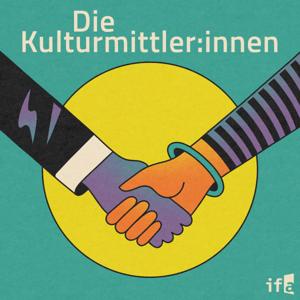


While the art of curating was once led by museums, its role has been transformed over the years. A curator nowadays wears many hats: They are curators, producers, mediators – working across fields and disciplines, across borders and mediums, and across physical and virtual spaces.
Nascimento explains the many layers of curating and how she herself has experienced it in collaborative and interdisciplinary projects. In this episode, we also take a look at the role of international exhibitions, such as the Venice Biennial, where Nascimento co-curated the Angolan pavilion in 2013. It was the first and only time, an African country received the golden lion for its national representation. And finally, she gives us an insight into virtual art spaces, with ifa’s digital exhibition “ARE YOU FOR REAL – Phase 1” that she curated together with various artists and curators.
If you want to learn more about the digital exhibition, ARE YOU FOR REAL, click here: https://www.ifa.de/tournee/are-you-for-real/
For more information on the potential of transnational cooperations in curating, you should read our study “What does ‘curating’ mean today?” by the art historian Annette Tietenberg. You can find the full study here: https://culturalrelations.ifa.de/en/research/details/what-does-curating-mean-today/
All previous episodes of “Die Kulturmittler:innen”, e.g. on feminist foreign policy or our special episodes on Ukraine, can be found here: https://www.ifa.de/ifa-podcast/
Do you have topic requests or feedback? Feel free to send them to [email protected].
More information on the Institut für Auslandsbeziehungen at https://www.ifa.de.
Colonial legacies continue to shape international cooperation and climate policy. While actors in the climate debates seem to be aware of that, the question remains: what is specifically being done about it? In this episode researchers Marina Caetano and Pedro Affonso Ivo Franco talk about their study “Analysing Decolonial Climate Perspectives: The Case of the Brazilian Legal Amazon Region” and explain their position that a decolonial perspective needs to be central to the global response to climate change.
Read the full study here: Analysing Decolonial Climate Perspectives https://culturalrelations.ifa.de/en/research/details/analysing-decolonial-climate-perspectives/
For all other information visit our website: https://culturalrelations.ifa.de/en/
If you have any questions or comments, please feel free to email us at [email protected].
Dürre, Überflutungen und Flächenbrände. Wir sehen die Auswirkungen der Klimakrise fast täglich in den Nachrichten. Worüber bisher aber kaum berichtet wird: wie diese Katastrophen unser materielles und immaterielles Kulturerbe beschädigen oder sogar gänzlich zerstören.
Weitere Informationen und Beiträge zum Thema Kultur und Klima finden Sie hier:
https://www.ifa.de//insel-der-uebriggebliebenen
Taiwan is still not recognised as a state by the international community. What role does its external cultural policy play for the country? In this episode, we talk to Yuqing Yang about the topic. The historian and research associate at Hertie School in Berlin furthermore gives a brief insight into the “External Cultural Policy Monitor – Taiwan”. In this country report on Taiwan, she presents insightful data and information on Taiwan’s external cultural policy.
Read the full Taiwan Country Report here: https://culturalrelations.ifa.de/en/research/details/taiwan-country-report/
For more information on the External Cultural Policy Monitor, click here: https://culturalrelations.ifa.de/en/research/#c12686
You will find more research on topics of International Cultural Relations supported by ifa here: https://culturalrelations.ifa.de/en/research/
To learn more about ifa: https://www.ifa.de/en/
Do you have topic requests or feedback? Feel free to send them to [email protected]
Taiwan usually appears in Western media because of the simmering conflict with mainland China or its global dominance in the semiconductor industry. The entrepreneur and podcaster Emily Y. Wu lets us in on other issues that are moving the Taiwanese people today beyond these two topics. In this episode, she gives an insight into her work and her country – one of only three “full democracies” in Asia.
Wu explains how metal music and politics fit together, what tensions still remain between the various ethnic groups in Taiwan and how she lives with the constant threat of a Chinese invasion.
Furthermore, the ifa magazine KULTURAUSTAUSCH has dedicated its current issue II/2023 to Taiwan. In doing so, it also sheds light on topics beyond the current news situation and offers other perspectives on the island state in the West Pacific.
For English articles from the current edition of KULTURAUSTAUSCH, you can visit the website at kulturaustausch.de or order the German print issue of the magazine here: https://www.kulturaustausch.de/de/bestellen/bestellung
To listen to Freddy Lim’s personal playlist, click here: https://www.kulturaustausch.de/de/archiv/dossiers/taiwan/playlist
If you want to learn more about Taiwan’s approach on cultural diplomacy, you can download our country report on Taiwan: https://culturalrelations.ifa.de/forschung-detail/taiwan-country-report/
If you would like to find out more about Emily Wu’s work, listen to her podcast „Metalhead Politics“.
All previous episodes of “Die Kulturmittler:innen”, e.g. on feminist foreign policy or our special episodes on Ukraine, can be found here: https://www.ifa.de/ifa-podcast/
Do you have topic requests or feedback? Feel free to send them to [email protected].
More information on the Institut für Auslandsbeziehungen at https://www.ifa.de.
Although Ukraine is one of the largest countries in the centre of Europe, the country has been in the shadow of international attention for over 30 years since the collapse of the Soviet Union. The Russian invasion has changed that. The Ukraine Institute tries to bring Ukrainian culture and history closer to foreign countries.
Our guest today, Alim Aliev, is Deputy Director of the Ukraine Institute. In this episode of die Kulturmittler, he tells us about the strategies Russia is using to try to bind Crimea closer to itself and what this means for the Crimean Tatars. He himself belongs to the Crimean Tatar minority and does research on this ethnic group.
We also learn how the Ukraine Institute works against Russian propaganda and how it tries to preserve and spread Ukrainian culture and history.
You can find all previous Kulturmittler episodes, including the one on Ukraine, at https://www.ifa.de/digitale-formate/podcast/.
Do you have topic requests, praise or criticism? Feel free to send them to [email protected].
More information on the Institute für Auslandsbeziehungen at https://www.ifa.de.
Derzeit sind über 13.000 Sanktionen gegen Russland in Kraft, einige davon seit der Krimannexion 2014. Die ukrainische Journalistin Emiliia Dieniezhna ist für die Independent Anti-Corruption Commission (NAKO), eine zivilgesellschaftliche NGO, tätig. Dort untersucht sie, wie die Sanktionen der EU, der USA und anderer westlicher Staaten von der russischen Rüstungsindustrie umgangen werden und erläutert im Podcast, was Haushaltsgeräte wie Kühlschränke und Waschmaschinen damit zu tun haben.
Neben den Schwächen der Sanktionspakete gegen Russland, spricht die Ukrainerin in dieser Kulturmittler-Episode auch über die Korruptionsbekämpfung innerhalb der Ukraine und erklärt, weshalb es neben vier Anti-Korruptionsämtern noch eine zivilgesellschaftliche NGO dafür benötigt.
Alle bisherigen Episoden von “Die Kulturmittler” finden Sie hier: https://www.ifa.de/digitale-formate/podcast/
Sie haben Themenwünsche, Lob und Kritik? Diese können gerne an [email protected] geschickt werden.
Mehr Informationen zu Projekten und Initiativen des ifa rund um die Ukraine finden Sie unter https://www.ifa.de/ukraine-projekte/
In 2014, the artist and human rights activist Diana Berg fled from Donetsk to Mariupol to escape pro-Russian separatists. Eight years later, she had to leave her home a second time when Russia invaded Ukraine.
In this episode of ‘Die Kulturmittler’, Diana Berg talks about the meaning and potential of art and art spaces in times of war. In 2016, she founded the art platform TU in Mariupol, which she now continues to run in exile. We also learn about her on-going commitment to amplify Ukrainian voices and their needs at international art events, such as the Documenta or the Berlinale.
You can find all previous ‘Die Kulturmittler’ episodes, including the special episodes on Ukraine, at https://www.ifa.de/digitale-formate/podcast/.
Do you have topic requests or feedback you want us to know? Feel free to send them to [email protected].
For more information on ifa’s Ukraine projects and initiatives visit: https://www.ifa.de/en/ukraine-projects/
Als Russland vor einem Jahr die Ukraine überfiel, war es möglich in Echtzeit das Vorrücken der russischen Truppen, Raketenangriffe oder ukrainische Proteste in den sozialen Medien zu verfolgen. Die New York Times sprach vom „ersten TikTok Krieg“.
In dieser Folge „Die Kulturmittler“ erklärt der Autor und Psychologe Christian Stöcker, inwiefern sich die Kriegsberichterstattung durch die sozialen Medien verändert hat. Jeder Mensch kann mit einem Smartphone unmittelbar Nachrichten in die Welt senden und durch TikTok, Twitter und Co. die klassischen Gatekeeper wie Nachrichtenredaktionen und deren Filter umgehen. Außerdem analysiert Christian Stöcker, die Kommunikationsstrategie des ukrainischen Präsidenten Wolodymyr Selenskyj in den sozialen Netzwerken.
Im Angriffskrieg Russlands zeigt sich die ukrainische Zivilgesellschaft resilient, stark und handlungsfähig. Vor einem Jahr sprachen wir bereits mit der Sozialwissenschaftlerin Susann Worschech über die Rolle der ukrainischen Zivilgesellschaft im Krieg und die Tragfähigkeit der internationalen Solidarität. In dieser Folge “Der Kulturmittler” erfahren wir, wie sich die Gesellschaft unter dem Druck des Krieges entwickelt hat. Anders als die russische Regierung vielleicht erwartet hatte, erklärt Worschech, sei die ukrainische Zivilgesellschaft kein passives Objekt der Politik. Stattdessen sei sie geleitet von einer starken kollektiven Idee des Widerstandes und der Solidarität - auch im Exil. Im Interview blickt sie zudem kritisch auf die zögerliche westeuropäische Haltung und plädiert dafür, die Stimmen der Ost- und Mitteleuropäer:innen stärker in das politische Handeln Europas zu integrieren.
Die Kulturmittler Folge #37 mit Volodymyr Yermolenko und Susann Worschech: https://www.ifa.de/37-standwithukraine-bedroht-aber-stark-mit-susann-worschech-und-volodymyr-yermolenko-1/
Sie haben Themenwünsche, Lob und Kritik? Diese können gerne an [email protected] geschickt werden.
Mehr Informationen zu Projekten und Initiativen des ifa rund um die Ukraine finden Sie unter www.ifa.de/ukraine-projekte/
From the publisher's feed
224 Listeners
5 Listeners

101 Listeners

47 Listeners

5 Listeners
185 Listeners
118 Listeners
252 Listeners
107 Listeners
57 Listeners
97 Listeners

28 Listeners
144 Listeners
14 Listeners