
Sign up to save your podcasts
Or

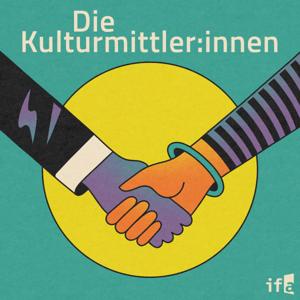


Seit mehr als zehn Jahren versucht Russland die ukrainische Kultur zu bekämpfen. In dieser Zeit sind nicht nur unzählige Menschenleben bedroht und ausgelöscht worden, sondern auch kulturelle Denkmäler, Museen und Theater der Ukraine zerstört oder ausgeraubt worden. Noch bestehende Kultureinrichtungen in der Ukraine können wegen des Krieges nur eingeschränkt oder gar nicht öffnen. Kurz: Kunst, Kultur und Sprache sind in Zeiten des Krieges besonders bedroht. Zugleich ist Kultur gerade dann aber auch so wichtig wie selten. In dieser Podcast-Folge geht es deshalb darum, wie Kulturtätige, Intellektuelle und Künstler:innen, die im Exil oder an der Front in der Ukraine leben, ihre Kultur und Identität erhalten. Kateryna Rietz-Rakul, die Leiterin des Ukrainischen Instituts in Deutschland, spricht dazu mit Host Amira El Ahl.
Mehr Informationen zur Arbeit des ifa gibt es auf dem Instagram und LinkedIn oder auf der Webseite des ifa.
Hier geht es zur Webseite des Ukrainischen Instituts.
In dieser Podcast-Folge zu den Menschenrechtsorganisationen „Ukraine 5 AM Coalition“ gibt es mehr Informationen zum Thema.
On 30 August 2021, US troops and their allies withdrew from Afghanistan, leaving the country under Taliban rule. In this episode of Die Kulturmittler:innen – Deep Dive we’re joined by Emran Feroz to explore the human rights situation in Afghanistan which is marked by a complex interplay of political instability, cultural practices, and restrictive policies. Women’s rights in particular have been massively restricted since the Taliban took over, with bans on education, employment, and public freedoms. Violence against minorities, suppression of free speech, and harsh laws further worsen the situation.
Emran Feroz is journalist and book author, and regularly reports from and about Afghanistan for media such as Die Zeit, Al Jazeera, The New York Times or ifa’s online magazine Qantara.de.
Emran Feroz’ articles on Qantara.de as well as a link to his new book “Vom Westen nichts Neues” can be found here: qantara.de/en/author/emran-feroz
For all other information visit our website: culturalrelations.ifa.de
If you have any questions or comments, please feel free to email us at [email protected].
Today is International Human Rights Day! Human Rights are the fundamental freedoms and protections that belong to every person, ensuring dignity, equality, and safety. They include the right to life, freedom from torture, and protection against discrimination.
All previous episodes of Die Kulturmittler:innen and more information about the ifa can be found on the website ifa.de.
The ifa is also on Instagram and Linkedin.
Even today, colonial structures are still firmly anchored in cultural institutions and international relations. A decolonising perspective and critical approaches can contribute to changing these structures.
In this episode of Die Kulturmittler:innen – Deep Dive Sarah Smith and Lynda Jessup talk about the role of decolonisation in international cultural relations and cultural diplomacy. The episode offers exciting insights into the challenges and opportunities of decolonisation and the transformative power of art in international relations.
More on NACDI can be found here: North American Cultural Diplomacy Initiative – NACDI
For all other information visit our website: culturalrelations.ifa.de
If you have any questions or comments, please feel free to email us at [email protected].
The European Union and the Association of Southeast Asian Nations are two of the world’s most significant regional entities. In today’s episode, we explore the cultural cooperation between the two. Why was it so modest in the past and why is it crucial to enhance their cultural ties at the multilateral level? Interdisciplinary cultural historian and anthropologist Dr. David Ocón and Prof. Lluís Bonet, an expert on cultural economics, cultural policies and arts management, give insights into these and other questions – based on their recent study “Enhancing ASEAN-EU Relations through Cultural Cooperation: Realities and Unexplored Potential” published by ifa’s ‘Culture and Foreign Policy’ research programme.
If you want to read the study by David Ocón and Prof. Lluís Bonet, click here
For all other information visit our website: https://culturalrelations.ifa.de/en/
To learn more about ifa, visit: https://www.ifa.de/en/
If you have any questions or comments, please feel free to email us at [email protected].
In 2022, Jina Mahsa Amini died in police custody after having been arrested because her headscarf was too loose. A wave of protest began in Iran - the protest cry echoed through the cities: ‘Zan, zendegi, azadi.’ ‘Woman, life, freedom.’
Although the protests might have quieted down in the media, the precarious situation has not changed. What is the current situation in Iran, especially for women? Is there any hope for the people seeking freedom in Iran? And how does the Western world view the protests?
Read more about the International Civil Society Action Network at https://icanpeacework.org.
All previous episodes of Die Kulturmittler:innen and more information about the ifa Award can be found on the website of ifa – Institut für Auslandsbeziehungen ifa.de.
The ifa is also on Instagram and Linkedin.
Artificial intelligence (AI) has a transformative impact on International Cultural Relations. On the other hand, International Cultural Relations affect AI development. Amidst growing geopolitical competition, AI presents both opportunities and challenges. How can we harness AI’s potential while mitigating its risks?
In this episode we delve into ethical, linguistic, creative, informational, and geopolitical issues with our guest, Octavio Kulesz. He discusses his new study, “Artificial Intelligence and International Cultural Relations: Challenges and Opportunities for Cross-Sector Collaboration,” published by ifa’s ‘Culture and Foreign Policy’ research programme.
If you want to read Octavio Kulesz’ study, click here: https://culturalrelations.ifa.de/en/research/results/ai-international-cultural-relations/
A summary of his research findings and online discussion can be found here: https://www.youtube.com/watch?v=w_XczCMRBmA
For all other information visit our website: https://culturalrelations.ifa.de/en/
If you have any questions or comments, please feel free to email us at [email protected].
The 60th Venice Biennale has been running since 20 April. It was curated by Adriano Pedrosa with the theme „Foreigners Everywhere“. One of the artists invited by Pedrosa for the main exhibition in Arsenale is Isaac Chong Wai. Born in Hong Kong and living in Berlin, Isaac Chong Wai combines performance, video, installation, painting and photography in his art. He deals with topics such as racism and homophobia as well as celebrating emotions.
All previous episodes of Die Kulturmittler:innen and more information about the ifa Award can be found on the website of ifa – Institut für Auslandsbeziehungen ifa.de.
The ifa is also on Instagram and Linkedin.
Time and again, artists are forced to leave their home countries. They are fleeing restrictions on freedom of expression, censorship and threats to their livelihoods. Many find protection in Germany, a country that offers support programmes for artists at risk. But what needs should these programmes meet? How can we support artists sustainably and how can diaspora communities contribute with their expertise?
In this episode of Die Kulturmittler:innen Deep Dive, Dr Lisa Bogerts and Serap Yılmaz-Dreger share their latest research findings from their study „Learning from the diaspora: Shaping new beginnings in art and culture sustainably and collaboratively“, which is published as part of the ifa research programme „Culture and Foreign Policy“.
If you want to read the whole study, click here: https://culturalrelations.ifa.de/forschen/ergebnisse/lernen-von-der-diaspora/
More on the Martin Roth-Initiative and its programmes for artists at risk can be found here: https://www.ifa.de/en/funding/martin-roth-initiative/
For all other information visit our website: www.culturalrelations.ifa.de/en
If you have any questions or comments, please feel free to email us at [email protected].
30 Jahre geballtes Fußballwissen – der renommierte Sportjournalist und Kommentator Béla Réthy diskutierte gemeinsam mit den ehemaligen Fußballprofis Maurizio Gaudino, Matthieu Delpierre und Krisztián Lisztes über ihre Erfahrungen mit Integration in internationalen Teams. Gaudino hat italienische Wurzeln, Delpierre stammt aus Frankreich und Lisztes ist ungarischer Herkunft. Béla Réthy hat auch ungarische Wurzeln. Während der Europameisterschaft sprachen sie in einer Podiumsdiskussion darüber, wie Integration durch Fußball funktionieren kann und fragen sich natürlich, wer dieses Jahr Europameister wird.
Organisiert wurde die Veranstaltung von EUNIC, dem europäischen Netzwerk von Organisationen, die sich für kulturelle Beziehungen weltweit einsetzen. Die Folge wurde live am 2. Juli 2024 aufgezeichnet.
Alle bisherigen Folgen von Die Kulturmittler:innen und weitere Informationen zum Institut für Auslandsbeziehungen finden Sie auf unserer Website.
Instagram und LinkedIn.
Shownotes:
EUNIC – EU National Institutes for Culture
From the publisher's feed
224 Listeners
5 Listeners

104 Listeners
47 Listeners

5 Listeners
189 Listeners
121 Listeners
250 Listeners
107 Listeners
58 Listeners
97 Listeners

30 Listeners
144 Listeners
14 Listeners