
Sign up to save your podcasts
Or



Based on Podcast App listening data
Iron is the chemical element at the heart of steel, and by extension of industrialisation, so what does the collapse in iron ore prices say about the economic progress of China and India? Is the steel-making party over, or is a new one just about to begin? And will humanity, one day, stop digging this element up altogether? (Photo: Skyscraper under construction in Pudong, Shanghai, Credit: Getty Images)
The two key ingredients that enabled the mass production of steel. We travel to Sheffield - the birthplace of modern steelmaking - to get up close to the technological mid-wife, a Bessemer converter. Plus we visit the modern Forgemasters steelworks, to get a taste of just how hard it is to produce unbreakable parts for nuclear power stations and oil rigs. (Photo: Steel component at Forgemasters Steelworks, Credit: Laurence Knight/BBC)
In the first of three programmes about iron, Justin Rowlatt explores two moments in industrial history that transformed this most abundant of metal elements into the key material out of which modern life is constructed. And they both took place right here in the British Isles.
Technetium is essential for medical imaging, yet supplies of this short-lived manmade element are far from guaranteed. We see a technetium scan in progress and a cow being milked, and hear the yarn of the 70-year chemistry wild goose chase sparked by this mysterious radioactive metal.
Itself a ferocious yellow gas, fluorine is also the key building block for a string of other gases that pose a threat to mankind - from the ozone-depleting CFCs to potent greenhouse gases. We track fluorine from the mine to its incredible array of final uses. And we find out why an exploding Mercedes car has caused a trans-Atlantic chemistry tiff.
Chromium is the metal of modernity - spawning icons from the Chrysler Building to the Harley Davidson. This colourful element is the key ingredient in stainless steel and leather. But the shiny metal also has a dark side - one brought to public attention by Erin Brockovich.
Nickel is the metal that made the jet age possible, not to mention margarine and bicycle sprockets. We visit Rolls Royce to discover the incredible materials science that this chemical element and its super-alloys have driven.
Uranium is the fuel for nuclear power stations, which generate carbon-free electricity, but also radioactive waste that lasts a millennium. In the latest in our series looking at the world economy from the perspective of the elements of the periodic table, Justin Rowlatt travels to Sizewell in Suffolk, in a taxi driven by a former uranium prospector.
He is given a tour of the operational power station, Sizewell B, which generates 3% of the UK's electricity, by EDF's head of safety Colin Tucker, before popping next-door to the original power station, Sizewell A, where he speaks to site director Tim Watkins about the drawn-out process of decommissioning and cleaning up the now-defunct reactors.
But while Sizewell remains reassuringly quiet, big explosions come at the end of the programme. We pit environmentalist and pro-nuclear convert Mark Lynas against German Green politician Hans-Josef Fell, the joint architect of Germany's big move towards wind and solar energy, at the expense of nuclear. Is nuclear a green option? It really depends whom you ask.
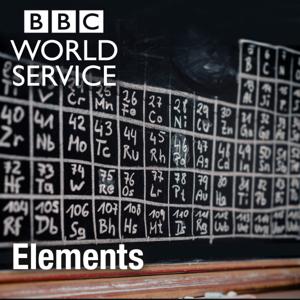
(Photo: Perdiodic table)
Lead is the sweetest of poisons, blamed for everything from mad Roman emperors to modern-day crime waves. Yet a lead-acid battery is still what gets your car going in the morning. So have we finally learnt how to handle this heavyweight element? Justin Rowlatt travels to arts shop Cornelissen in London's Bloomsbury to find out why they have stopped stocking lead paints, and hears from professor Andrea Sella of University College London about the unique properties that have made this metal so handy in everything from radiation protection to glassware.
Yet lead in petrol is also accused of having inflicted brain damage on an entire generation of children in the 1970s, as the economist Jessica Wolpaw-Reyes of Amherst College explains. And, producer Laurence Knight travels to one of the UK's only two lead smelters - HJ Enthoven's at Darley Dale in Derbyshire, the historical heartland of the UK lead industry - to see what becomes of the lead in your car battery. And, we speak to the director of the International Lead Association, Andy Bush.
The atomic clock runs on caesium, and has redefined the very meaning of time. But it has also introduced a bug into timekeeping that affects everything from computerised financial markets to electricity grids, and satellite navigation to the Greenwich Meridian.
Justin Rowlatt travels to the birthplace of modern time, the National Physical Laboratory in Teddington, England, to speak to Krzysztof Szymaniec, the keeper of the 'Caesium Fountain', and Leon Lobo, the man charged with disseminating time to the UK. He also hears from Felicitas Arias, director of time at the Bureau International des Poids et Mesures in Paris, about plans to abolish the 'leap second'.
And, the Astronomer Royal, Martin Rees, explains why even the atomic clock can never hope to provide an absolute measure of time.
From the publisher's feed
A close look at chemical elements, the basic building blocks of the universe. Where do we get them, what do we use them for and how do they fit into our economy?
Ranked by our users in the last 21 days

91,022 Listeners

43,852 Listeners

26,831 Listeners
26,151 Listeners

7,625 Listeners
873 Listeners

1,048 Listeners

5,481 Listeners
1,797 Listeners

3,201 Listeners

1,811 Listeners

1,907 Listeners
4,839 Listeners
964 Listeners

770 Listeners
359 Listeners

4,209 Listeners
3,225 Listeners

1,004 Listeners

723 Listeners
1,004 Listeners

779 Listeners