
Sign up to save your podcasts
Or

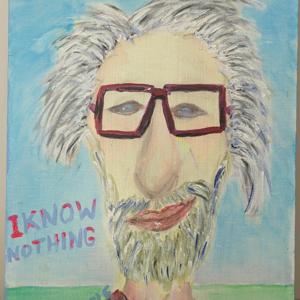

Of all the podcasts we’ve done so far, this is my favourite.
We discuss Peter Heather’s marvellous book “Christendom: the triumph of a Religion”. It covers the thousand years from the time Christianity becomes embedded in the Roman Empire, via Emperor Constantine’s conversion. Heather’s book shows how much Christianity was spread not by those ‘meek’ whom Jesus would have inherit the earth, but by the powerful for whom conversion offered improved relations with the Emperor’s court. Over time, and through the period of Charlemagne it infiltrated European life via various drives for Christian piety.
By the 12th century, the Church had deeply infiltrated people’s lives through the seven sacraments — which marked the weekly rhythms and major milestones of people’s lives — they included baptism, confirmation, the eucharist, penance, and marriage. And by the 12th century, the church was in many ways more powerful than any king or emperor. It controlled Europe’s operating system — it’s systems of information and learning and its transnational legal code. The church is also the template for a specific organisational form. The church was a unitary organisation governed by a monarch supported by a skilled bureaucracy administering an elaborate and time-honoured legal code. Nation states took their form from the church. So too, later on did corporations.
If you prefer watching the video, you can find it here.
 View all episodes
 By Nicholas Gruen
Of all the podcasts we’ve done so far, this is my favourite.
We discuss Peter Heather’s marvellous book “Christendom: the triumph of a Religion”. It covers the thousand years from the time Christianity becomes embedded in the Roman Empire, via Emperor Constantine’s conversion. Heather’s book shows how much Christianity was spread not by those ‘meek’ whom Jesus would have inherit the earth, but by the powerful for whom conversion offered improved relations with the Emperor’s court. Over time, and through the period of Charlemagne it infiltrated European life via various drives for Christian piety.
By the 12th century, the Church had deeply infiltrated people’s lives through the seven sacraments — which marked the weekly rhythms and major milestones of people’s lives — they included baptism, confirmation, the eucharist, penance, and marriage. And by the 12th century, the church was in many ways more powerful than any king or emperor. It controlled Europe’s operating system — it’s systems of information and learning and its transnational legal code. The church is also the template for a specific organisational form. The church was a unitary organisation governed by a monarch supported by a skilled bureaucracy administering an elaborate and time-honoured legal code. Nation states took their form from the church. So too, later on did corporations.
If you prefer watching the video, you can find it here.

2,456 Listeners

106 Listeners
84 Listeners

126 Listeners
4,061 Listeners

313 Listeners
1,650 Listeners
568 Listeners

4 Listeners
1,089 Listeners
382 Listeners
3 Listeners
22 Listeners

3 Listeners

1 Listeners