
Sign up to save your podcasts
Or

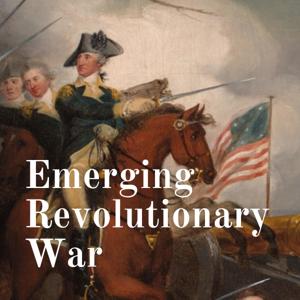


British cartographer William Faden is well known for his maps depicting major battles of the Revolutionary War. Unusually, he produced two maps of the Battle of Brandywine, one in 1778 and the other in 1784. Each map shows troop movements and positions along with other aspects of the overall battlefield landscape, but each conveys significantly different information. Andrew Outten, historical programs manager for the American Revolution Institute of the Society of the Cincinnati, will discuss the Battle of Brandywine, key differences between the two maps, and recent discoveries pertaining to those differences.
During the War for Independence, Fort Ticonderoga’s guns, sited critically between Lakes Champlain and George, dominated north-south communications in upstate New York that were vital to both the British and American war efforts. In the public mind Ticonderoga was the “American Gibraltar” or the “Key to the Continent,” and patriots considered holding the fort essential to the success of the Revolutionary cause. Join us for this installment of our Rev War Revelry series as we welcome back award-winning historian, Dr. Mark Edward Lender, to discuss his newest book and the importance of Fort Ticonderoga in the oft-forgotten latter years of the Revolutionary War in Upstate New York.
Join our Emerging Revolutionary War historians for a discussion on highlights from the Valley Forge - Monmouth tour in 2022 and reveal where we are headed in November 2023. We will also discuss other upcoming 2023 projects.
Join us as we highlight Emerging Revolutionary War's newest book "Unhappy Catastrophes: The American Revolution in Central New Jersey, 1776–1782" by Robert M. Dunkerly. The book follows the course of the war through its various phases and details lesser-known battles, military campsites, raids, espionage, and more. The book also includes historic sites to visit, markers, and websites for further research and study. We will sit down with the author and discuss the book, the events and personalities in central New Jersey and places to visit today.
In the summer of 2022, archaeologists discovered the remains of 13 Hessians who had been killed during the Battle of Red Bank in New Jersey. The Battle of Red Bank was fought on October 22, 1777 and resulted in the deaths of dozens of Hessian soldiers. Join Emerging Revolutionary War as we welcome one of the archaeologists who worked on the project, Wade Catts, to discuss the battle, the surprising discovery that occurred this summer, and what we can learn from archaeology about the men who fought the battle 245 years ago.
This October marks the 241st anniversary of the Siege of Yorktown. Before Cornwallis was forced into his works at Yorktown, American and British forces sparred across Virginia in a series of moves and countermoves. We welcome back Dr. John Maass to our Sunday night Rev War Revelry as we discuss the events of 1781 in Virginia and Dr. Maass' book "Road to Yorktown."
The Saratoga Campaign and Battle of Saratoga sit near the top of numerous "Turning Points of the Revolutionary War" lists. It is a story that has been told many times. New research has shed additional light on the campaign's well-known and trivial parts. Join Saratoga National Historical Park interpreter and historian Eric Schnitzer as we explore new research being conducted about the campaign. Eric also authored the text of Don Troiani's Campaign to Saratoga - 1777: The Turning Point of the Revolutionary War in Paintings, Artifacts, and Historical Narrative.
The Battle of Fort McHenry is well known in American history. The defense of the fort which protected Baltimore harbor turned back the British in September 1814 and led to the writing of the poem and future national anthem, "The Star-Spangled Banner." Less though is known about the accompanying land battle, fought between the British and American militia at North Point on September 12, 1814. Tune in to this "Rev War Revelry" as Emerging Revolutionary War discusses the action at North Point with historians Jim Bailey and Chris Boyle.
On July 9, 1755, British regulars and American colonial troops under the command of General Edward Braddock, commander in chief of the British Army in North America, were attacked by French and Native American forces shortly after crossing the Monongahela River and while making their way to besiege Fort Duquesne in the Ohio Valley, a few miles from what is now Pittsburgh. The long line of red-coated troops struggled to maintain cohesion and discipline as Indian warriors quickly outflanked them and used the dense cover of the woods to masterful and lethal effect. Within hours, a powerful British army was routed, its commander mortally wounded, and two-thirds of its forces casualties in one the worst disasters in military history. Join us for this Rev War Revelry as we sit down with historian David L. Preston to discuss his book and this critical event in America's colonial history.
Join historian Phill Greenwalt as he discusses the impact Nathanael Greene had on improving the supply situation during the Valley Forge encampment in 1777-1778 with Dan Davis of the American Battlefield Trust. Washington's trust in Greene was affirmed by Greene's improvement of the Quartermaster Department of Washington's Army at Valley Forge.
From the publisher's feed
4,706 Listeners

1,561 Listeners

744 Listeners

787 Listeners
3,992 Listeners

6,231 Listeners

6,157 Listeners
1,035 Listeners

4,209 Listeners

3,338 Listeners
923 Listeners

208 Listeners

387 Listeners

2,132 Listeners

1,593 Listeners