
Sign up to save your podcasts
Or

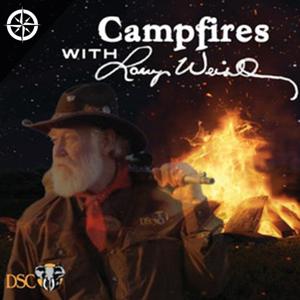

This episode of DSC’s Campfire features host Larry Weishuhn joined by returning guest Craig Archer and wildlife biologist Cyle Foley. Recorded in a hunting camp in the Rolling Plains of Texas, the trio dives deep into the science and strategy behind successful wildlife management.
The Role of a Biologist:
Cyle Foley explains his role as a consulting wildlife biologist. He emphasizes that effective management starts with knowing what you have. He conducts helicopter surveys to count populations, determining buck-to-doe ratios and fawn crops to set accurate harvest quotas.
The group discusses the importance of the "management team"—the landowner, the land manager (Craig), and the biologist (Cyle) working in unison to achieve property goals.
Deer Management Philosophy:
"Age is King": Cyle stresses that age is the most critical factor in producing big deer. A buck needs to reach maturity (5-6 years old) to express his full potential.
Nutrition is Queen: Once age is established, nutrition is the next limiting factor. If a deer has age and food, the antlers will follow.
Genetics is the Joker: They agree that in a low-fence, free-range environment, you cannot effectively manage genetics. Culling "inferior" bucks generally doesn't work because you can't control the doe's genetic contribution.
The Quail Equation:
The Rolling Plains is famous for quail, but populations are volatile ("boom or bust").
Cyle explains that while rain is essential, timing is everything. Rain is needed to grow forbs (weeds), which attract insects. Quail chicks require a diet of almost 100% insects for the first few weeks of life to survive. Without "bugging grounds," the chicks starve even if the habitat looks green.
Habitat Restoration:
They discuss the use of prescribed fire and mechanical clearing (grubbing) to restore grasslands. The goal is to create a mosaic of cover and open space that benefits both deer and quail.
Cyle’s Background:
A graduate of Texas Tech University, Cyle started his own consulting business to help landowners across Texas. He values the relationship with practical managers like Craig who can implement the scientific recommendations effectively on the ground.
"You can't manage what you don't know you have." — Cyle Foley (on the necessity of accurate wildlife surveys)
Learn more about your ad choices. Visit megaphone.fm/adchoices
 View all episodes
 By Larry Weishuhn

4.9
1717 ratings
This episode of DSC’s Campfire features host Larry Weishuhn joined by returning guest Craig Archer and wildlife biologist Cyle Foley. Recorded in a hunting camp in the Rolling Plains of Texas, the trio dives deep into the science and strategy behind successful wildlife management.
The Role of a Biologist:
Cyle Foley explains his role as a consulting wildlife biologist. He emphasizes that effective management starts with knowing what you have. He conducts helicopter surveys to count populations, determining buck-to-doe ratios and fawn crops to set accurate harvest quotas.
The group discusses the importance of the "management team"—the landowner, the land manager (Craig), and the biologist (Cyle) working in unison to achieve property goals.
Deer Management Philosophy:
"Age is King": Cyle stresses that age is the most critical factor in producing big deer. A buck needs to reach maturity (5-6 years old) to express his full potential.
Nutrition is Queen: Once age is established, nutrition is the next limiting factor. If a deer has age and food, the antlers will follow.
Genetics is the Joker: They agree that in a low-fence, free-range environment, you cannot effectively manage genetics. Culling "inferior" bucks generally doesn't work because you can't control the doe's genetic contribution.
The Quail Equation:
The Rolling Plains is famous for quail, but populations are volatile ("boom or bust").
Cyle explains that while rain is essential, timing is everything. Rain is needed to grow forbs (weeds), which attract insects. Quail chicks require a diet of almost 100% insects for the first few weeks of life to survive. Without "bugging grounds," the chicks starve even if the habitat looks green.
Habitat Restoration:
They discuss the use of prescribed fire and mechanical clearing (grubbing) to restore grasslands. The goal is to create a mosaic of cover and open space that benefits both deer and quail.
Cyle’s Background:
A graduate of Texas Tech University, Cyle started his own consulting business to help landowners across Texas. He values the relationship with practical managers like Craig who can implement the scientific recommendations effectively on the ground.
"You can't manage what you don't know you have." — Cyle Foley (on the necessity of accurate wildlife surveys)
Learn more about your ad choices. Visit megaphone.fm/adchoices
4,811 Listeners

41,172 Listeners
38,057 Listeners

1,533 Listeners

816 Listeners
21 Listeners
1,190 Listeners
423 Listeners

1,202 Listeners

311 Listeners

40,522 Listeners
7,438 Listeners
375 Listeners
17,000 Listeners
170 Listeners