
Sign up to save your podcasts
Or

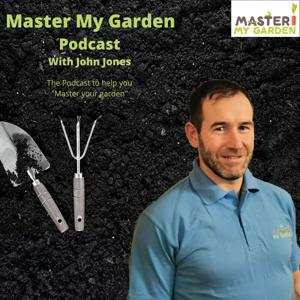

Peat built our seed-starting habits because it made life easy: even moisture, airy structure, predictable results. But when carbon-rich bogs and vanishing habitats enter the frame, “easy” stops feeling right. We take a clear-eyed look at what peat-free really means for gardeners in Ireland, the UK, and the US—beyond labels, beyond trends—and ask how to balance strong germination with true environmental sense.
We start by mapping the policy shifts and market realities: Ireland still sells mostly peat-based compost; the UK’s retail ban has pushed rapid innovation; the US market offers a mature spread of growing media, from coir and wood fibre to biochar, vermicast, and tailored blends. Then we dig into performance. Peat-free mixes can be excellent but inconsistent, changing with feedstocks and age. Two bags from the same pallet may give different germination and salt levels. We explain why that happens, how peat-free holds water differently, and how to adjust watering and timing to avoid stalled seedlings or damping-off.
From there, we get practical. We’re trialling three seed-starting paths this season: a local vermicast blend opened with perlite and a touch of biochar for moisture balance; a highly regarded coir-forward seed mix known for uniform germination; and a very small reserve of peat-based compost used only for sowing. We also share DIY routes: hot-composting followed by a long cure to stabilise the material, blending with sharp sand or perlite, and using inert media like grit plus vermiculite for germination before an early prick-out into a proven mix. Along the way, we question coir’s “green” halo by tracing its journey across oceans and factories—great performance can still carry a heavy footprint if it travels farther than your holidays.
If you want reliable seedlings without greenwash, this conversation gives you a framework: use imports sparingly where they truly shine, switch to local bulk mixes for planters and potting on, learn the moisture cues of peat-free, and record what works in your climate. We’d love to hear your winning recipes and failures too. Subscribe, share this with a gardening friend, and leave a review with your go-to seed-starting mix so we can test it next.
Join my free Grow Your Own Food Webinar:
http://subscribepage.io/growyourownfoodwebinar
Last Few Places In Feb Workshop:
https://subscribepage.io/growyourownfoodworkshop
Support the show
If there is any topic you would like covered in future episodes, please let me know.
Email: [email protected]
Check out Master My Garden on the following channels
Facebook: https://www.facebook.com/mastermygarden/
Instagram @Mastermygarden https://www.instagram.com/mastermygarden/
Until next week
Happy gardening
John
 View all episodes
 By John Jones
5
33 ratings
Peat built our seed-starting habits because it made life easy: even moisture, airy structure, predictable results. But when carbon-rich bogs and vanishing habitats enter the frame, “easy” stops feeling right. We take a clear-eyed look at what peat-free really means for gardeners in Ireland, the UK, and the US—beyond labels, beyond trends—and ask how to balance strong germination with true environmental sense.
We start by mapping the policy shifts and market realities: Ireland still sells mostly peat-based compost; the UK’s retail ban has pushed rapid innovation; the US market offers a mature spread of growing media, from coir and wood fibre to biochar, vermicast, and tailored blends. Then we dig into performance. Peat-free mixes can be excellent but inconsistent, changing with feedstocks and age. Two bags from the same pallet may give different germination and salt levels. We explain why that happens, how peat-free holds water differently, and how to adjust watering and timing to avoid stalled seedlings or damping-off.
From there, we get practical. We’re trialling three seed-starting paths this season: a local vermicast blend opened with perlite and a touch of biochar for moisture balance; a highly regarded coir-forward seed mix known for uniform germination; and a very small reserve of peat-based compost used only for sowing. We also share DIY routes: hot-composting followed by a long cure to stabilise the material, blending with sharp sand or perlite, and using inert media like grit plus vermiculite for germination before an early prick-out into a proven mix. Along the way, we question coir’s “green” halo by tracing its journey across oceans and factories—great performance can still carry a heavy footprint if it travels farther than your holidays.
If you want reliable seedlings without greenwash, this conversation gives you a framework: use imports sparingly where they truly shine, switch to local bulk mixes for planters and potting on, learn the moisture cues of peat-free, and record what works in your climate. We’d love to hear your winning recipes and failures too. Subscribe, share this with a gardening friend, and leave a review with your go-to seed-starting mix so we can test it next.
Join my free Grow Your Own Food Webinar:
http://subscribepage.io/growyourownfoodwebinar
Last Few Places In Feb Workshop:
https://subscribepage.io/growyourownfoodworkshop
Support the show
If there is any topic you would like covered in future episodes, please let me know.
Email: [email protected]
Check out Master My Garden on the following channels
Facebook: https://www.facebook.com/mastermygarden/
Instagram @Mastermygarden https://www.instagram.com/mastermygarden/
Until next week
Happy gardening
John

1,984 Listeners
284 Listeners

108 Listeners

130 Listeners
271 Listeners
682 Listeners

1,858 Listeners
37 Listeners

1,844 Listeners
86 Listeners
370 Listeners
306 Listeners
210 Listeners

2,135 Listeners

539 Listeners