
Sign up to save your podcasts
Or

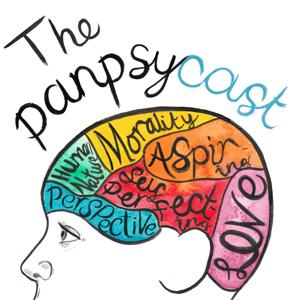

Everything you could need is on www.thepanpsycast.com! Please tweet us your thoughts at www.twitter.com/thepanpsycast. Most people understand conscience as something which tells us right from wrong. The conscience is that little voice in your head that tells you to do your homework, go to bed on time and eat 5 a day. In fact, the Oxford Dictionary defines conscience as: "A person's moral sense of right and wrong, viewed as acting as a guide to one's behaviour." We're going to be questioning this definition extensively. What is conscience? Where does the conscience come from? Where does the word conscience come from? Is conscience fundamental in its own right, or is it acquired through our development? Does the conscience carry any moral authority, and if so, what should be the function of conscience in ethical decision-making? Is conscience just an illusion? To aid our exploration of these questions, we're going to be consulting C. S. Lewis' Studies in Words in Part I, Aquinas' Summa Theologiae in Part II and Sigmund Freud's The Ego and the Id in Part III. In Part IV we'll wrap up the show with some further analysis and discussion and the return of philosophical ultimatum.
 View all episodes
 By Jack Symes | Andrew Horton, Oliver Marley, Rose de Castellane, Gregory Mill

4.8
286286 ratings
Everything you could need is on www.thepanpsycast.com! Please tweet us your thoughts at www.twitter.com/thepanpsycast. Most people understand conscience as something which tells us right from wrong. The conscience is that little voice in your head that tells you to do your homework, go to bed on time and eat 5 a day. In fact, the Oxford Dictionary defines conscience as: "A person's moral sense of right and wrong, viewed as acting as a guide to one's behaviour." We're going to be questioning this definition extensively. What is conscience? Where does the conscience come from? Where does the word conscience come from? Is conscience fundamental in its own right, or is it acquired through our development? Does the conscience carry any moral authority, and if so, what should be the function of conscience in ethical decision-making? Is conscience just an illusion? To aid our exploration of these questions, we're going to be consulting C. S. Lewis' Studies in Words in Part I, Aquinas' Summa Theologiae in Part II and Sigmund Freud's The Ego and the Id in Part III. In Part IV we'll wrap up the show with some further analysis and discussion and the return of philosophical ultimatum.
15,251 Listeners
315 Listeners

777 Listeners
2,113 Listeners
199 Listeners

5,565 Listeners
1,613 Listeners

1,539 Listeners

316 Listeners
245 Listeners
356 Listeners
1,661 Listeners
206 Listeners
464 Listeners
231 Listeners