
Sign up to save your podcasts
Or

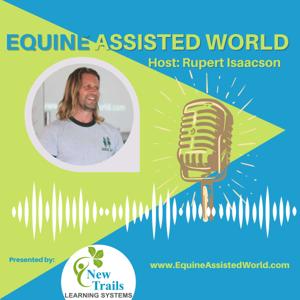
By Rupert Isaacson

5
1111 ratings


The podcast currently has 64 episodes available.
The most played episodes among Podcast App listeners.
✨ "Well, I'm an engineer. I collect data." – Laila Rahmatian Laila Rahmatian is an autism mom and former NASA engineer, originally from Houston and living in Indianapolis, Indiana when her son Donatello was diagnosed with autism spectrum disorder in October 2024 — now based near Frankfurt, Germany. Unlike most guests on this show, Laila isn't a practitioner — she's a service user. After her son's diagnosis, she brought her engineering background to bear on his care, systematically tracking data across a comparison of therapy approaches and, eventually, more than 70 Horse Boy Method sessions. This conversation covers Laila's diagnosis journey, why she walked away from a well-regarded autism center within minutes of touring it, the chance referral that led her family to Horse Boy Method after relocating to Germany, and the session-by-session developmental milestones her data captured — from a son who could barely stay on a horse for a minute to one making spontaneous eye contact, sleeping through the night, and initiating speech. If you want to support the show, you can do so at Patreon: https://www.patreon.com/LongRideHome 🔍 What You'll Learn in This EpisodeWhy the first signs of Donatello's autism showed up not as a language delay but as a failure to respond to his own name — until a summer camp counselor discovered it wasn't the name he needed to hear, it was his mother's voiceHow Laila's background as a former NASA engineer, and later an ADHD coach and tutor, shaped her instinct to research every option rather than accept the first professional's recommended protocolWhy Laila and her husband initially tried to "rule out" the diagnosis entirely, and what changed their mindsWhat made Laila walk out of a well-regarded autism therapy center within ten minutes of touring it, and why environment turned out to matter as much as methodHow a chance referral from a school in Germany — not a marketing campaign — led Laila's family to Horse Boy Method for the first timeWhy Laila decided to start formally recording data on her son's sessions, and how skepticism from others became the reason she started tracking numbersWhat Laila's session-by-session data showed across roughly 70 sessions — from a child who could barely stay on the horse for a minute to one making spontaneous eye contact, sleeping through the night, and initiating speechHow working with multiple Horse Boy and Movement Method practitioners across Germany gave Laila a way to compare approaches and see which data patterns held upWhy Laila enrolled in Movement Method training herself rather than only bringing her son to sessions, and how that changed her ability to support him at homeWhat Laila is now planning for her family's next chapter — a "Horse Boy pilgrimage" across the practitioner network in Europe🎤 Memorable Moments from the Episode [00:01:15] Rupert introduces Laila as a mother tracking hard data on her autistic son's progress — and a former NASA scientist — flipping the show's usual practitioner-focused format [00:06:33] Laila recalls getting her son's diagnosis over the phone while driving, and telling the doctor she felt like they were "out to get my insurance money" [00:13:26] Laila breaks down in tears within ten minutes of touring a well-known autism therapy center, describing its sterile, neon-lit rooms as feeling like an asylum [00:29:30] Laila shares getting fired from a substitute teaching job at a Christian school for swearing in class — an unexpected twist in the chain of events that push her family toward the move to Germany [00:33:26] Laila recounts thinking "Horse Boy" was simply the German word for horse therapy, and mistakenly believing Rupert didn't speak English before their first meeting [00:39:50] Laila describes watching Donatello ride for the first time and hearing Rupert mention oxytocin and neuroplasticity — the moment she starts to move past her skepticism [00:54:52] Laila explains why she started formally logging data on every session: "Well, I'm an engineer. I collect data" [00:59:35] Laila walks through the data from session 19, when Donatello began saying "on" and "off" without prompting, answered yes/no questions at school, and slept through the night for the first time [01:20:38] Laila describes session 63, when Donatello pointed and said "That way" while on the horse [01:20:59] Laila recalls a session with practitioner Carla Brahms where Donatello sang and moved his hands on horseback, bringing Carla to tears 📚 Contact, Projects, and Resources Mentioned Laila Rahmatian https://www.instagram.com/lailaalieh/ New Trails Learning Systems – Horse Boy Method, Movement Method & Takhin Equine Integration https://ntls.co Rupert Isaacson / Long Ride Home https://rupertisaacson.com Patreon Support https://www.patreon.com/LongRideHome 🌍 Follow Us Long Ride Home https://longridehome.com https://facebook.com/longridehome.lrh https://instagram.com/longridehome_lrh https://youtube.com/@longridehome New Trails Learning Systems https://ntls.co https://facebook.com/horseboyworld https://instagram.com/horseboyworld https://youtube.com/newtrailslearningsystems 📊 Affiliate Disclosure Links to books and products may include affiliate tracking. We may earn a commission if you make a purchase, at no extra cost to you. Thank you for supporting the show.

✨ "It's not that I gave up. I switched." – Carolina Lockwood Carolina Lockwood joins Rupert Isaacson from Bariloche, in the Patagonia region of Argentina, where she has spent more than 30 years building equine-assisted work from the ground up — first blending art therapy with horses, then training directly with Rupert in Texas, then running an intensive Horse Boy–style program, then coaching, and now facilitating horse-based energy healing. What makes Carolina's story distinctive is the environment she's built it in. In the areas around Bariloche, horse theft for meat is a real and recurring danger — over the years Carolina has lost five horses to thieves, including cases where stolen horses were found slaughtered. She talks candidly about tracking horses down with the police, the informal social protections that eventually stabilized her herd's safety, and the anxiety that never fully goes away even after 30 years without an incident. The conversation traces her full arc: building a team of six staff and 30 kids a week at the height of her program, learning to read burnout in both horses and herself, closing that chapter deliberately rather than abandoning the work altogether, and evolving into equine coaching (trained through Kathy Pike and the Linda Kohanov lineage), liberty work (with Jean-François Pignon and Celeste Solzenne), and now a year-plus training in horse-facilitated energy healing with Saskia Marroquin of Caballo Cósmico. Along the way, Rupert and Carolina dig into what "energy work" actually means in practical terms, and why practitioners shouldn't feel locked into one rigid model for life. If you want to support the show, you can do so at Patreon: https://www.patreon.com/LongRideHome 🔍 What You'll Learn in This EpisodeHow Carolina moved from art therapy and ceramics work with special-needs kids into equine-assisted work in Bariloche, PatagoniaWhy she traveled to Texas to train directly with Rupert after discovering the Horse Boy filmWhat it's actually like running horses in a region where theft and slaughter for meat is a recurring, organized threat — and how she and her family tracked down stolen horses with the policeWhy gauchos' and polo horses are rarely stolen while therapy and pleasure horses are the ones targetedHow Carolina rebuilt her herd's security by relocating and relying on informal community protection rather than fences or gunsWhat her own "non-structure structure" for horse welfare looks like, built around free roaming, herd life, and trust — and how it differs from the fitness-and-conditioning approach used in Horse Boy MethodHow she learned to read burnout in a horse, including a beloved therapy horse who started biting handlers when he was "done"Why she eventually closed her intensive riding-based program on purpose, and how she thinks about that decision nowHow she transitioned into equine coaching, training with Kathy Pike and the lineage of Linda Kohanov in ColoradoWhat liberty work with Jean-François Pignon and his student Celeste Solzenne taught her about horses reflecting a person's inner stateHow she began training in horse-facilitated energy healing with Saskia Marroquin of Caballo Cósmico, and what that work looks like in practiceThe story of a terminally ill client whose final wish involved Carolina's horses, and what it revealed to her about this kind of healingWhat Carolina's dream is for a future retreat and rescue sanctuary in Patagonia, and why she's decided to say it out loud 🎤 Memorable Moments from the Episode [00:02:02] Carolina's path from art therapy and ceramics to horses, and the natural horsemanship training with Paul Walker that changed her perspective [00:06:27] Discovering the Horse Boy film, writing to Rupert, and going to Texas to train [00:11:56] The reality of horse theft and slaughter for meat in the mountains around Bariloche [00:15:22] Tracking down stolen horses with the police, and the ones she never got back [00:28:36] Carolina's "non-structure structure" for horse welfare, compared with Horse Boy's fitness-based system [00:38:00] A beloved therapy horse starts biting handlers — reading the signs of equine burnout [00:51:00] Carolina's own burnout, and the deliberate decision to close her intensive program [00:59:42] Liberty training with Jean-François Pignon and Celeste Solzenne [01:19:00] The story of a terminally ill client and what happened in her final horse session [01:32:55] Carolina's dream of a future healing retreat and rescue sanctuary in Patagonia 📚 Contact, Projects, and Resources Mentioned Carolina Lockwood – Equine-assisted practitioner, coach & energy healing facilitator Email: [email protected] Patreon Support https://www.patreon.com/LongRideHome 🌍 Follow Us Long Ride Home https://longridehome.com https://facebook.com/longridehome.lrh https://instagram.com/longridehome_lrh https://youtube.com/@longridehome New Trails Learning Systems https://ntls.co https://facebook.com/horseboyworld https://instagram.com/horseboyworld https://youtube.com/newtrailslearningsystems 📊 Affiliate Disclosure Links to books and products may include affiliate tracking. We may earn a commission if you make a purchase, at no extra cost to you. Thank you for supporting the show.
✨ "It's not about the job or the wages. You have to love it with absolute passion." – Helen Picha Helen Picha manages Liskennett Farm, a groundbreaking equine-assisted therapy center for children and adults with autism and intellectual disabilities in Granagh, County Limerick, Ireland, on the border of Limerick and Cork. She took over as manager two years ago after eleven years working alongside founder David Doyle, and now runs the 80-acre center — home to 23 horses across residential, day, and equine programs — that Rupert calls the cutting edge of best practice in equine-assisted therapy. What sets Liskennett apart is scale paired with radical openness. Every Saturday, the farm runs a booking-free, fee-free open day that draws between 80 and 100 children, no appointment required, no family turned away. Its indoor arena, originally built for riding, has been repurposed entirely into a music, movement, and play space, because the horses and children preferred being outdoors. And many of Liskennett's horses are retired Thoroughbred racehorses, some placed at Cheltenham, brought down from the racing circuit through a careful, months-long retraining process before ever carrying a child. In this conversation, Helen and Rupert trace Liskennett's origin story — from a 2012 Horse Boy demo, a young woman's tragic death, and a €3 million donation to a modern therapy campus — and dig into how the farm actually runs day to day: horse selection and retraining, staff burnout prevention, community integration through an inclusive fox hunt and horse show, and Liskennett's expansion into new satellite centers backed by €6 million in Irish government funding. If you want to support the show, you can do so at Patreon: https://www.patreon.com/LongRideHome 🔍 What You'll Learn in This EpisodeHow Liskennett Farm evolved from an 80-acre burned-out stud farm into a state-of-the-art residential, day, and equine therapy hub serving hundreds of children and adults with autism and intellectual disabilitiesWhy founder David Doyle built a "step in, step down, step out" model, letting families in crisis access residential support without being permanently separatedWhat Liskennett's booking-free Saturday open days look like, welcoming 80 to 100 children with no appointment, no fee, and no rushHow the farm's Christmas open day scaled to 300 children in a single day, all riding and meeting Santa, with zero bookings and zero meltdownsWhy Liskennett retired the original purpose of its indoor arena entirely, turning it into a music, movement, and play space insteadHow retired racehorses, many connected to the McManus racing family, are systematically retrained over six to twelve months before ever carrying a childWhat the "MMM Room" (Movement Method to Music) is, and how a chance visit from founder David Doyle's daughter Caroline inspired its creationHow Liskennett integrates families into local community life through an inclusive fox hunt, agricultural show classes, and an annual fundraising concertWhy Helen believes horsemanship fundamentals — temperament, soundness, and long, slow conditioning work — are the foundation of safe therapeutic ridingHow the farm is expanding with new satellite hubs in Charleville and Kanturk, backed by €6 million in HSE fundingWhat Helen learned from an early personal loss that quietly shaped her approach to working with families years before she ever set foot in LiskennettHow Helen and her team plan for staff burnout with rotating schedules, an open culture around asking for help, and regular team celebrations🎤 Memorable Moments from the Episode [00:04:50] Rupert traces how Liskennett came to exist: a 2012 Horse Boy demo organized by Shelley Murtagh, who died of a brain tumor three months later — and three years after that, an email from David Doyle leading to €3 million raised for the center [00:09:02] Helen shares that at age 20 she had a daughter, Danielle, born with spina bifida and hydrocephalus, who lived 11 months — an experience that quietly planted the seed for her future work, long before she knew it [00:12:13] Helen describes Liskennett's booking-free Saturday open days: up to 100 children riding between 9:30am and 3:30pm, with no appointment required and no family turned away [00:14:59] Last Christmas, 300 children went horse riding and met Santa in a single day with no booking system, and Helen says not one child had a meltdown [00:25:00] Rupert recalls the moment eight nonverbal autistic boys galloped past him independently on Liskennett's ponies, taking instruction and riding single file at the canter [00:31:43] Helen walks through how retired Thoroughbreds, including horses that placed at Cheltenham, are brought down from the racing circuit over six to twelve months before any child rides them [00:47:16] Helen tells the story behind the "MMM Room" — inspired by watching founder David Doyle's autistic daughter Caroline light up at the sight of mirrors and music in an unrelated training room [01:01:00] Helen reveals the scale of Liskennett's growth: a new satellite center in Kanturk backed by €6 million in HSE funding, with Ireland's Taoiseach turning the sod at the site [01:20:40] Rupert and Helen recall Staker Wallace, a JP McManus racehorse, briefly reverting to old "racing brain" habits while walking into the Limerick Racecourse parade ring before settling back down [01:43:57] Helen is coaxed into singing a verse of a Christy Moore song live on the show 📚 Contact, Projects, and Resources Mentioned Helen Picha – Manager, Liskennett Farm / St. Joseph's Foundation https://www.sjf.ie/What-We-Do/Facilities/Liskennett-Farm Liskennett Farm – Facebook https://facebook.com/LiskennettETC Liskennett Farm – Instagram https://instagram.com/liskennettequinetherapy St. Joseph's Foundation https://www.sjf.ie 🌍 Follow Us Long Ride Home https://longridehome.com https://facebook.com/longridehome.lrh https://instagram.com/longridehome_lrh https://youtube.com/@longridehome New Trails Learning Systems https://ntls.co https://facebook.com/horseboyworld https://instagram.com/horseboyworld https://youtube.com/newtrailslearningsystems 📊 Affiliate Disclosure Links to books and products may include affiliate tracking. We may earn a commission if you make a purchase, at no extra cost to you. Thank you for supporting the show.
✨ "The healing process is there in service of your life, not the other way around. Do the healing in order to live." – Kira Julius Kira Julius is a German-Danish horse trainer and equine assisted practitioner whose career has taken her from working young horses in Tanzania at 16, to eight years alongside Australian warmblood specialist Will Rogers — first in the Netherlands, then Germany — to therapeutic work with autistic children and families across Germany, Denmark, Ireland, and the UK. She now runs her own practice through horserealms.com, working with horses, families, and individuals at the intersection of horsemanship and resilience. What makes Kira's perspective unusual is that she has lived the subject she now teaches. A lifelong relationship with anxiety and fear around horses, a family crisis at 18 when her father suffered a stroke that pulled her into an early adult role, and years inside the hyper-demanding world of sport horse training — including a period where her own anxiety became so acute she could barely ride — all of it has shaped a practitioner who speaks from earned experience, not theory. In this conversation, Rupert and Kira go deep on what resilience actually means — for horses, for humans, and for the practitioners who work with both. They move through the groundwork methodology Kira developed starting sensitive warmbloods, the specific exercises that release tension and build connection, and how those same principles apply when working with autistic children. They explore why always being calm may be the wrong goal, how to move through fear rather than wait for it to pass, and why the trauma conversation risks tipping into a place that keeps people stuck. This is a wide-ranging, experience-backed conversation that will resonate with anyone who works with horses, with neurodivergent individuals, or with their own inner life. If you want to support the show, you can do so at Patreon: https://www.patreon.com/LongRideHome 🔍 What You'll Learn in This Episode How curiosity overrides anxiety — and why doing the thing is often more healing than waiting until you feel ready Why "always being calm" is not the goal for horses or humans, and what heart rate variability tells us about genuine resilience How to distinguish between protective fear and anxious mental noise — and how gut instinct becomes the tool for telling them apartThe groundwork methodology Kira used starting sensitive warmbloods: approach and retreat, shoulder yields, hindquarter yields, and why crossing the midline triggers BDNF and neuroplasticityWhy the shoulder-in position is both a tension-release tool and a safety tool — and how having it reliably in place can get a handler out of serious troubleHow Kira's experience of her father's stroke at 18 shaped her understanding of grief, family strain, and the cost of going into management mode when you're struggling yourselfHow Kira's own severe anxiety crisis mid-career — when she could barely get on a horse — became the turning point that led her toward therapeutic work with humansWhy seeing possibilities rather than problems is the key reframe in both horse training and equine assisted work with neurodivergent clientsWhy the trauma conversation risks becoming a place people stay rather than move through — and what the spiral model of grief and healing offers insteadHow projecting limitations onto horses or children blocks their capacity to surprise us, and why listening to the person in front of you matters more than the story others gave youWhy joy and play are not extras in equine assisted work — they are the mechanism by which change happensWhy practitioners who want horses or clients to make big changes need to be making changes themselves 🎤 Memorable Moments from the Episode [00:12:38] Kira explains why waiting to feel "ready" often keeps anxiety alive — the doing of the thing is what changes your storyline [00:15:00] Kira describes what happened when her father had a stroke at 18 — and how managing practical needs meant disconnecting from her family emotionally at the same time [00:30:17] Kira takes us inside the Will Rogers yard: how they started sensitive warmbloods using groundwork, approach and retreat, and the principle of explaining the human world to the horse rather than demanding compliance [00:37:12] The connection between lateral movement, crossing the midline, and BDNF — why these classical exercises produce neuroplasticity in horses just as they do in humans [00:45:16] Why shoulder yields and hindquarter yields are not just gymnastic tools but safety tools — and how they can get a handler out of serious trouble when a horse reacts unexpectedly [00:49:08] Tarp training in front of thousands of people: how Will Rogers conditioned sharp warmbloods to treat a crashing plastic sheet as a signal to exhale, not explode [00:56:57] Kira's own anxiety crisis at Will's yard — when the pressure to produce calm horses while managing a conflict between the horse's needs and client expectations sent her into a spiral she couldn't ride through [01:00:21] The "calm at all times" myth — why both Rupert and Kira push back on the idea that triggering is a failure, and what Rupert's experience walking with lions in the Kalahari reveals about appropriate fear [01:12:23] Kira reframes the goal with horses: not calm at all times, but maintaining connection through whatever arises [01:39:14] Working with an autistic child: why listening to what the person is actually telling you matters more than the story others have given you about them [01:54:00] The grief spiral: going down to meet it, then spiraling back up to build from it — and why many people only do the first half [02:05:35] Rupert's challenge to practitioners: if you want a horse or child to make a big change, what changes are you currently making yourself? 📚 Contact, Projects, and Resources Mentioned Kira Julius – Horse trainer and equine assisted practitioner https://horserealms.com Instagram: https://www.instagram.com/kira.horses_/ New Trails Learning Systems – Horse Boy Method, Movement Method & Takhin Equine Integrationhttps://ntls.co Patreon Support https://www.patreon.com/LongRideHome Alan Pogue – Trick training / Imagine a Horse https://imaginehorse.com 🌍 Follow Us Long Ride Home https://longridehome.com https://facebook.com/longridehome.lrh https://instagram.com/longridehome_lrh https://youtube.com/@longridehome New Trails Learning Systems https://ntls.co https://facebook.com/horseboyworld https://instagram.com/horseboyworld https://youtube.com/newtrailslearningsystems 📊 Affiliate Disclosure Links to books and products may include affiliate tracking. We may earn a commission if you make a purchase, at no extra cost to you. Thank you for supporting the show.
In this essential episode of Equine Assisted World, Rupert Isaacson sits down with Dr. Temple Grandin, one of the world’s most influential voices on autism, sensory processing, and practical approaches to learning and healing. Together, they explore how therapeutic riding centers can do more than just offer horse time—they can create whole environments of sensory safety, meaningful skill-building, and community resilience. Dr. Grandin shares her personal experiences growing up autistic, her early fears and breakthroughs, and the real-life tools that helped her thrive—tools that every equine program can apply. From using turn-taking games to stimulate speech to setting up repair shops and greeter stations to build confidence and career readiness, this episode is a blueprint for any equine-assisted center aiming to have deeper impact. If you want to support the show, you can do so at Patreon: https://www.patreon.com/LongRideHome ✨ What You’ll Learn in This Episode: The Power of Observation & Following the Child (Starts at 01:00)How Rupert adapted Temple's three-step approach to help his nonverbal sonWhy nature and movement are essential for sensory integrationEquine Interaction & Sensory Patterns (Starts at 04:00)The three ways autistic kids respond to animalsWhat PET scans and OTs show about rhythm, balance, and the cerebellumWhy nature and gardens still matter even without horsesEarly Intervention with Church Play & Library Play (Starts at 07:00)Why many children can't afford to be on waitlistsTurn-taking games and imitation as entry pointsHow to tap into local retirees to fill gaps in early interventionTheory of Mind & Naturalistic Learning (Starts at 08:30)Flapping, spinning coins, and making daisy chains as foundational social engagementHow structured tasks lead to intellectual developmentHigh Expectations with Support (Starts at 14:00)Accommodating without overprotecting: ferry horns and dessert rulesWhy selling candy and hosting parties mattered for both Temple and Bill GatesPractical Skills, Tools & Trades (Starts at 20:00)From coat hangers to glue guns: the neuroscience of hands-on learningHow fixing things builds brains and self-worthRebuilding the Workshop Culture (Starts at 28:00)Why shop class should return to therapeutic barnsVisual thinkers vs. math thinkers: all kinds of brains need tactile trainingUsing retired mechanics, carpenters, and engineers as mentorsStructured Responsibility Around the Barn (Starts at 34:00)Real tasks: mucking, grooming, feeding, building stallsHow responsibility leads to confidence and safety awarenessSocial Skills Training through Greeting & Selling (Starts at 43:00)Simulating cookie sales, greeter roles, and party host behaviorControlled exposure to rejection and resilience buildingJob Skills, Routine & Community Integration (Starts at 51:00)Creating modern equivalents of paper routes with local volunteersWhy non-family bosses matter for skill-buildingTap into senior centers to address budget shortfallsThe Cost of Screen Time & the Value of Movement (Starts at 54:00)How too much tech stunts developmentWhat real-world vestibular tasks do for brain growthCognitive, Motor & Emotional Growth Through Challenge (Starts at 59:00)The science behind tool use, play, and heavy workBalancing boards, swings, and walking rails in arenas and homesMedication, Anxiety & Exercise (Starts at 67:00)Temple's 40-year experience with antidepressantsWhy burst exercise helps more than walkingHow low-dose meds plus movement can regulate fear systems🌟 Memorable Moments from the Episode:Temple's method for helping kids tolerate scary noises like vacuum cleaners (01:34:00)How she visualizes responsibility: "Put the lid down and turn the latch." (01:36:22)Why greeting guests at parties was as important as riding horses (01:37:38)Temple's go-to back pain trick: "Look at the ceiling beams." (01:05:00)🤝 Connect with Dr. Temple Grandin: Website: https://www.templegrandin.com Books: Thinking in Pictures, Visual Thinking, The Autistic Brain, and more 🌐 See All of Rupert’s Programs and Shows: Rupert Isaacson: https://rupertisaacson.com Equine-Assisted Programs: https://newtrailslearning.com 📲 Follow Us: Long Ride Home Facebook: https://facebook.com/longridehome.lrh Instagram: https://instagram.com/longridehome_lrh YouTube: https://youtube.com/@longridehome New Trails Learning Systems Website: https://ntls.co Facebook: https://facebook.com/horseboyworld Instagram: https://instagram.com/horseboyworld YouTube: https://youtube.com/newtrailslearningsystems 🧺 Affiliate Disclosure: Some links may be affiliate links. If you purchase through them, we may receive a commission at no additional cost to you. Thank you for supporting the show!
The podcast currently has 64 episodes available.

43,392 Listeners

38,667 Listeners
26,827 Listeners
1,095 Listeners
10,513 Listeners

8,585 Listeners
63 Listeners

27,714 Listeners
19 Listeners
213 Listeners
318 Listeners

19,289 Listeners

13 Listeners
92 Listeners

50 Listeners