Eusebius on TimesLIVE

Eusebius on TimesLIVE

By Arena Podcast NetworkNewsNews CommentaryPolitics
Download on the App Store

Eusebius on TimesLIVE episodes

  • Deadly pit toilets remain because of shitty ANC governance
    In this episode of Eusebius on TimesLIVE, the host holds the government accountable by revisiting the tragic story of Michael Komape, who died after falling into a pit latrine at school in 2014. 
    McKaiser, a contributor and analyst for TimesLIVE, looks at the latest claims by basic education minister Angie Motshekga of progress made in ensuring the government complies with the agreed norms and standards every state school must meet. There remains, argues McKaiser, a gap between political promises and service delivery, which worsens educational inequalities between the haves and the have-nots. 
    McKaiser draws on archived material to highlight and affirm the activism of civil society organisations like Equal Education and Section 27 in getting the state to comply with its constitutional obligations.
    The episode ends on a sombre note, recalling the avoidable death of Komape, and leaving listeners to wrestle with the question of whether the government has done enough to honour its mandate, especially for millions of black people living in poverty.
    Produced by Bulelani Nonyukela.
    39 min
  • Michael alleges R2m Tshwane vote ‘bribe’ and tackles Bongani Baloyi’s ‘lies’
    In a wide-ranging conversation with TimesLIVE contributor and analyst Eusebius McKaiser, ActionSA national chairperson Michael Beaumont made several claims and arguments.
    He alleged that a councillor in Tshwane had offered a bribe to an ActionSA councillor to vote for Murunwa Makwarela on February 28. He expanded on the allegation and claimed that criminal charges would be laid tomorrow.
    Beaumont also argued that the DA made “an error of judgment” in how it went about trying to vote for a speaker of Tshwane, and that he agrees with the IEC decision that the 69 votes should be classified as spoilt. But in the details of the discussion with the podcast host, he puzzled through the tension between the importance of the principle of a secret vote, and the entitlement of political parties to enforce party discipline, especially at local government level where there is clear suspectibility to ill-discipline and potential bribery.
    McKaiser pressure-tested ActionSA's use of lie detector technology, suggesting that it is indicative of the party leadership not being certain that councillors they selected have integrity. Beaumont responded by suggesting that parties cannot always know “the hearts” of candidates when they are selected and that technology is one of several tools to be used to ensure that caucus decisions are adhered to. He argued that, at any rate, councillors have an enforceable right to conscience that they can expressly invoke by applying to be exempted from voting along caucus lines. McKaiser and Beaumont debated the cogency of this response.
    In the bulk of the remainder of the conversation between McKaiser and Beaumont, Beaumont went into great detail to explain various falsehoods, as he sees it, in the narrative given by former ActionSA leader Bongani Baloyi at a press conference about why he has left the party. Beaumont offered several counter-narratives that contest this week's public claims made by the former mayor of Midvaal.
    As always, it is up to listeners of the podcast to decide what you find compelling, or not, in the responses of the interviewee.
    Produced by Bulelani Nonyukela.
    33 min
  • EXPLAINED: Why Bongani Baloyi resigned from ActionSA and what the repercussions are
    TimesLIVE contributor and analyst Eusebius McKaiser has followed the story of internal disagreements within ActionSA closely. In this explainer episode of Eusebius on TimesLIVE, he details how the Gauteng leader of ActionSA came to his decision to resign from the party.
    McKaiser offers analysis that focuses on the implications for ActionSA and opposition politics generally.
    Have a listen.
    Produced by Bulelani Nonyukela.
    29 min
  • SABC ‘on the verge of financial collapse’
    Michael Markovitz (former SABC Board member and head of the GIBS Media Think Tank) explained to podcast host Eusebius McKaiser what the role of the board is in respect to the functioning of the SABC.
    Markovitz argues that it would be naive to downplay the centrality of the public broadcaster in the life of our democracy just because some citizens also have access to commercial media and new media. First, says Markovitz, the media products owned by the SABC are not restricted to terrestrial channels, but also online and other platforms and products that reach millions of people who do not have the economic capacity to easily access commercial media, and technologies that are prohibitively expensive.
    Markovitz urges the public to think of the SABC as “public media” that balances out the inherent biases of the commercial media market. To that end, he then explained to listeners of Eusebius on TimesLIVE what the more precise, legally defined roles of the board are.
    These, in turn, he fleshed out by focusing on the financial, policy and strategic roles of the board. Having explained these areas in some detail, he gave practical examples as to why it is an urgent and serious problem that president Cyril Ramaphosa has not yet confirmed the new SABC board.
    Markovitz claims that there are about 30 business plans waiting for board approval. These approval processes ought to have happened before the end of the financial year, which means that the public broadcaster is in breach of the PFMA. Another example would be strategic new acquisitions like indigenous language news channels that are conceptually excellent ideas but ought not to be operationalised without board approval and oversight.
    Markovitz remarked that while he agreed with McKaiser that the implication of what he had sketched is that an SABC without a board is bound to fall foul of good governance best practice, and be liable to external pressures such as attempted political manipulation ahead of the elections, that the overall effects of there being no board in place are even worse. He intimated that the SABC is “potentially on the verge of financial collapse” based on what he knew on October 15 2022 as a board member, when they had compiled a report to hand over.
    Markovitz also cited the absurdity of the CEO being designated as standing in for the board, a move made by the former shareholder minister, thereby contradicting the Broadcasting Act. The absence of the board had led to an unlawful fusion of senior management roles and board duties.
    McKaiser also invited Markovitz to reflect on the legal battle undertaken by Media Monitoring Africa to compel Ramaphosa to confirm the names of the board. Markovitz argues that the law is clear that on the advice of parliament the president “must” confirm the names. There is no reasonable or lawful justification for the delay.
    McKaiser had invited the presidency for an interview on the SABC board not yet being confirmed, but Vincent Magwenya, presidential spokesperson, declined to go on the record when approached by McKaiser last week. Have a listen to this latest episode of Eusebius on TimesLIVE and tell us your views.
    Produced by Bulelani Nonyukela.

    32 min
  • The day after the reshuffle damp squib
    In this short podcast entry, TimesLIVE contributor and analyst Eusebius McKaiser provides his reaction to President Cyril Ramaphosa’s cabinet reshuffle.
    McKaiser details three points: why the reshuffle is best understood in wholly political and not governance terms; analysing the survival of poorly performing ministers, and; drawing out the implications of how one should view the president’s leadership.
    Produced by Bulelani Nonyukela.
    13 min
  • Is the budget anti-poor and anti-middle class? Or is it well-balanced?
    Eusebius McKaiser was joined by Sowetan editor Nwabisa Makunga, Oxfam executive director Lebogang Ramafoko, seasoned journalist and Mkokeli Advisory head Sam Mkokeli to debate the 2023 national budget. It proved to be a spirited podcast entry, as the guests disagreed on a few crucial issues.
    Ramafoko offered an argument to support her claim that the budget is pro-middle class and pro-rich. She analysed how the suggested new tax rebates, for example, would benefit only a few. By contrast, the material conditions of millions of black people living in poverty will not change considering the line items in this year’s budget.
    Mkokeli disagreed by arguing that, while the budget is not pro-poor, it is also not pro-middle class. This dovetailed the main view teased out by Makunga, that the budget does not change socioeconomic problems. At best, it allocates monies in such a way that the basic business of the state ticks over. She did not think the budget was austere but conceded to Ramafoko’s contention that, regardless of the linguistic characterisation of the budget, the realities of poor people are not going to change any time soon.
    There was overlapping consensus that politics and the technical capacity of the state are more important drivers of material change for all South Africans. Mkokeli observed that the finance minister’s budget speech piggybacked on political realities. Ramafoko, mindful of this reality, ended the discussion with an appeal to South Africans to co-operate across class divisions, in mutual recognition of the all-encompassing consequences of a dismal government.
    Produced by Bulelani Nonyukela.
    41 min
  • #StopTeenSuicide — Tips to reduce mental health challenges
    Eusebius McKaiser was joined on his TimesLIVE podcast by Roshni Parbhoo-Seetha, projects co-ordinator at the South African Depression and Anxiety Group(Sadag).
    Sadag is running Teen Suicide Prevention Week, which includes the online campaigns #CheckInWithSADAG and #StopTeenSuicide
    Parbhoo-Seetha explained the dangers of adults thinking of teenagers as infants and not paying attention to the complex and unique modern challenges they face. These are exacerbated by new media, smart devices and online platforms that allow for new forms of exclusion and bullying.
    A catastrophic event like the Covid-19 pandemic, said Parbhoo-Seetha, made today's teenagers more aware of existential threats to their lives and more aware of their own mortality than teenagers from previous generations.
    This is the context within which Teen Suicide Prevention Week is located this year.
    Parbhoo-Seetha shared with McKaiser many signs that adults can be on the lookout for to become aware, within good time, of a teenager at risk of harming themselves.
    The rest of the conversation between the podcast host and his guest was devoted to practical ways to reduce the chances of a teenager thinking about or attempting suicide. These interventions ranged from engendering a family norm of speaking openly about one's feelings to role-modelling  in your leadership of an institution, like a school, and teaching it is permissible to seek help when not feeling mentally well.
    McKaiser and Parbhoo-Seetha also challenged and deconstructed unhealthy cultural norms and stereotypes that make it hard for teenagers and adults to develop health/help-seeking behaviours.
    Produced by Bulelani Nonyukela.

    31 min
  • Trust deficit makes it hard to be excited about new Sona promises
    In this brief first take on the 2023 state of the nation address from President Cyril Ramaphosa, TimesLIVE contributor and analyst Eusebius McKaiser explains why the speech falls short of its political intentions.
    The president, argues McKaiser, continues to trick the public with searing descriptions of our challenges but without taking full moral, political and constitutional responsibility for his government’s role in how we got here.
    Further, argues McKaiser, the president’s proposed solutions, such as appointing a minister of electricity, assume that the existing legal architecture of the state has disabled him from solving our myriad crises until now. In reality, nothing in the legal or administrative arrangements of the state explains why the state of the nation is not in better shape.
    Ultimately, concludes McKaiser, citizens have so many examples of unfulfilled promises that they are likely to be sceptical about Ramaphosa making good on new promises.
    Produced by Bulelani Nonyukela.
    9 min
  • #QueerSONA - Queer community demands Ramaphosa’s ear
    Nolwazi Tusini, from Iranti (a media advocacy organisation defending the rights of lesbian, intersex and transgender persons in Africa), joined Eusebius McKaiser on his TimesLIVE podcast to explain their #QueerSONA campaign.
    Tusini started off by explaining the particular forms of violence, oppression, and marginalisation sexual minorities experience in South Africa, despite the foundational values of the constitution. She urged society to take seriously the gap between the vision of a just society and realities to the contrary.
    Tusini and McKaiser puzzled through the bittersweet fact that, while queer people in South Africa have a lot to be grateful for, such as landmark legal cases and progressive jurisprudence that has evolved since 1996, there are still many inequalities within the queer community that mean these wins are not evenly distributed and enjoyed equitably.
    When asked by McKaiser to be precise about what practical outcomes she wanted the president and his government to aim for, Tusini focused on two examples.
    First, she explained why hate crimes legislation is important and, second, why more efficient administrative processes need to be in place for gender non-conforming persons to access services in a dignified manner, with state-issued documentation that reflects their true identities, rather than identities assigned at birth.
    While McKaiser pushed Tusini on whether the law can be effective in changing the behaviour of people in communities or officials at home affairs, they agreed that legal and administrative reforms are necessary even if not sufficient.
    The conversation ended with a reflection between the podcast host and his guest on active democratic citizenship from queer South Africans, and on why it is important, even if the gains are not always quick or linear.
    Produced by Bulelani Nonyukela.

    23 min
  • What does it all mean? Examining the biggest political stories of the week
    Business Day political editor Hajra Omarjee and Sowetan political editor Fikile Ntsikelelo Moya joined Eusebius McKaiser on his TimesLIVE podcast to discuss and debate some of the biggest political stories in the country.
    Three themes were isolated: Does the state of the nation address (still) matter? Will the impending cabinet reshuffle improve the government’s performance on key governance metrics, or will it simply reflect the new internal leadership structures of the ANC? Are coalitions inherently unworkable in South Africa, or may we yet reform the rules to ensure less instability?
    A wide range of views emerged from the host and his guests. As always, listen and decide where your own views land.
    Produced by Bulelani Nonyukela.

    35 min

About Eusebius on TimesLIVE

From the publisher's feed

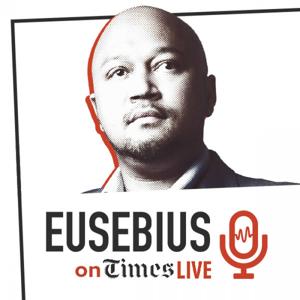
Eusebius McKaiser, well-known broadcaster, author, and now also contributor and political analyst for TimesLIVE, hosts a weekly podcast that journeys to the heart of major news items, dissecting politics, law, and ethics.

More shows like Eusebius on TimesLIVE

Stuff You Should Know by iHeartPodcasts

Stuff You Should Know

78,398 Listeners

The Joe Rogan Experience by Joe Rogan

The Joe Rogan Experience

227,497 Listeners

Global News Podcast by BBC World Service

Global News Podcast

7,618 Listeners

Focus on Africa by BBC World Service

Focus on Africa

372 Listeners

The Money Show by Radio 702

The Money Show

33 Listeners

The Clement Manyathela Show by Primedia Broadcasting

The Clement Manyathela Show

14 Listeners

The Diary Of A CEO with Steven Bartlett by DOAC

The Diary Of A CEO with Steven Bartlett

8,527 Listeners

Crime Junkie by Audiochuck

Crime Junkie

369,624 Listeners

Sunday Times Politics Weekly by TimesLIVE Podcasts

Sunday Times Politics Weekly

3 Listeners

BizNews Radio by BizNews

BizNews Radio

20 Listeners

True Crime South Africa by Killer Audio Creations

True Crime South Africa

174 Listeners

SMWX by Sizwe Mpofu-Walsh

SMWX

9 Listeners

In The Ring With Eusebius McKaiser by Eusebius

In The Ring With Eusebius McKaiser

11 Listeners

The Rest Is Politics by Goalhanger

The Rest Is Politics

3,010 Listeners

What Now? with Trevor Noah by Trevor Noah

What Now? with Trevor Noah

4,204 Listeners