
Sign up to save your podcasts
Or

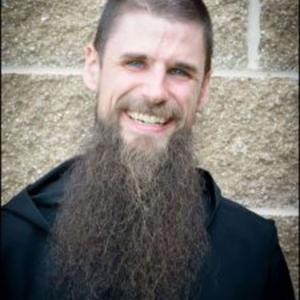


How can a society move from celebrating Jesus as Messiah to accepting (or even demanding) His crucifixion—within days? Joe Rockey and Father Boniface Hicks pick up the thread from the previous episode and go deeper into the forces that make moral collapse feel “normal”: self-interest, fear, groupthink, and the quiet pressure of power structures.
Father frames a key clarification: it’s not certain the Palm Sunday crowd and the “crucify him” crowd were the exact same people—Jerusalem was flooded with pilgrims for Passover. But even those who loved Jesus still faced a terrifying reality: Rome’s violence was real, and even the apostles fled when things became dangerous. The conversation turns practical: if corruption can become invisible from the inside, how do we train ourselves to resist the crowd, keep Scripture speaking clearly, and stay close to people with integrity—so we don’t breathe “putrid air” so long we stop noticing it?
Key Ideas
Palm Sunday’s contrast (Hosanna → Passion) is real, even if the crowds weren’t identical.
Fear is a powerful silencer: when violence is credible, even loyal followers often retreat.
Jesus didn’t present as a worldly power figure (no army, no weapons), so the “little ones” recognized Him—but lacked power to defend Him.
Groupthink pulls people downstream; self-interest (status, honor, money, security) keeps them there.
Resistance becomes possible when we: (1) honor courageous witnesses, (2) let the Gospel keep challenging our rationalizations, and (3) surround ourselves with high-integrity people who keep the air “fresh.”
Scripture Mentioned (no links)
Palm Sunday readings (Triumphal Entry + Passion narrative)
Matthew 7:3–5 (beam/splinter)
References to the apostles fleeing during the Passion narrative
Links & References (official/source only)
Dr. Jordan B. Peterson (official site):
https://www.jordanbpeterson.com/
Pope Benedict XVI (official Vatican profile):
https://www.vatican.va/content/benedict-xvi/en.html
CTA: If this helped, please leave a review or share this episode with a friend.
Questions or thoughts? Email [email protected]
.
Tags (comma-separated)
Father and Joe, Joe Rockey, Father Boniface Hicks, Palm Sunday, Passion narrative, Holy Week, Hosanna, crucify him, crowds, groupthink, fear, courage, self interest, power structures, corruption, public opinion, moral courage, integrity, apostles, discipleship, Rome, persecution, Pharisees, scribes, humility, resistance, conscience, truth, Gospel, Pope Benedict XVI, Jesus of Nazareth, Jordan Peterson, beam in your eye, Matthew 7:3-5, virtue, repentance, conversion, community, faithful witness
What if you were one of the money changers in the Temple—doing what “everyone” said was acceptable—until Jesus showed up and flipped the tables? In this episode, Joe Rockey and Father Boniface Hicks take a fresh angle on a familiar Gospel moment: not from the perspective of the disciples, but from the unnamed people caught in a system that slowly drifted from worship to marketplace.
They unpack why the issue wasn’t currency exchange itself, but desecrating the Temple—turning God’s house into a commercial space. Then Father adds a deeper layer: the money changers were set up in the courtyard of the Gentiles, a space meant to welcome non-Jews who were being drawn toward God. Clearing it wasn’t only a moral correction; it carried a prophetic message—God’s salvation is universal, and room must be made for the nations.
The conversation becomes a practical mirror for modern life: how groupthink, incentives, and “location, location, location” logic can normalize behavior we’d question if we had fresh eyes—and why we need Scripture and the Church to “air out” the room when we’ve stopped noticing the stench.
Key Ideas
The practice (currency exchange / selling offerings) wasn’t intrinsically evil; the sin was turning sacred space into a marketplace.
Corruption often happens gradually: you stop noticing it from the inside (“stench in the room” analogy).
Groupthink can normalize what individuals might resist alone—especially when money and institutional approval are involved.
The courtyard of the Gentiles matters: Jesus’ action also signals the universal mission—making room for those outside.
A helpful self-audit: where am I “going with the flow” in ways that would change if God overturned the tables in my world?
Scripture Mentioned (no links)
Matthew 21:12–13 / Mark 11:15–17 / Luke 19:45–46 / John 2:13–22 (Temple cleansing accounts)
Acts 10 (Cornelius)
Jeremiah 31 (new covenant referenced)
Links & References (official/source only)
Dr. Jordan B. Peterson (official site):
https://www.jordanbpeterson.com/
CTA: If this helped, please leave a review or share this episode with a friend.
Questions or thoughts? Email [email protected]
.
Tags (comma-separated)
Father and Joe, Joe Rockey, Father Boniface Hicks, money changers, cleansing of the temple, Temple in Jerusalem, house of prayer, den of thieves, sacred space, reverence, desecration, corruption, groupthink, moral blindness, incentives, location location location, courtyard of the Gentiles, Gentiles, universal salvation, mission to the nations, Messiah, prophetic sign, Pope Francis, Pope Benedict, Jordan Peterson, Ordinary Men, conscience, ethics, integrity, repentance, self examination, Scripture in daily life, Acts 10, Cornelius, Jeremiah 31, Council of Jerusalem, YouTube podcast, Father and Joe on YouTube
If God’s will is love, what does it mean to love yourself without sliding into narcissism—or the opposite extreme of self-neglect and self-hatred? Continuing the “Thy will be done on earth as it is in heaven” conversation, Joe Rockey and Father Boniface Hicks bring needed nuance: self-love isn’t self-worship, and self-denial isn’t automatically virtue.
They unpack why “harder” is not inherently “better,” why suffering is only meaningful when ordered to a higher purpose (love), and how true humility is simply honesty—being clear about what you’re good at and what you’re not. The episode reframes self-care as stewardship of your humanity: caring for yourself with the same respect and consistency you’d give a loved one (or even your pet), so you can show up with more freedom, joy, and capacity to serve.
Key Ideas
Ordered self-love avoids two traps: narcissism (self as god) and self-disregard (treating God’s creation as worthless).
The Christian goal isn’t “maximum suffering”; virtue often makes the good easier, more spontaneous, and more joyful over time.
Sacrifice matters—but only when it’s for a higher purpose (love of God and neighbor), not as an identity or performance.
Humility is honesty: “I’m good at X” isn’t pride, and “I’m bad at Y” isn’t self-hatred—it’s reality.
Grow the gifts you actually have, and let that growth expand your ability to love and serve others more effectively.
Links & References (official/source only)
Dr. Jordan B. Peterson (official site):
https://www.jordanbpeterson.com/
CliftonStrengths (Gallup) overview:
https://www.gallup.com/cliftonstrengths/en/home.aspx
Immanuel Kant (Stanford Encyclopedia of Philosophy entry):
https://plato.stanford.edu/entries/kant/
CTA: If this helped, please leave a review or share this episode with a friend.
Questions or thoughts? Email [email protected]
.
Tags (comma-separated)
Father and Joe, Joe Rockey, Father Boniface Hicks, love, self love, ordered self love, narcissism, self care, stewardship, humility, virtue, holiness, Lent, fasting, suffering, sacrifice, purpose, love and limits, joy, gratitude, human nature, Immanuel Kant, moral formation, Jordan Peterson, treat yourself like someone worth caring for, CliftonStrengths, Gallup StrengthsFinder, gifts and talents, discernment, prudence, growth mindset, service, charity, family leadership, fatherhood, YouTube podcast, subscribe on YouTube, algorithms
A 4-year-old’s Lenten question opens a bigger one: what does it actually mean to “act like Jesus” and pray, “Thy will be done on earth as it is in heaven”? In this episode, Joe Rockey and Father Boniface Hicks connect Lent, Scripture, and real-life decision-making—showing that God’s will is love, but love isn’t vague “good vibes.” Love has reality, boundaries, and practical limits: what you can give, what someone can receive, and what wisdom calls for in a specific moment.
They start with the Garden of Eden and the way God speaks truth about consequences, then move into how virtue matures us toward love as the “crown” of the virtues. The conversation closes with a key challenge: most of life isn’t a carved-in-stone playbook—so how do we actually develop discernment, trust our judgment, and keep growing (with God’s grace and the help of others)?
Key Ideas
“Act like Jesus” isn’t imitation theater—it’s becoming formed in God’s logic over time, especially through Lent.
God’s will (in heaven and on earth) is love, and virtue exists to serve love.
Love has limits in practice: what you can do, what others can receive, and what is realistically possible.
We avoid what is clearly wrong, but we don’t always instantly know the most loving “right” in gray areas.
Discernment grows through prayer, experience, feedback, community wisdom, and noticing wounded places that distort decisions.
The Holy Spirit forms Christians gradually—more sensitivity, better judgment, more Christlike freedom.
Scripture Mentioned (no links)
Genesis 2–3 (Garden of Eden context)
Matthew 6:10 (“Thy will be done on earth as it is in heaven”)
Galatians 6:2 (“Carry one another’s burdens…”)
Romans 13:10 (“Love is the fulfillment of the law”)
Acts 3:1–10 (the beggar at the Beautiful Gate)
Links & References (official/source only)
Dr. Jordan B. Peterson (official site):
https://www.jordanbpeterson.com/
CTA: If this helped, please leave a review or share this episode with a friend.
Questions or thoughts? Email [email protected]
.
Tags (comma-separated)
Father and Joe, Joe Rockey, Father Boniface Hicks, Lent, Ash Wednesday, first week of Lent, giving things up, sacrifice, act like Jesus, thy will be done, God’s will, love, virtue, prudence, justice, temperance, fortitude, crown of virtues, discernment, spiritual growth, Holy Spirit, spiritual consolation, wisdom, counsel, moral norms, right and wrong, gray areas, parenting and faith, fatherhood, children’s questions, Garden of Eden, Adam and Eve, Genesis, Our Father, Matthew 6:10, Galatians 6:2, Romans 13:10, Acts 3, Beautiful Gate, community learning, trusting intuition, woundedness, conflict aversion, spiritual formation, YouTube podcast, subscribe on YouTube
What do you do when someone crosses a line—especially when tolerating it could pay off financially? In this episode, Joe Rockey brings a fresh, real-world story: after years of work building a client’s business toward a major breakthrough, a volatile outburst (in front of Joe’s wife and kids) triggers a hard decision—ending the relationship right as the payoff is finally in reach.
Joe and Father Boniface Hicks walk through the difference between reacting in anger versus setting a boundary with prudence. They explore why some “wins” can feel morally and emotionally “dirty,” how a parent’s choices shape a family’s peace, and how God can give clarity through interior calm (the “snow globe” settling). The conversation stays grounded in the three-relationship lens: integrity within self, charity and boundaries with others, and discernment under God.
Key Ideas
Not every hard decision is a moral absolute; many are prudential judgments about what you will (and won’t) tolerate.
Boundaries protect your family culture as much as they protect your business.
Sometimes the “cost” isn’t money—it’s the sense that accepting certain behavior taints the relationship and the fruit of the work.
Discernment can show up as interior peace and clarity after a difficult decision (“snow globe” settling).
Growth is real when old triggers don’t produce the old reactions—faith can re-train anger into measured action.
Links & References (official/source only)
Dr. Jordan B. Peterson (official site):
https://www.jordanbpeterson.com/
CTA: If this helped, please leave a review or share this episode with a friend.
Questions or thoughts? Email [email protected]
.
Tags (comma-separated)
Father and Joe, Joe Rockey, Father Boniface Hicks, anger, boundaries, prudence, discernment, interior peace, spiritual consolation, St Ignatius, snow globe analogy, integrity, family leadership, fatherhood, marriage, self-control, emotional regulation, respect, conflict, workplace behavior, client management, business ethics, professionalism, verbal outbursts, tolerance limits, long-term payoff, sacrifice, protecting children, trust, relationships, communion, God’s guidance, decision-making, consequences, freedom, courage, peace
Lent isn’t just “trying harder.” It’s a Church-wide reset—entered intentionally, with a plan, and with God’s help. As this episode releases on Shrove Tuesday, Joe Rockey and Father Boniface Hicks explain why today (and Ash Wednesday) matters, how confession and a concrete Lenten plan set you up for real change, and why the goal isn’t perfection—it’s growth in virtue and deeper communion with God.
Through the lens of relationships—self, others, and God—they contrast two approaches: “Fat Tuesday” as last-chance indulgence versus Shrove Tuesday as spiritual preparation. They also explore how shared momentum (everyone doing Lent together) makes lasting habit-change more achievable, and why a meaningful, realistic step sustained for 40 days can reshape your life long after Easter.
Key Ideas
Shrove Tuesday is historically tied to shriving: preparing for Lent through confession and renewed intention.
Lent works best with a plan: pick a meaningful step that’s realistic enough to sustain for 40 days.
Virtue grows like training: discipline isn’t the goal—holiness is, and virtue is the habit of choosing the good.
Avoid “outside pressure” spirituality; listen for what God is already stirring inside you (desire, conviction, readiness).
Lent isn’t a solo project: we lean on God’s help and the reinforcement of the whole Church moving together.
Links & References (official/source only)
None referenced with clear official/source URLs in this episode.
CTA: If this helped, please leave a review or share this episode with a friend.
Questions or thoughts? Email [email protected]
.
Tags (comma-separated)
Father and Joe, Joe Rockey, Father Boniface Hicks, Shrove Tuesday, Ash Wednesday, Lent, confession, penance, fasting, abstinence, virtue, holiness, sanctity, spiritual discipline, habits, self-control, temptation, renewal, Easter preparation, liturgical season, Rule of St Benedict, Christian perfection, realistic goals, spiritual growth, prayer plan, spiritual reading, daily Mass, phone usage, algorithms, community support, accountability, fatherhood, being present, playing with children, patience, training, athletes and virtue, interior freedom, gratitude
Faith isn’t a lottery ticket—and it isn’t a guarantee of comfort. But over time, living the faith reshapes who you are: how you think, how you love, how you sacrifice, and what you place at the top of your “value hierarchy.” In this episode, Joe Rockey and Father Boniface Hicks revisit the practical “why” behind Mass, worship, and the Christian life—and how that long-game orientation changes your relationship with yourself, your relationships with others, and your relationship with God.
Key Ideas
The question worth revisiting: “Why am I doing this?” (faith, marriage, work, commitments).
Everyone has a “value hierarchy”—and whatever is on top functions as a god. (Jordan Peterson reference.)
Christianity proposes God as Father, Son, and Holy Spirit: an eternal communion of love—and worship keeps that love at the top.
Faith demands real sacrifice (sometimes even lifelong loss), but it produces interior freedom, meaning, and deeper love.
Practical takeaway: don’t let a phone algorithm or “followers” set the top of your hierarchy; build real communion with real people.
Scripture Mentioned (no links)
Philippians 3:8
Luke 14:26
Links & References (official/source only)
Catechism of the Catholic Church (Vatican archive):
https://www.vatican.va/archive/ccc/index.htm
Dr. Jordan B. Peterson (official site):
https://www.jordanbpeterson.com/
CTA: If this helped, please leave a review or share this episode with a friend.
Questions or thoughts? Email [email protected]
.
Tags (comma-separated)
Father and Joe, Joe Rockey, Father Boniface Hicks, value hierarchy, faith in daily life, practical faith, worship, Mass, Sunday, Sabbath, Trinity, Father Son Holy Spirit, communion of love, sacrifice, integrity, love, trust, long game, martyrdom, St. Francis of Assisi, St. Paul, Philippians 3:8, Luke 14:26, catechism, Christian maturity, holiness, patience, fatherhood, marriage, work and purpose, idols, money, power, reputation, freedom, meaning, discipleship, phone addiction, algorithms, social media, followers, genuine connection
Curiosity can be the opposite of self-centeredness—but only when it’s paired with respect, trust, and appropriate vulnerability. In this episode, Joe Rockey and Father Boniface Hicks unpack the difference between “healthy and holy curiosity” and being “nebby” (nosy), and why that line matters in friendships, marriage, and sales. They also connect it to the life of faith: softening the heart so communion becomes possible under God.
Key Ideas
Links & References (official/source only)
Judith Glaser / CreatingWE Institute (Transformational conversation article):https://creatingwe.com/news-blogs/articles-blogs/shifting-to-transformational-conversation-for-best-resultsCTA: If this helped, please leave a review or share this episode with a friend.
Questions or thoughts? Email [email protected]
.
Tags (comma-separated)
Father and Joe, Joe Rockey, Father Boniface Hicks, curiosity, vulnerability, trust, relationship building, communion, intimacy, selfishness, self-centeredness, kindness, compassion, calm, confidence, courage, connectedness, internal family systems, IFS, Judith Glaser, transformational conversation, Conversational Intelligence, nebby, nosy, Pittsburgh, gossip, pride, humility, Saint Bernard of Clairvaux, hard of heart, Jesus, sales, ethical sales, sales training, servant leadership, boundaries, trustworthiness, manipulation, integrity
Indulgences can sound like scorekeeping. They’re not. Joe Rockey and Father Boniface Hicks unpack indulgences in plain relational terms: the Church’s “treasury of merit” is like trusted relational credit you can lean on—the saints’ friendship with God helping you deepen your own. We connect First Fridays/Saturdays, rosaries, Scripture, adoration, and pilgrim practices to one aim: better spiritual health, i.e., a stronger, freer relationship of trusting love with God.
Key Ideas
Indulgence = relational help, not a magic pass: you “tap” the Church’s treasury of merit (the saints’ lived friendship with God) through concrete practices.
Always personal: you still act (prayer, Scripture, adoration, works of mercy); grace perfects, doesn’t replace, effort.
Apply to self or the dead: love shares its credit—our bonds in Christ extend beyond death.
Keep the frame human: think “street cred” or a trainer’s plan—habits that restore and strengthen relationship, not accounting tricks.
Sin harms relationships; practices heal: less “temporal punishment” math, more repair, trust, and re-ordering of love.
Helpful Parallels
Trainer plan → spiritual plan:
30 min Scripture reading (indulgenced)
Rosary in common
30 min Eucharistic adoration
Stations of the Cross
Pilgrimage/holy door (in jubilee years)
Works of mercy + usual conditions (state of grace, confession, Eucharist, prayer for the Pope’s intentions)
Scripture touchpoints
“Whatever you bind on earth…” (Mt 16:19; 18:18)
“The communion of saints” (cf. Heb 12:1; Eph 2:19)
Reconciliation and restoration (Jn 20:21–23; 2 Cor 5:18–20)
One-week Spiritual Health Tune-up (simple, doable)
Pick one indulgenced practice above and do it twice.
Go to confession (once).
Add one concrete act of mercy (call, visit, forgive, give).
Close each day with a 2-minute examen (gratitude → review → ask help for tomorrow).
CTA
If this clarified indulgences, share the episode and leave a written review—helps others find us.
Tags
Father and Joe, Joe Rockey, Father Boniface Hicks, indulgence, treasury of merit, communion of saints, First Friday, First Saturday, adoration, rosary, Scripture, pilgrimage, spiritual health, confession, temporal punishment, works of mercy, Catholic podcast, practical spirituality, relationship with God
We know the headline miracles—Incarnation, Eucharist, Resurrection. But what about the quieter moments that don’t come with spectacle? Joe Rockey and Father Boniface Hicks explore why God preserves room for trust, why Eucharistic “flesh-and-blood” phenomena are less than the Eucharist itself, and how faith matures when we live the mysteries (not rank them). Through the three lenses—self, others, under God—we look at spiritual health as a habit of trusting love, not a hunt for proofs.
Key Ideas
God invites freedom, not coercion: He offers evidence, then leaves space for trust—the essence of love.
Signs vs. Sacrament: visible Eucharistic phenomena are signs; the Eucharist is the whole living Christ (Body, Blood, Soul, Divinity).
Don’t “rank” feasts: Christmas, the institution of the Eucharist, and Easter are one saving mystery unfolding—each essential.
Living the unseen: deeper attention at Mass reorients daily life; think “spiritual health plan” (prayer, confession, charity) that steadies mind and relationships.
Faith grows by practice: name doubts honestly, choose trust, and act—grace meets you in motion.
Links & References
Scripture named (no links):
Doubting Thomas (John 20:24–29)
Institution of the Eucharist (Matthew 26:26–29; Mark 14:22–25; Luke 22:14–20; 1 Corinthians 11:23–26)
Signs confirming authority to forgive sins (Mark 2:1–12)
CTA
If this helped, please leave a review or share this episode with a friend.
Questions or thoughts? Email [email protected]
Tags
Father and Joe, Joe Rockey, Father Boniface Hicks, Christmas, Easter, Incarnation, Resurrection, Eucharist, Real Presence, Eucharistic miracles, believing without seeing, Doubting Thomas, signs vs sacrament, freedom and faith, trust, spiritual health, prayer, confession, charity, participation at Mass, liturgical seasons, unity of mysteries, grace, interior conversion, relationship with God, relationship with self, relationship with others, Benedictine spirituality, Catholic podcast, practical spirituality
From the publisher's feed

4,982 Listeners

6,230 Listeners

5,711 Listeners

6,753 Listeners

7,667 Listeners

2,162 Listeners

1,356 Listeners

25 Listeners

2,645 Listeners

1,273 Listeners
951 Listeners
2,915 Listeners

1,214 Listeners

439 Listeners

11,383 Listeners