The romance genre has been quietly running a masculinity experiment for years, and Nikki and Meg are here to analyze the data!
This week, they're breaking down the himbo: the handsome, kind, not-always-the-sharpest-tool-in-the-shed hero who may actually be the most politically interesting archetype in contemporary romance.
What you'll catch in this episode:
- Why the word "bimbo" was originally Italian slang for a man and the Oxford English Dictionary's 1929 definition that will make you throw something
- The three-trait framework that actually defines a himbo — and why cutting just one of them turns him into a meathead
- What the rise of the himbo says about collective reader exhaustion with alpha heroes, billionaires, and men who need fixing
- Why he gets to be big, strong, and protective with none of the control, aggression, or emotional withholding that usually comes packaged with that
- Why the himbo's lack of sexual hangups makes him the perfect vehicle for a queer awakening arc
- The twist nobody expects: sometimes the himbo isn't the one doing the rescuing — he's the one who needs to be saved
- A very unserious ranking of the "generational himbo," from Thor to Joey Tribbiani
Nikki and Meg make the case that the himbo isn't a silly trope! He's a cultural dispatch from a moment when readers are flat-out done doing the emotional labour of fixing men, even fictional ones.
The Framework, In Short: a himbo isn't just "big and dumb" — cut any one of these three traits and the archetype falls apart. He has to be (1) physically impressive, (2) not particularly book-smart, and (3) genuinely, actively a good person. Drop the third trait and you just have a meathead. It's that third trait that's load-bearing, and it's the reason he doesn't need the redemption arc that powers so much of the genre — he shows up with his heart already open, no cracking required.
Pull Quotes:
Nikki: "Bimbo is a portmanteau... it comes from the Italian bimbo, which is a masculine word, which means little boy... it started off as an Italian term referring to a man."Nikki: "The Oxford English Dictionary first put the word bimbo into the dictionary in 1929, where the definition was simply: a woman. Bimbo equals a woman."Nikki: "Physically impressive... not particularly book smart... but the third part — I think this is the key point of differentiation — they have to be genuinely, actively a good human. Because if you take out being a good person, you just have physically impressive and not very smart. He's just a meathead."Nikki: "Himbos are not dangerous. They don't need to be fixed. They don't need to be redeemed. It's like he comes — he's like Ikea furniture in a way — he's almost preassembled. He is good as is."Nikki: "This character is mapping onto reader exhaustion — the expectation that it's the woman's job to do the work of making men emotionally functional... it was showing up in fiction and life."Meg: "Himbos don't really have a lot of internal conflict, and that's part of what we like about them... A lot of the conflict would be interpersonal with a himbo."Nikki: "You cannot assume everybody around you is good... the himbo may also need to be the one that gets saved."Nikki: "I get to enjoy the aesthetics of a masculinity that I personally enjoy... but I don't have to deal with the drama that usually comes with it."Meg: "It's the ease of partnership — you don't have to crack them open... they come in loving you. You just need to retain the loyalty of a himbo. Don't hurt the himbos."
One more thing: stick around to the end for Nikki and Meg's (extremely unserious) attempt to rank the "generational himbo" — Thor post-Ragnarok, Jason Mendoza, Kronk, Joey Tribbiani, and Colin Bridgerton all make the case.
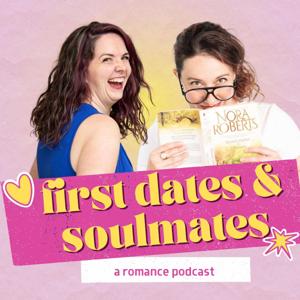
This episode developed the Himbo Archetype Framework — First Dates & Soulmates' guide to romance's most underestimated hero, including how to distinguish the Himbo from the Meathead, the Golden Retriever, and the Cinnamon Roll.
On the word's actual (surprising) origin:
Nikki: "Bimbo is a portmanteau... it comes from the Italian bimbo, which is a masculine word, which means little boy... it started off as an Italian term referring to a man."
On the Oxford English Dictionary's 1929 entry (the one that'll make people mad):
Nikki: "The Oxford English Dictionary first put the word bimbo into the dictionary in 1929, where the definition was simply: a woman. Bimbo equals a woman."
On the himbo's defining three traits:
Nikki: "Physically impressive... not particularly book smart... but the third part, I think this is the key point of differentiation: they have to be genuinely, actively a good human. Because if you take out being a good person, you just have physically impressive and not very smart. He's just a meathead."
On why he doesn't need to be "fixed" (the thesis of the episode):
Nikki: "Himbos are not dangerous. They don't need to be fixed. They don't need to be redeemed. It's like he comes, he's like Ikea furniture in a way — he's almost preassembled. He is good as is."
On reader exhaustion as the cultural driver:
Nikki: "This character is mapping onto reader exhaustion — the expectation that it's the woman's job to do the work of making men emotionally functional... it was showing up in fiction and life."
On where the tension actually comes from, since he's not withholding:
Meg: "Himbos don't really have a lot of internal conflict, and that's part of what we like about them... A lot of the conflict would be interpersonal with a himbo."
On the twist nobody expects — sometimes he needs saving:
Nikki: "I don't know if you've noticed, you cannot assume everybody around you is good or [kind] as much as you do... the himbo may also need to be the one that gets saved."
On what they each ship most:
Nikki: "I get to enjoy the aesthetics of a masculinity that I personally enjoy... but I don't have to deal with the drama that usually comes with it."Meg: "It's the ease of partnership — you don't have to crack them open... they come in loving you. You just need to retain the loyalty of a himbo. Don't hurt the himbos."
The Himbo Book List:
- 10 Ways to Accidentally Fall in Loveby Emmy Sanders
- An Unwitting Bargainby Grae Bryan
- Muscling Throughby JL Merrow
- Whitby Cora Rose
- Himbo Hitmanby Saxon James
- Mr Romanceby Louisa Masters
- How to Flirt With a Hellhoundby Shannon Mae
- Not All Himbos Wear Capesby C. Rochelle
- Time to Shineby Rachel Reid
- Irresponsible Puckboy by Eden Finley and Saxon James
- Jacked (Gymbos 1)by KM Neuhold
- The Barkeep and the Broby AJ Truman
- Against A Wallby Cate C. Wells
- A Court of Silver Flamesby Sarah J. Maas
Our Ships this week:
* Charming Puckboy by Saxon James and Eden Finley
* Bedside Manor by C. G. Mason