
Sign up to save your podcasts
Or

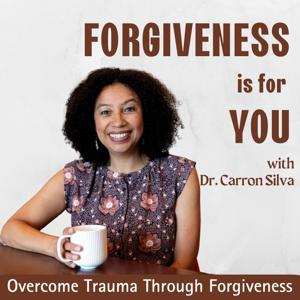
By Dr. Carron Silva: Forgiveness Guide, Christian Trauma Coach

5
4242 ratings


The podcast currently has 143 episodes available.
The most played episodes among Podcast App listeners.
In today’s episode, I discuss how Internal Family Systems Therapy is one way to uncover the parts of ourselves that carry blame and shame in our unforgiveness of self. Forgiving ourselves is in line with the second commandment, to love our neighbor as ourselves. Loving ourselves as God loves us requires fully accepting who He created us to be. We cannot extend to others what we cannot do for ourselves. Shame and blame are tango partners in keeping us stuck in unforgiveness of self. When it comes to forgiving ourselves, we must be ready, willing, and able to face, love, and accept the parts of us that carry the shame attached to the memory of what transpired. Internal Family Systems Therapy, developed by Dr. Richard Schwartz, might help identify the parts of us that need to be relieved of shame and blame in the process of forgiveness. I share a personal story of a protective part of me that caused the rupture of a lifelong friendship. I read the entry Right Judgment story in my book With You Always: A Journey with Jesus Self-forgiveness means we allow ourselves to be fully seen and known and let go of the shame and guilt we feel about our actions. If this podcast resonates with you, please subscribe. Write a review, share the link with a friend, take a screenshot, and share it on your social media. Connect with me as your forgiveness guide at www.drcarron.com. I will hold space for you as your Christian Life Coach as you work through your pain and rewrite your story. Not ready for coaching? Sign up for my 5 Days to Forgiveness Self-Guided Mini-Audio Retreat. Email me at [email protected] to schedule a speaking engagement at your church or small faith-sharing group. Remember Friend, Forgiveness is for You.

Today’s episode, What Forgiveness Is Not, is the fourth in a four-part series called Understanding Forgiveness. In today’s episode, I discuss what forgiveness is not. Forgiveness is not a one-time event we have to do it over and over and over sometimes for years before we can actually say that we have forgiven the person. Forgiveness not for the offender, it is for you, to set your heart free from holding on to the emotional bonds and the memory that you have connected to the offender. Forgiveness is not accountability for someone else. We may never be able to hold the offender accountable. They might not even be aware that they've done anything wrong to us, so the possibility of holding them accountable may not always be available. Forgiveness also does not erase the consequences for myself or the offender. If we need to ask for forgiveness, that other person may never want to speak to us, see us, or have anything to do with us ever again. In contrast, we may never receive justice. We do have a responsibility to pursue criminal justice if we are aware that the person is still causing harm, especially to protect minors. Forgiveness is not forgetting or erasing the memories of what happened to us. Forgiveness is not reconciliation. We may never have the opportunity to reconcile with the other person and we may not want to reconcile. There are exceptions. We can have reconciliation with that part of us that was hurt. It can be healed and integrated into our whole being. We can also have reconciliation with God. Forgiveness is also not a disempowered state. When we decide to forgive, we're taking back our power and that gives us more agency over how we are going to interact with that person and that's where boundaries come in. Forgiveness is not dehumanizing the other person. When we forgive, we have to broaden our view to perceive that person in their entirety because God created that person or those people and he did not create them as a monster or an entity that doesn't have full human dignity. This concludes our four-part series, Understanding Forgiveness. I hope you will join me next episode as we explore how who we are impacts how we forgive. If this podcast resonates with you, please subscribe. Write a review, share the link with a friend, take a screenshot, and share it on your social media. Connect with me as your forgiveness guide at www.drcarron.com. I will hold space for you as your Christian Life Coach as you work through your pain and rewrite your story. Sign up HERE for a discovery call. Not ready for coaching? Sign up for my 5 Days to Forgiveness Self-Guided Mini-Audio Retreat. Email me at [email protected] to schedule a speaking engagement at your church or small faith-sharing group. Remember Friend, Forgiveness is for You.
Today’s episode is the third in a four-part series called Understanding Forgiveness. In today’s episode, I discuss seven more distinct characteristics of forgiveness. Forgiveness requires supernatural love – what we call agape love. This is the type of love with which God loves us and is made available to us through participation in the Sacraments. Forgiveness frees us to love more abundantly. Forgiveness is an opportunity to reconcile ourselves with God. The Catechism of the Catholic Church # 2844 states that forgiveness is "...a high point of Christian prayer. Forgiveness also bears witness that, in our world, love is stronger than sin…Forgiveness is the fundamental condition of the reconciliation of the children of God with their Father and of men with one another." Forgiveness is the fulfillment of the first and second commandments, to love God and to love our neighbor as ourselves. Premature forgiveness blocks healing. Before true forgiveness can happen, there is work to be done. “The survivor must first develop a full understanding of the moral questions of guilt and responsibility and reconstruct a system of belief that makes sense of her undeserved suffering…” (Judith Herman, M.D., Trauma and Recovery: The aftermath of Violence from domestic abuse to political terror). The victim must first determine what belongs to whom in order not to take on any guilt, shame, or residual consequences that belong to the perpetrator. Forgiveness requires humility. A major roadblock to forgiveness is pride. Humble forgiveness recognizes that we are all human, all have sinned and fall short of the glory of God (Romans 3:23 ESV). We recognize that we are created equal in dignity, and only God knows the whole story. Forgiveness requires goodwill – the desire to do God’s will in everything, forgiving the offender with a pure heart. God’s will is for me to forgive so that He can in turn forgive me freely. When I am lacking in goodwill, I may not desire to forgive someone because it seems like my life is so much worse off than theirs. I want them to suffer the same way that I am suffering. It’s a constant battle within my own heart to let go and let God heal me. Forgiveness can be vengeful when we use it as a form of manipulation to get the offender to do what we want them to do. We are willing to forgive, but only if certain conditions exist. I forgave you for doing X so you should do Y for me and an unhealthy, unequal dynamic ensues in the relationship. This type of false forgiveness creates a superficial relationship where trust is compromised. Forgiveness becomes a weapon or a shield with which I am willing to protect myself at all costs. It sets up a cycle of offense and false forgiveness. We cannot truly extend forgiveness to others if we cannot first forgive ourselves. Forgiveness of self requires self-compassion, self-love, not in a self-centered way, but in the way that God loves us, unconditionally. Self-forgiveness is often the most difficult act of the will we can engage in. I will be devoting an entire future episode to forgiveness of self. This concludes our episodes on what forgiveness is. I hope you will join me next episode to learn more about what forgiveness is NOT. If this podcast resonates with you, please hit subscribe below. Write a review, share the link with a friend, take a screenshot, and share it on your social media. Connect with me as your forgiveness guide at www.drcarron.com. I will hold space for you as your Christian Life Coach as you work through your pain and rewrite your story. Sign up HERE for a discovery call. Not ready for coaching? Sign up for my 5 Days to Forgiveness Self-Guided Mini-Audio Retreat. Email me at [email protected] to schedule a speaking engagement at your church or small faith-sharing group. Remember Friend, Forgiveness is for You.
Today’s episode is the second in a four-part series called Understanding Forgiveness. In today’s episode, I discuss four more characteristics of forgiveness. Forgiveness is our own responsibility. If we wait for the offender to ask for forgiveness first, we may never have an opportunity to forgive. Waiting for the offender to show remorse is surrendering our power and agency to the offender. Forgiveness is allowing God to help us walk through the pain of the forgiveness process. Instead of moving away, it’s moving toward the thoughts and emotions that are rooted in the wound or past painful experience, what I call the pain story, and asking God/Jesus to accompany us there. You can have a three-part conversation with Jesus as you move toward him in your pain. First, tell him what happened. Jesus, so and so did this to me. Then tell him how you feel. I feel betrayed, brokenhearted, sad, furious, angry resentful, whatever you are feeling. Then ask him what you need. Jesus, I need you to help me through this. I need you to help me figure out a way to move forward. I need you to help me learn how to forgive this person. He hears all our prayers. Sit with Him for a while. He's patient, and he can take all of your emotions. Jesus is the Divine Physician. He has already suffered every imaginable wound we have suffered and He is with us in the present moment, waiting for us to invite him into our pain story. He knows our sorrow. We can trust in that. Forgiveness is being willing to acknowledge the offender’s right to moral justice. Moral justice is the justice that belongs to Christ Himself. This is the hardest saying. God sees the heart of the person who committed the act, and only He knows the whole story. This doesn’t mean that we can’t desire and pursue criminal justice. Forgiveness is allowing God’s grace to flow through us to the other person, making us their intercessor. The Catechism of the Catholic Church #2843 states, It is not in our power not to feel or forget the offense, but the heart that offers itself to the Holy Spirit turns injury into compassion and purifies the memory in transforming hurt into intercession. Our forgiveness may be what softens the heart of our offender, whether they are in a relationship with us or not. Pope St. John Paul II and President Ronald Reagan both forgave the men who attempted to kill them. Both perpetrators showed remorse afterward. St. Pope John Paul II taught us that the suffering we face in our pain story can be redemptive if we unite our suffering to Christ on the cross. This, my friends, is a gift we as Christians can treasure. If this podcast resonates with you, please hit subscribe below. Write a review, share the link with a friend, take a screenshot, and share it on your social media. Connect with me as your forgiveness guide at www.drcarron.com. I will hold space for you as your Christian Life Coach as you work through your pain and rewrite your story. Sign up HERE for a discovery call. Not ready for coaching? Sign up for my 5 Days to Forgiveness Self-Guided Mini-Audio Retreat. Email me at [email protected] to schedule a speaking engagement at your church or small faith-sharing group. Remember Friend, Forgiveness is for You.
Today’s episode What Forgiveness Is, Part 1 is the first in a four-part series called Understanding Forgiveness. In today’s episode, I discuss four distinct characteristics of forgiveness. Forgiveness is an act of the will. We decide if, when, and how we will forgive. Jesus never forces us to forgive. He equips us with the ability to forgive through the free gift of grace to fill our hearts with forgiveness. The more we forgive, the more we will be forgiven. When we struggle with forgiveness, our prayer can simply be, Lord, I want to forgive, please help my unforgiveness. Forgiveness is an ongoing or iterative process. We have to do it over and over in some instances, even for weeks, months, or years, depending on the situation. When we can tell the story of the pain without reliving it, we will know that we have finally forgiven the offender. Forgiveness is adaptive. With each act of forgiveness, we become someone new. We adapt ourselves to a new reality in which our ties to the offender are no longer keeping us emotionally bound. We now have space to pay attention to those parts that were overshadowed by the pain of unforgiveness. Forgiveness may also involve a grieving process for the loss of who we were meant to be or the life that we were meant to have. The harm that was done to us could have physical, mental, and emotional consequences that last a lifetime. As you've listened to me talk about forgiveness today, I hope that you can see that forgiveness is multifaceted. There is no one way to do it. Although it is an act of the will, there is a process that leads up to that decision to forgive. When we are wounded, those parts of us that are wounded tend to be disintegrated from our whole selves. And once we can work through that disintegration and heal those wounds, we can get to a place where we can decide to extend forgiveness to the person or people who have harmed us. In the next two episodes, I will continue to discuss what forgiveness is and following that, I will be talking about what forgiveness is not. If this podcast resonates with you, please subscribe below. Write a review, share the link with a friend, take a screenshot, and share it on your social media. Connect with me as your forgiveness guide at www.drcarron.com. I will hold space for you as your Christian Life Coach as you work through your pain and rewrite your story. Sign up HERE for a discovery call. Not ready for coaching? Sign up for my 5 Days to Forgiveness Self-Guided Mini-Audio Retreat. Email me at [email protected] to schedule a speaking engagement at your church or small faith-sharing group. Remember Friend, Forgiveness is for You.
The podcast currently has 143 episodes available.

15,719 Listeners

1,670 Listeners

4,757 Listeners

6,329 Listeners
4,158 Listeners

31,739 Listeners

660 Listeners

21 Listeners

900 Listeners

2,088 Listeners

19,066 Listeners

5,674 Listeners

12,362 Listeners
0 Listeners

216 Listeners