
Sign up to save your podcasts
Or

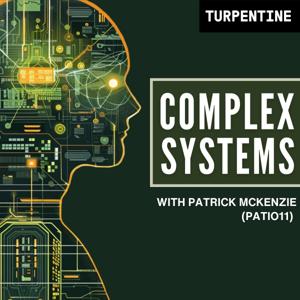

In this episode, Patrick McKenzie (patio11) offers a reading of his viral essay, "The optimal amount of fraud is non-zero" with extensive live commentary. Patrick examines payment systems, benefits programs, and pandemic-era policies, to uncover how businesses and governments often intentionally accept some level of fraud as a cost of doing business. Reducing fraud to zero would require such restrictive verification that it would severely hamper legitimate commerce and social programs. Using examples from credit card processing to PPP loans, Patrick illustrates how different industries calibrate their tolerance for fraud based on their margins, mission, and societal role.
–
Full transcript available here: https://www.complexsystemspodcast.com/fraud-choice-patrick-mckenzie
–
Sponsors: Safebase
Ready to save time and close deals faster? Inbound security reviews shouldn’t slow down your team or your sales cycle. Leading companies use SafeBase to eliminate up to 98% of inbound security questionnaires, automate workflows, and accelerate pipeline. Go to safebase.io/podcast
–
Links:
–
Twitter:
@patio11
-
Timestamps:
(00:00) Intro
(00:32) Origins of the essay and Dan Davies' influence
(02:16) Fraud is a policy choice
(04:56) The unique nature of fraud enforcement
(07:54) Who pays for payment fraud?
(12:55) Fraud as a necessary business expense
(21:13) Sponsors: GiveWell & Check
(27:43) Credit reports
(29:19) Anti fraud loops used in online commerce
(35:38) Different business tolerances for fraud
(37:20) High vs low margin fraud strategies
(41:40) Fraud in Benefit Systems and Pandemic Programs
(43:29) Taxes
(45:38) Fraud as an intended component
(51:55) Wrap
 View all episodes
 By Patrick McKenzie

4.9
140140 ratings
In this episode, Patrick McKenzie (patio11) offers a reading of his viral essay, "The optimal amount of fraud is non-zero" with extensive live commentary. Patrick examines payment systems, benefits programs, and pandemic-era policies, to uncover how businesses and governments often intentionally accept some level of fraud as a cost of doing business. Reducing fraud to zero would require such restrictive verification that it would severely hamper legitimate commerce and social programs. Using examples from credit card processing to PPP loans, Patrick illustrates how different industries calibrate their tolerance for fraud based on their margins, mission, and societal role.
–
Full transcript available here: https://www.complexsystemspodcast.com/fraud-choice-patrick-mckenzie
–
Sponsors: Safebase
Ready to save time and close deals faster? Inbound security reviews shouldn’t slow down your team or your sales cycle. Leading companies use SafeBase to eliminate up to 98% of inbound security questionnaires, automate workflows, and accelerate pipeline. Go to safebase.io/podcast
–
Links:
–
Twitter:
@patio11
-
Timestamps:
(00:00) Intro
(00:32) Origins of the essay and Dan Davies' influence
(02:16) Fraud is a policy choice
(04:56) The unique nature of fraud enforcement
(07:54) Who pays for payment fraud?
(12:55) Fraud as a necessary business expense
(21:13) Sponsors: GiveWell & Check
(27:43) Credit reports
(29:19) Anti fraud loops used in online commerce
(35:38) Different business tolerances for fraud
(37:20) High vs low margin fraud strategies
(41:40) Fraud in Benefit Systems and Pandemic Programs
(43:29) Taxes
(45:38) Fraud as an intended component
(51:55) Wrap

1,967 Listeners

4,272 Listeners
2,447 Listeners
1,093 Listeners
377 Listeners
2,354 Listeners

99 Listeners
576 Listeners

292 Listeners
143 Listeners

101 Listeners
146 Listeners
403 Listeners

34 Listeners

138 Listeners