
Sign up to save your podcasts
Or

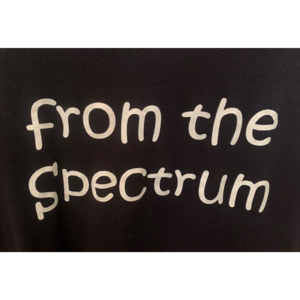


In this episode, we discuss Autism and Education. We explore some current condition within education and some personal experiences. Specifically, the school day is in complete conflict with Autism- both Criteria A and B. This is the primary factor with the challenges of Autism in Education. The classroom requires a Social Dynamic, a Speech and Language Dynamic, and Sensory-Processing Dynamic, which is 3 strikes against Autism. In addition, the subject switching throughout the school day complicates our path of learning- Our learning style prefers spending extended times on a single subject. Autism gives us the ability to be comfortable within ourselves and this accelerates our learning, our Superpowers. School and the world mostly requires the social communication and interaction.
Antipsychotics https://www.marketresearchfuture.com/reports/antipsychotic-drugs-market-2784#:~:text=The%20antipsychotic%20drugs%20market%20size,period%20(2023%20%2D%202030).
Pediatrician and Psychologists on the Medical Paradigm https://podcasts.apple.com/us/podcast/radically-genuine-podcast-with-dr-roger-mcfillin/id1573253801?i=1000624733618
Autism and Education https://www.fhautism.com/shop/autism-and-education-the-way-i-see-it-what-parents-and-teachers-need-to-know/
Thinking in Pictures https://www.grandin.com/inc/visual.thinking.html
Autism and Intelligence and an Explanation https://www.youtube.com/watch?v=pxNg0xcadsM&t=316s
(0:00) Intro; Autism and Education; Are Educators educated on Autism?; Biases from others towards the environment
(7:00) The Prescription Era; Medication first Paradigm
(10:32) The School Day- Conflicts with Criteria A and B; Limits a Capacity to Think; Underlying thoughts and feelings of agitation and frustration when learning;
(13:15) Autism gives us the ability to be comfortable within ourselves; Are we like the so-called normal people, or not?
(13:39) The Classroom- Social Dynamic, Speech and Language Dynamic, Sensory-Processing Dynamic, 3 strikes against Autism;
(14:39) Subject Switching and Criteria B conflict
(17:14) If you have met one child with Autism, you have met one child with Autism
(17:49) Elementary School, 2 reasons why Reading is HARD, Social dynamic experience;
(23:07) 4th Grade personal experience- easy task from the outside, tremendous difficulty for Autistics;
(27:00) Art was fine, other subjects were not fine; Details to General versus General to Details;
(27:58) High School personal experiences; Pathway to Success > General Education;
(29:52) Did I graduate, or Not?
(31:56) SAT
(32:43) Assessment Superpowers and Superdeficits- Very Superior to Severe/Impaired; Schools simply cannot accommodate to all- within group (Autistic to Autistic) or between group (Autistic to Masses)
(36:34) Education Arrangement; Taking Notes is challenging
(39:16) Wrap Up, Reviews, Ratings, Feedback, Contact Information
There is no question Mothers that have children with Autism are incredible. You are loved and appreciated.
Criteria B is Autism. Hans Aspergers called the children with the syndrome "little professors." This is Autism. Our routines and fixated interests. Autism gives us the ability to be comfortable within ourselves, and this accelerates our abilities, our Superpowers. How will society handle these so-called "differences" and the conflict within the so-called "normal" people?
In this episode, we expand to real-life examples of Criteria B components and review some personal experiences.
Dopamine Nation (Pleasure and Pain SeeSaw) https://www.annalembke.com
https://www.templegrandin.com/templegrandinbooks.html
(0:00) Intro; Autism is Criteria B, how will society handle "differences," those differences create conflict in others, stimulus-response, conflict, and comfort
(4:44) Routines (B2) and Plans, Exact Planning, Plan versus Actual Time and Execution, Reality meets our Visualized Thinking; Pleasure and Pain SeeSaw; More Relationship Struggles Implicated by Criteria B,
(9:01) Punctual- for others and ourselves; Bias yourself into Action; Understanding the need for Breaks; Others take the easy way out; get Sunlight for our Biology
(12:34) Personal Experience and a Glimpse into an Autistic Thought; Traffic Spacing
(16:33) Researching Items and Fixated Interests (B3); personal experience; Hans Aspergers and his Little Professors- This is Autism!
(20:40) Other examples- Pant Sizes and Alpha instead of Numerical, Restaurant Rant, Never Underestimate a Human's Capacity to Think; Don't try to change Autism because it is offends you- offends your expectations and beliefs
(23:12) Reviews and Ratings and Contact Information
Don't try to change an Autistic Person because they are "different" than you.
In this episode, we explore more examples of Criteria A- Deficits in Social Communication and Interaction. Yay, more DSM-5-TR. Can you fit in, or not? Are you like the so-called "normal" people, or not? This episode is highlighted by personal experiences and examples. Plus, I have three jokes. The examples and episode is not exhaustive, however, I try to capture some of the conditions on the spectrum. There are lots of examples in our social world that just does not make sense, and we like to say, "that does not make sense."
See Jack Kruse, Quantum Engineering 45
(0:00) Introduction; Crude Symptoms intend to capture the Spectrum; Can you fit in, or not? Are you like the so-called normal people, or not?
(2:08) Facts and Reality over Make-Believe; Methodical and Seeing Bottlenecks in Society- I hate "that's just the way it is"; Traffic; Names- Landon?, Associations; Repeating things- I hate, "like I said."
(7:09) "This does not make Sense"; Romantic Interests and Joke 1; Verbal Responses; Task-Switching from Fixated Interests; Sound Blends
(11:44) Social Media Use- Strange; Eye-Contact- Humans say we need to do it, and We are not Birds; Leaving Social Gatherings and Joke 2, the gathering will gather without me
(15:32) High-Fives = Stereotypy?; I hate Favors- favors create conflict; Henry David Thoreau; Self-Checkout Lanes and Autism, Neuroplasticity and Preference; Emotional Empathy
(20:04) Debriefing and Understanding; Supplementing Relationships and Visual Thinking; Joke 3 and Fixated Interests and Perfect Intensity- the DSM can have it's "abnormal" label; Echolalia; Fitting In and Modeling as a Blueprint
(26:03) Wrap-Up; Don't try to change an Autistic Person because They are "different" than you; Contact Information
In Part 2 of the Excitation and Inhibition phenomena, we discuss Metabolic "bank" account and demands of navigating the social world. We discuss if we have enough resources or if we will run a metabolic deficits (think burnout and avoidance, and social isolation). We cover NMDA and AMPA and different Autistic Phenotypes. In addition, we review Neuromodulators, which are vast in our biology and determine how and where to direct our attention and energy. Lastly, we discuss the medial Prefrontal Cortex and how it integrates the "self" with the outside world.
Don't try to change an Autistic person because they are different than you or different than others. Don't let that offend your beliefs and capacity to apply critical thinking in life.
https://www.nature.com/articles/s41398-023-02317-5
https://www.ncbi.nlm.nih.gov/pmc/articles/PMC5723386/
https://www.nature.com/articles/s41398-018-0155-1
https://www.nature.com/articles/nature10360
https://onlinelibrary.wiley.com/doi/full/10.1034/j.1601-183X.2003.00037.x?sid=nlm%3Apubmed
https://www.nature.com/articles/s41380-022-01506-w
(0:00) Introduction; Know Autism and Make Informed Decisions; Biological Aspects influencing Excitation / Inhibition Phenomena
(4:30) Metabolic "Bank" Account and Resources; E/I creates criteria A and B; NMDA and AMPA, and more on the Striatum
(10:02) Neuromodulators- Serotonin, Dopamine, Epinephrine and Norepinephrine, Acetylcholine; Active versus Passive Coping; Activating Systems and Cells and influencing Learning and Memory (Neuroplasticity); Nicotinic Receptors and Rapid-Excitation
(15:20) medial Prefrontal Cortex (mPFC)- Metabolic demands and planning while considering Feelings, Integrating the Self and the Outside World; How E/I interacts; a brief explanation on Default Mode Network; Quieting the Body, or not; Information-Processing; Thalamocortical
(20:19) Pursuits and Preference- Wanting and Having and being Autistic is fine, and others need to accept our phenotypes; sensory-input causes Faster Firing Rates in normal E/I- Image an imbalanced E/I
(22:25) Wrap-up and understanding Autism, and Contact Info
In this episode, we discuss the Excitation and Inhibition Phenomena in Autism. There are many biological aspects implicating the E/I balance, and the Nervous System needs a healthy balance. This episode extends slightly downstream of the Genetic and Protein implications previously discussed. We discuss cortical and subcortical areas, sensations, introduce Glutamate and GABA, and discuss the critical period. The critical period is, pardon the pun, a critical period for Autism. In addition, we discuss BDNF and introduce neuroplasticity. Finally, we discuss Melanin and Melanopsin and sunlight and modern light, and the vast implications from our new environment. To end, we connect many modern diseases to these biological factors.
See Dr. Jack Kruse Quantum Engineering 45
Email: [email protected]
In this episode, we discuss common genetic and proteins implicated with Autism. This episode is all about preparing for a future episode about Excitation and Inhibition imbalance- a known phenomena with Autism. I play Tug-of-War with Barbed-Wire and talk about a critical factor of our environment implicating proteins and development- This is huge, and necessary.
Genomic Architecture of Autism https://www.cell.com/cell/pdf/S0092-8674(22)01324-1.pdf
PTEN and mTOR https://www.cell.com/cell-reports/fulltext/S2211-1247(22)01435-8?_returnURL=https%3A%2F%2Flinkinghub.elsevier.com%2Fretrieve%2Fpii%2FS2211124722014358%3Fshowall%3Dtrue
16p11.2, Serotonin, and Possible Social Deficit Rescues
https://www.ncbi.nlm.nih.gov/pmc/articles/PMC4824539/
https://www.nature.com/articles/s41586-018-0416-4
https://www.nature.com/articles/s41386-021-01091-6
https://www.ncbi.nlm.nih.gov/pmc/articles/PMC7606557/
Dr. Jack Kruse on Autism https://jackkruse.com/category/autism/
Cullin 3 / Cul3 https://pubmed.ncbi.nlm.nih.gov/31455858/
SHANK3 https://pubmed.ncbi.nlm.nih.gov/?term=shank3
Neurexin and Neuroligin https://www.ncbi.nlm.nih.gov/pmc/articles/PMC4120877/
https://www.sciencedirect.com/science/article/pii/S0092867414006734
(0:00) Introduction; Excitation and Inhibition;
(3:15) Phosphate and Tensin- Pten; Synapses, Soma Size, Migration, Cellular Spine Density, Dendritic Overgrowth, Myelination; mTOR (Rapamycin) and hope; Are cells doing what they should?
(10:18) 16p11.2; Serotonin; Raphe and Nucleus Accumbens; Possible Therapeutic Help;
(13:40) NEED TO KNOW INFORMATION; Tryptophan, Aromatic Amino Acids, UV-B Light and Proteins; Changes in our Light Environment and Implications to our Biology and Modern Health Concerns; Photoreceptors and Brain and Skin Connection- Neuroectoderm; Circadian Mismatch;
(19:24) Back to 16p11.2 and Cortical Development;
(22:00) Cullin 3 and Cul3 and Implications to Socialness and Sensory-Gating; Causes of Stereotypic Behaviors; Neuronal Excitability;
(24:09) SHANK3; Tissues and Brain; Synaptic Implications; more Spine and Dendritic formation; Sensory Processing; Repetitive Behaviors; Anxiety; Social Deficits; Poor Motor Coordination;
(25:59) Neurexin and Neuroligin; Synaptic development and action; Myelination; E/I and Spine; CNTNAP2 and mPFC
(29:25) Wrap Up and Contact Information
email: [email protected]
In today's episode, we discuss Criteria A in the DSM-5-TR, which involves social communication and interaction. We discuss various aspects of the social world including unpredictableness, sensory processing being overwhelmed from the rapid firehose of information, being a student in a classroom, empathy, and are Autistic's being changed instead of cultivated into their own unique gifts (or Superpowers).
Autism and Empathy https://www.ncbi.nlm.nih.gov/pmc/articles/PMC8484273/
https://www.ncbi.nlm.nih.gov/pmc/articles/PMC9804307/
More from CNTNAP-2 https://www.ncbi.nlm.nih.gov/pmc/articles/PMC5723386/
https://www.cell.com/fulltext/S0092-8674(11)01010-5
Sir Simon Baron-Cohen https://www.psychol.cam.ac.uk/people/simon-baron-cohen
Temple Grandin https://www.templegrandin.com
Deisseroth on Socialness https://www.youtube.com/watch?v=gOWnf1BpkGs
DSM (don't get hitched on this book) https://www.psychiatry.org/psychiatrists/practice/dsm
(0:00) Introduction;
(2:12) A1; don't change others just because; joining conversation; unpredictableness, protection, sensory processing and sounds blending; firehose of information;
(15:11) A2; don't change others just because pt. 2 and ABA therapy; interests are easier for all; challenges in the classroom and mental effort;
(21:09) A3; challenges with play as a child; strict rule adherence; imaginative play, even when good, is bad; fits and tantrums; speech and peers; empathy- emotional versus cognitive- ASD is better at emotional empathy; supplementing relationships later in life with small talk; relationships are hard!
(31:32) Leo Kanner correction- Nervous Child, not Pathology- Pathology section in Nervous Child;
(31:54) Final Thoughts; contact information and reaching out to me
Email- [email protected]
In this episode, we discuss criteria B from the DSM-5-TR. Criteria B are known as Restricted and Repetitive Behaviors. In addition, we discuss how criteria B implicates criteria A, or the social communication and interaction aspects of Autism.
Projections https://www.amazon.com/Projections-Story-Human-Emotions/dp/B08LDWC2L6/ref=sr_1_4?crid=1GPPI5ZOFM2OS&dib=eyJ2IjoiMSJ9.nkY0ZQ0_m001QwcD7GiPwEwRdZitzaWU2NDjvRw_-xiCyiXLlyVfEZSzmonDa2coKQXiPSas9JLw1NeXBBjVh-I5pYHXvMVnLvB9vFwniO7QRoSLMGL3Idst8j8oqskuyPjy1UlNxZR23U_Ch22UJLU033T0wsMJNyZE6FcDepX8XAZAlXqeWXAHRXYD6jhVQLF771sNzRg3o_tKPJBoDr7GF0TWaaX5Nl7Mynmvvc4.Yfa8m249WY_xvl2E3TGObX7BoDhrJ_nU9R8d0ezWL34&dib_tag=se&keywords=projections&qid=1711134807&sprefix=projections%2Caps%2C100&sr=8-4
Peter Attia and Karl Deisseroth https://youtu.be/4oiKOX2lCmE?si=Ru7W7cPpDDxtE8Qr
Future Treatment possibilities https://youtu.be/eeySrgKev2g?si=IbX5h6qG5ddBPeO5
Leo Kanner https://psycnet.apa.org/record/1943-03624-001
Meet My Autistic Brain Episode https://podcasts.apple.com/us/podcast/meet-my-autistic-brain/id1548001224?i=1000629007371
APA's DSM-5-TR https://www.psychiatry.org/psychiatrists/practice/dsm
(But don't get hitch on this book)
Time Scales
Introduction (0:00)
A Brief History (1:29)
Similar Disorders (or Phenomena) (2:25)
Levels of Autism; Criteria A and B; Superpowers and Superdeficits (5:16)
Criteria B; B1 Stereotyped or Repetitive Motor Movements, Use of Objects, or Speech; Stimming; Echolalia Example (9:40)
B2 Insistence on Sameness, Inflexible Adherence to Routines, or Ritualized Patterns of Verbal or Non-Verbal Behavior; Rigid Thinking Patterns and Gray Areas cause Problems; BEE MOVIE example (16:24)
B3 Highly Restricted, Fixated Interests that are "Abnormal" in Intensity or Focus; Find your Interests and Superpowers and Do That; Vietnam War; Memorization, Accelerated Learning and Personal Example (22:37)
B4 Hyper or Hyperactivity to Sensory Input or Unusual Interests in Sensory Aspects of the Environment; Complications with Eye-Contact and Keeping Up; Sensory Processing Phenomena; Visualization and the Eyes (32:47)
From the publisher's feed
This is a podcast about autism.
I do this because I love it. Everything here comes from the Autism DOJO.
Thank you for your retinas.
Find me…
X: https://twitter.com/rps47586
YouTube: https://www.youtube.com/channel/UCGxEzLKXkjppo3nqmpXpzuA
Email: [email protected]

963 Listeners
759 Listeners
125 Listeners
20 Listeners
163 Listeners

29,204 Listeners

15,964 Listeners

10,653 Listeners
5 Listeners

7 Listeners
30 Listeners