
Sign up to save your podcasts
Or



“We and all living beings thrive by being actors in the planet’s regeneration, a civilizational goal that should commence and never cease. We practiced degeneration as a species and it brought us to the threshold of an unimaginable crisis. To reverse global warming, we need to reverse global degeneration.”
Can we really end the climate crisis in one generation? What kind of bold collective action, technologies, and nature-based solutions would it take to do it?
Paul Hawken is a renowned environmentalist, entrepreneur, author, and activist committed to sustainability and transforming the business-environment relationship. A leading voice in the environmental movement, he has founded successful eco-friendly businesses, authored influential works on commerce and ecology, and advised global leaders on economic and environmental policies. As the founder of Project Regeneration and Project Drawdown, Paul leads efforts to identify and model solutions to reverse global warming, showcasing actionable strategies. His pioneering work in corporate ecological reform continues to shape a sustainable future. He is the author of eight books, including Regeneration: Ending the Climate Crisis in One Generation.
https://regeneration.org
https://paulhawken.com
https://drawdown.org
https://regeneration.org/nexus
www.creativeprocess.info
www.oneplanetpodcast.org
IG www.instagram.com/creativeprocesspodcast
Can we really end the climate crisis in one generation? What kind of bold collective action, technologies, and nature-based solutions would it take to do it?
Paul Hawken is a renowned environmentalist, entrepreneur, author, and activist committed to sustainability and transforming the business-environment relationship. A leading voice in the environmental movement, he has founded successful eco-friendly businesses, authored influential works on commerce and ecology, and advised global leaders on economic and environmental policies. As the founder of Project Regeneration and Project Drawdown, Paul leads efforts to identify and model solutions to reverse global warming, showcasing actionable strategies. His pioneering work in corporate ecological reform continues to shape a sustainable future. He is the author of eight books, including Regeneration: Ending the Climate Crisis in One Generation.
“We and all living beings thrive by being actors in the planet’s regeneration, a civilizational goal that should commence and never cease. We practiced degeneration as a species and it brought us to the threshold of an unimaginable crisis. To reverse global warming, we need to reverse global degeneration.”
https://regeneration.org
https://paulhawken.com
https://drawdown.org
https://regeneration.org/nexus
www.creativeprocess.info
www.oneplanetpodcast.org
IG www.instagram.com/creativeprocesspodcast
“So, New York City will ultimately build a seawall that it estimates will cost somewhere in the order of 120 billion dollars. And, you know, the fact is that many cities in the United States will not be able to afford that, especially smaller ones and especially southern ones.
A part of planning for this needs to include thinking about managed retreat from highly vulnerable areas. The tax base of that community that supports schools undermines the real estate market and the value of property, and it can lead to a spiral of economic decline that can be really dangerous for the people who remain. This can really hollow out a community and that's an enormous challenge to deal with, but one way to deal with it is to try to keep the resources and infrastructure in a community proportional to the population that's utilizing it and to maintain some energy and prosperity and vitality. So, I think a lot of places in the United States need to plan to get smaller, which is really the antithesis of the American philosophy of growth and economic growth.
If you want to keep your community intact, you could move together, or you could move to a place where your neighbors have also moved or something like that. That's the kind of new idea that is being batted around that can help keep communities coherent.”
Abrahm Lustgarten is an investigative reporter, author, and filmmaker whose work focuses on human adaptation to climate change. His 2010 Frontline documentary The Spill, which investigated BP’s company culture, was nominated for an Emmy. His 2015 longform series Killing the Colorado, about the draining of the Colorado river, was nominated for a Pulitzer Prize. Lustgarten is a senior reporter at ProPublica, and contributes to publications like The New York Times Magazine and The Atlantic. His research on climate migration influenced President Biden’s creation of a climate migration study group. This is also the topic of his newly published book, On The Move: The Overheating Earth and the Uprooting of America in which he explores how climate change is uprooting American lives.
https://abrahm.com
https://us.macmillan.com/books/9780374171735/onthemove
www.creativeprocess.info
www.oneplanetpodcast.org
IG www.instagram.com/creativeprocesspodcast
An estimated one in two people will experience degrading environmental conditions this century and will be faced with the difficult question of whether to leave their homes. Will you be among those who migrate in response to climate change? If so, where will you go?
Abrahm Lustgarten is an investigative reporter, author, and filmmaker whose work focuses on human adaptation to climate change. His 2010 Frontline documentary The Spill, which investigated BP’s company culture, was nominated for an Emmy. His 2015 longform series Killing the Colorado, about the draining of the Colorado river, was nominated for a Pulitzer Prize. Lustgarten is a senior reporter at ProPublica, and contributes to publications like The New York Times Magazine and The Atlantic. His research on climate migration influenced President Biden’s creation of a climate migration study group. This is also the topic of his newly published book, On The Move: The Overheating Earth and the Uprooting of America in which he explores how climate change is uprooting American lives.
“So, New York City will ultimately build a seawall that it estimates will cost somewhere in the order of 120 billion dollars. And, you know, the fact is that many cities in the United States will not be able to afford that, especially smaller ones and especially southern ones.
A part of planning for this needs to include thinking about managed retreat from highly vulnerable areas. The tax base of that community that supports schools undermines the real estate market and the value of property, and it can lead to a spiral of economic decline that can be really dangerous for the people who remain. This can really hollow out a community and that's an enormous challenge to deal with, but one way to deal with it is to try to keep the resources and infrastructure in a community proportional to the population that's utilizing it and to maintain some energy and prosperity and vitality. So, I think a lot of places in the United States need to plan to get smaller, which is really the antithesis of the American philosophy of growth and economic growth.
If you want to keep your community intact, you could move together, or you could move to a place where your neighbors have also moved or something like that. That's the kind of new idea that is being batted around that can help keep communities coherent.”
https://abrahm.com
https://us.macmillan.com/books/9780374171735/onthemove
www.creativeprocess.info
www.oneplanetpodcast.org
IG www.instagram.com/creativeprocesspodcast
“I call myself an apocalyptic optimist. In other words, I do believe there is hope to save ourselves from the climate crisis that we have caused. However, I also believe that saving ourselves will only be possible with a mass mobilization that is driven by the pain and suffering of climate shocks around the world. A generalized sense of extreme risk can lead to peaceful and less-peaceful mass mobilizations at the levels needed to stimulate an AnthroShift. Only a global risk event (or numerous smaller events that are seen as threatening social and economic centers of power) will motivate the kind of massive social change that is needed. In other words, without a risk pivot—be it driven by social or environmental change—an AnthroShift that is large enough to respond adequately to the climate crisis and open a large enough window of opportunity postshock is improbable.
At this point, it is impossible to predict if such a shock will come from ecological disaster, war, pandemic, or another unforeseen risk. What is certain, though, is that without such a shock that motivates an AnthroShift large enough to reorient all the sectors of society to respond meaningfully to the climate crisis, it is hard to envision the world achieving the levels of climate action needed. Instead, the best we can hope for is incremental change that does not disrupt the dominant nodes of political and economic power; such incremental change has the potential to reduce the gravity of the crisis, but it will not stop the coming climate crisis.”
– Saving Ourselves: From Climate Shocks to Climate Action
Dana R. Fisher is the Director of the Center for Environment, Community, & Equity and Professor in the School of International Service at American University. Fisher’s research focuses on questions related to democracy, civic engagement, activism, and climate politics. Current projects include studying political elites’ responses to climate change, and the ways federal service corps programs in the US are integrating climate into their work. She is a self-described climate-apocalyptic optimist and co-developed the framework of AnthroShift to explain how social actors are reconfigured in the aftermath of widespread perceptions and experiences of risk. Her seventh book is Saving Ourselves: From Climate Shocks to Climate Action.
https://danarfisher.com
https://cece.american.edu
www.acc.gov
www.creativeprocess.info
www.oneplanetpodcast.org
IG www.instagram.com/creativeprocesspodcast
How can we make the radical social changes needed to address the climate crisis? What kind of large ecological disaster or mass mobilization in the streets needs to take place before we take meaningful climate action?
Dana R. Fisher is the Director of the Center for Environment, Community, & Equity and Professor in the School of International Service at American University. Fisher’s research focuses on questions related to democracy, civic engagement, activism, and climate politics. Current projects include studying political elites’ responses to climate change, and the ways federal service corps programs in the US are integrating climate into their work. She is a self-described climate-apocalyptic optimist and co-developed the framework of AnthroShift to explain how social actors are reconfigured in the aftermath of widespread perceptions and experiences of risk. Her seventh book is Saving Ourselves: From Climate Shocks to Climate Action.
“I call myself an apocalyptic optimist. In other words, I do believe there is hope to save ourselves from the climate crisis that we have caused. However, I also believe that saving ourselves will only be possible with a mass mobilization that is driven by the pain and suffering of climate shocks around the world. A generalized sense of extreme risk can lead to peaceful and less-peaceful mass mobilizations at the levels needed to stimulate an AnthroShift. Only a global risk event (or numerous smaller events that are seen as threatening social and economic centers of power) will motivate the kind of massive social change that is needed. In other words, without a risk pivot—be it driven by social or environmental change—an AnthroShift that is large enough to respond adequately to the climate crisis and open a large enough window of opportunity postshock is improbable.
At this point, it is impossible to predict if such a shock will come from ecological disaster, war, pandemic, or another unforeseen risk. What is certain, though, is that without such a shock that motivates an AnthroShift large enough to reorient all the sectors of society to respond meaningfully to the climate crisis, it is hard to envision the world achieving the levels of climate action needed. Instead, the best we can hope for is incremental change that does not disrupt the dominant nodes of political and economic power; such incremental change has the potential to reduce the gravity of the crisis, but it will not stop the coming climate crisis.”
– Saving Ourselves: From Climate Shocks to Climate Action
https://danarfisher.com
https://cece.american.edu
www.acc.gov
www.creativeprocess.info
www.oneplanetpodcast.org
IG www.instagram.com/creativeprocesspodcast
Credit Sarah Fillman from FillmanFoto, 2023
“The creation of roads is this process that's sort of innate to all beings. You know, we're all sort of inclined to create and follow trails. We just do it at a much vaster and more permanent and destructive scale. I think we need to reconceive how we think about roads in some ways, right? I mean, we think about roads, certainly here in the U. S., as these symbols of movement and mobility and freedom, right? There's so much about the romance of the open road and so much of our popular culture going back to the mid-20th century when the interstate highway systems were built and writers like Jack Kerouac were singing the praises of the open highway. And certainly, roads play that role. I like driving. The iconic Western American road trip is kind of this wonderful experience, but you know, I think the purpose of this book is to say: Yes, roads are a source of human mobility and freedom, but they're doing precisely the opposite for basically all other forms of life, right? They're curtailing animal movement and mobility and freedom, both by killing them directly in the form of roadkill, but also by creating these kinds of impenetrable walls of traffic that prevent animals from moving around the landscape and accessing big swaths of their habitat. Right? So, that's kind of the mental reconfiguration we have to go through, which is to recognize that, hey, roads aren't just forms of mobility and freedom for us. They're also preventing that mobility in basically all other life forms.”
Ben Goldfarb is a conservation journalist. He is the author of Crossings: How Road Ecology Is Shaping The Future of Our Planet, named one of the best books of 2023 by the New York Times, and Eager: The Surprising, Secret Life of Beavers and Why They Matter, winner of the 2019 PEN/E.O. Wilson Literary Science Writing Award.
www.bengoldfarb.com
https://wwnorton.com/books/9781324005896
www.chelseagreen.com/product/eager-paperback
www.creativeprocess.info
www.oneplanetpodcast.org
IG www.instagram.com/creativeprocesspodcast
What is road ecology? How are our roads driving certain species towards extinction? And what can we do about it?
Ben Goldfarb is a conservation journalist. He is the author of Crossings: How Road Ecology Is Shaping The Future of Our Planet, named one of the best books of 2023 by the New York Times, and Eager: The Surprising, Secret Life of Beavers and Why They Matter, winner of the 2019 PEN/E.O. Wilson Literary Science Writing Award.
“The creation of roads is this process that's sort of innate to all beings. You know, we're all sort of inclined to create and follow trails. We just do it at a much vaster and more permanent and destructive scale. I think we need to reconceive how we think about roads in some ways, right? I mean, we think about roads, certainly here in the U. S., as these symbols of movement and mobility and freedom, right? There's so much about the romance of the open road and so much of our popular culture going back to the mid-20th century when the interstate highway systems were built and writers like Jack Kerouac were singing the praises of the open highway. And certainly, roads play that role. I like driving. The iconic Western American road trip is kind of this wonderful experience, but you know, I think the purpose of this book is to say: Yes, roads are a source of human mobility and freedom, but they're doing precisely the opposite for basically all other forms of life, right? They're curtailing animal movement and mobility and freedom, both by killing them directly in the form of roadkill, but also by creating these kinds of impenetrable walls of traffic that prevent animals from moving around the landscape and accessing big swaths of their habitat. Right? So, that's kind of the mental reconfiguration we have to go through, which is to recognize that, hey, roads aren't just forms of mobility and freedom for us. They're also preventing that mobility in basically all other life forms.”
www.bengoldfarb.com
https://wwnorton.com/books/9781324005896
www.chelseagreen.com/product/eager-paperback
www.creativeprocess.info
www.oneplanetpodcast.org
IG www.instagram.com/creativeprocesspodcast
Environmentalists, writers, artists, activists, and public policy makers explore the interconnectedness of living beings and ecosystems. They highlight the importance of conservation, promote climate education, advocate for sustainable development, and underscore the vital role of creative and educational communities in driving positive change.
00:00 "The Conditional" by U.S. Poet Laureate Ada Limón
01:27 The Secret Language of Animals: Ingrid Newkirk, President of PETA
03:03 A Love Letter to the Living World: Carl Safina, Ecologist & Author
04:11 Exploring the Mysteries of Soil and Coral Reefs: Merlin Sheldrake, Biologist, Author of Entangled Life
04:47 Exploring Coral Reefs: Richard Vevers, Founder of The Ocean Agency
05:56 The Importance of Climate Education: Kathleen Rogers, President of EarthDay.org
07:02 The Timeless Wisdom of Turtles: Sy Montomery, Naturalist & Author
07:38 Optimism in the Face of Environmental Challenges: Richard Vevers
08:32 Urban Solutions for a Sustainable Future: Paula Pinho, Director, Just Transition, Consumers, Energy Efficiency & Innovation, European Commission
08:57 The Circular Economy: Walter Stahel, Founder & Director of the Product-Life Institute
09:39 The Power of Speaking Out for Sustainability: Paula Pinho
10:16 Empowering the Next Generation Through Education: Jeffrey Sachs, President of the UN Sustainable Development Solutions Network
www.creativeprocess.info
www.oneplanetpodcast.org
IG www.instagram.com/creativeprocesspodcast
www.maxrichtermusic.com
https://studiorichtermahr.com
Max Richter’s music featured in this episode are “On the Nature of Daylight” from The Blue Notebooks, “Path 19: Yet Frailest” from Sleep.
Music is courtesy of Max Richter, Universal Music Enterprises, and Mute Song.
"So many cities can be enhanced through careful planning decisions. We need tree-lined streets and walkable cities. All of all of the vectors by which we can engage with nature and confer neurocognitive benefit. It's all the manners in which our planning decisions around density and green space and traffic and noise pollution ultimately bear on our health."
Clayton Page Aldern is an award winning neuroscientist turned environmental journalist whose work has appeared in The Atlantic, The Guardian, The Economist, and Grist, where he is a senior data reporter. A Rhodes Scholar, he holds a Master's in Neuroscience and a Master's in Public Policy from the University of Oxford. He is also a research affiliate at the Center for Studies in Demography and Ecology at the University of Washington. He is the author of The Weight of Nature: How a Changing Climate Changes Our Minds, Brains, and Bodies, which explores the neurobiological impacts of rapid environmental change.
https://claytonaldern.com
www.penguinrandomhouse.com/books/717097/the-weight-of-nature-by-clayton-page-aldern
https://csde.washington.edu
www.creativeprocess.info
www.oneplanetpodcast.org
IG www.instagram.com/creativeprocesspodcast
From the publisher's feed
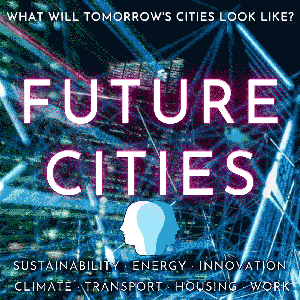
What will the city of tomorrow look like?
We are living in the Century of the City. Cities are the main drivers of creativity and innovation. Yet, a great number of people have little or no conception of what their future will look like when it comes to creating resilient, sustainable, and liveable cities. Even though a significant majority are intent on learning more about climate disruption, energy, transport, water, air, waste, education, and jobs.
In a decade of transformative change, Future Cities podcast tells stories about the best in democracy, culture, urbanism, and society. It is a story of the cities of tomorrow told in a relevant, exciting, and accessible way by the many stakeholders and changemakers reimagining and reshaping our future.
www.oneplanetpodcast.org
www.creativeprocess.info

7,579 Listeners

1,861 Listeners

74 Listeners

296 Listeners

1,161 Listeners
1,014 Listeners

458 Listeners

61 Listeners

276 Listeners
510 Listeners
93 Listeners

178 Listeners
149 Listeners

143 Listeners

431 Listeners

203 Listeners

229 Listeners
55 Listeners
55 Listeners
48 Listeners

35 Listeners

7 Listeners
89 Listeners

33 Listeners

13 Listeners

7 Listeners

18 Listeners

33 Listeners
40 Listeners

81 Listeners

11 Listeners

35 Listeners

2 Listeners
3 Listeners