
Sign up to save your podcasts
Or



“Lincoln Center is multiple stages. I think probably over three dozen stages across 16 acres. It is a vast canvas in and of itself. And then we have this beautiful plaza that leads to this beautiful campus, and that’s the visual I think that most people have when they think of Lincoln Center is this beautiful fountain in the center and these three gorgeous buildings.It’s New York’s biggest plaza, and it feels very vibrant and beautiful. In the summer, we really take that plaza and we transform it into a dance floor. So this idea of also interrupting what people’s notion of Lincoln Center is because it’s a space that is very aspirational, which is a great thing.”
Shanta Thake is the Chief Artistic Officer at Lincoln Center for the Performing Arts—the nation's largest performing arts complex. Before stepping into this role, she spent nineteen years at The Public Theater, shaping the city's cultural landscape through Joe's Pub and expansive community initiatives. Today, she is tearing down walls—both the literal barriers separating Lincoln Center from its neighbors, and the figurative ones that dictate who belongs in our cultural spaces. She views the arts not as a luxury, but as essential civic infrastructure. We are pleased to have Shanta Thake to discuss her journey, the power of radical curation, and the future of public performance.
(0:00) Reimagining Lincoln Center
(2:27) Art and the Human Experience
(4:40) The Curiosity of Childhood
(5:44) Alvin Ailey and the Pivot
(8:29) The Invisible Arts
(9:06) The Power of Public Theater
(17:03) Curation, Programming and the Art of Listening
(23:42) San Juan Hill and The Wall
(31:23) Art as the Oldest Technology
(35:02) globalFEST: Music and Connection
(38:20) Finding Universal Belonging
(41:20) The Gift of Pause
(54:27) A Collective Caretaking
Episode Website
www.creativeprocess.info/pod
Instagram:@creativeprocesspodcast
"I really do believe that the arts are critical to how we move forward together, and live performance in particular, I think, is a way of us practicing how to move across our ideological boundaries and find one another and imagine these new worlds together and create together."
Shanta Thake is the Chief Artistic Officer at Lincoln Center for the Performing Arts—the nation's largest performing arts complex. Before stepping into this role, she spent nineteen years at The Public Theater, shaping the city's cultural landscape through Joe's Pub and expansive community initiatives. Today, she is tearing down walls—both the literal barriers separating Lincoln Center from its neighbors, and the figurative ones that dictate who belongs in our cultural spaces. She views the arts not as a luxury, but as essential civic infrastructure. We are pleased to have Shanta Thake to discuss her journey, the power of radical curation, and the future of public performance.
(00:00) Reimagining Lincoln Center
(03:09) A Collective Caretaking
(03:47) The Technology of Human Creation
(04:20) The Curiosity of Childhood
(09:25) San Juan Hill and The Wall
(14:20) globalFEST: Music and Connection
(16:06) The Gift of Pause
(17:20) A Collective Caretaking
Episode Website
www.creativeprocess.info/pod
Instagram:@creativeprocesspodcast
Why do we write? Is it to capture a memory before it vanishes or to build a bridge between the person we are and the stories we've been told? In this episode of The Creative Process, we explore the practice of writing as an awakening and tool for discovery with a group of celebrated poets, novelists, musicians and thinkers.
We hear from neuroscientist, dancer and author Julia Christensen on how literature inspires transformative aesthetic experiences. Award-winning poet and clinical psychologist Hala Alyan discusses navigating displacement through narrative, while bestselling author Andre Dubus III reflects on the honest labor of the writer and the willingness to fail.
Pulitzer Prize-winning poet Jericho Brown shares how the sounds of American vernacular guide his work and Fmr. US Poet Laureate Ada Limón discusses holding hope within frightening thoughts about the future of our planet. NYT Bestseller Aimee Nezhukumatathil speaks on tenderness towards the natural world and naturalist Sy Montgomery shares how animals have been her greatest teachers.
The conversation expands with poet Max Stossel on finding humanity in conflict, Tiokasin Ghosthorse on the ancient energy of the earth and Julian Lennon on art as a collective human endeavor. Finally, composer Erland Cooper takes us to the landscape of his youth, where the sound of the sea informed his creative voice.
To hear more from each guest, listen to their full interviews.
Episode Website
www.creativeprocess.info/pod
Instagram:@creativeprocesspodcast
Step into the deep time of the forest floor, where a single fallen leaf contains the history of the world, and invisible fungal networks hum with ancient conversations. Biologist and acclaimed author David George Haskell reveals a staggering truth: we are completely dependent on the botanical world, and our belief in strict human individuality is a biological illusion.
Haskell has spent much of his life training himself to see the universal within the infinitesimally small. He's famously sat for a year in a single square meter of Tennessee's forest, a mandala experience that revealed the deep history of the world through a single fallen leaf. He's a two-time finalist for the Pulitzer Prize for his books The Forest Unseen and Sounds Wild and Broken, and he received the John Burroughs Medal for The Songs of Trees.
His work often focuses on what he calls the unwaged labor of the natural world, the complex biological communities that sustain our planet without a monetary ledger. And his latest book is How Flowers Made Our World. In it, he argues that we are essentially grass apes dependent on the ancient innovations of flowering plants for two-thirds of our daily calories.
(0:00) How Flowers Made Our World
(1:33) Networked Connection is the Foundation of Life
(2:00) Contemplating the Small
(4:07) Consciousness, Intelligence & Memory in the More-Than-Human-World
(4:18) We Are Grass Apes
(5:41) Memories of His Childhood in Paris & Wild Orchids
(6:34) The Networked Intelligence of Forests
(7:45) The Earth in Full Song
(8:46) The Practice of Listening
(10:11) Escaping the Screen: Real Connections in the Classroom
(11:35) The True Cost of AI
(12:11) Transforming Ourselves
(14:23) Silence Without Expectation
(15:32) A Sensory Legacy for the Future
Episode Website
www.creativeprocess.info/pod
Instagram:@creativeprocesspodcast
What if the defining revolution of Earth's history wasn't led by animals or humans, but by flowers? Are we truly individuals, or are our bodies and minds just walking ecosystems?
Our guest today is David George Haskell, a biologist who has spent much of his life training himself to see the universal within the infinitesimally small. He's famously sat for a year in a single square meter of Tennessee's forest, a mandala experience that revealed the deep history of the world through a single fallen leaf. He's a two-time finalist for the Pulitzer Prize for his books The Forest Unseen and Sounds Wild and Broken, and he received the John Burroughs Medal for The Songs of Trees.
His work often focuses on what he calls the unwaged labor of the natural world, the complex biological communities that sustain our planet without a monetary ledger. And his latest book is How Flowers Made Our World. In it, he argues that we are essentially grass apes dependent on the ancient innovations of flowering plants for two-thirds of our daily calories.
(0:00) How Flowers Made Our World
The incredible ancient history of flowers on Earth
(4:56) Contemplating the Small
Expanding our world by restricting our gaze
(14:30) The Illusion of Individuality
Why atomism is false and interconnectedness is the foundation of life
(26:08) We Are Grass Apes
The evolutionary origins of humans and our dietary dependence on grass
(33:32) Memories of His Childhood in Paris & Wild Orchids
(38:55) The Networked Intelligence of Forests
How trees communicate and share resources beneath the soil
(44:00) The Earth in Full Song
Tracing the sonic history of our planet
(51:08) The Practice of Listening
Why tuning in to the natural world is crucial for our survival
(1:01:21) Silence Without Expectation
Sitting with nature without demanding progress or enlightenment
(1:11:01) Transforming Ourselves
Why personal change matters in the fight for the climate
(1:15:20) Escaping the Screen
Finding real human-to-human connection away from technology
(1:16:16) The True Cost of AI
The devastating impact of data centers on our fossil fuel consumption
(1:23:18) A Sensory Legacy for the Future
What we must preserve for the generations not yet born
Episode Website
www.creativeprocess.info/pod
Instagram:@creativeprocesspodcast
In this special edition, we hear from our guests from across the arts and sciences. From composers and poets to forest ecologists and climate envoys, they tell the story of our planet. Moving beyond the data of destruction, we explore the intelligence of nature, the ethics of what we eat, and the empathy required to save our future.
MAX RICHTER, Composer, Sleep, The Blue Notebooks
CARL SAFINA, Author, Becoming Wild
ADA LIMÓN, 24th US Poet Laureate
CYNTHIA DANIELS, Grammy Award-winning Sound Eng.
SUZANNE SIMARD, Finding the Mother Tree
JOELLE GERGIS, Lead Author, IPCC 6th Assessment Rpt
NOAH WILSON-RICH, CEO, Best Bees Company
INGRID NEWKIRK, PETA Founder
BERTRAND PICCARD, Solar Impulse Foundation
DAVID FARRIER, Author, Footprints
KATHLEEN ROGERS, Pres, Earth Day Network
ODED GALOR, Unified Growth Theory
PETER SINGER, Philosopher
GEOFF MULGAN, Another World Is Possible
CLAIRE POTTER, Welcome to the Circular Economy
CHRIS FUNK, Dir. Climate Hazards Car.
JENNIFER MORGAN, Special Envoy, International Climate Action
To hear more from each guest, listen to their full interviews.
Episode Website
On Music, Trust and Connection with the Animal World
“Mostly I’ll play in a minor key, something sad, which I think can work for an animal because they can sense the sadness, and they try to reassure me and comfort me. I chose love songs because I'm convinced they are very intuitive and they can sense what I am trying to say to them, and profess my love in a way. I think there's always a way to connect, and if you're being cautious and don't threaten the animals, something beautiful can happen.”
Musician Plumes takes his guitar to the world's most unlikely concert halls—farms, sanctuaries, and wild habitats. A passionate advocate for veganism and animal welfare, we discuss what animals hear, how trust forms, and what music can reveal when it enters a world not made for humans alone.
Episode Website
www.creativeprocess.info/pod
Instagram:@creativeprocesspodcast
On Music, Trust and Connection with the Animal World
“Mostly I’ll play in a minor key, something sad, which I think can work for an animal because they can sense the sadness, and they try to reassure me and comfort me. I chose love songs because I'm convinced they are very intuitive and they can sense what I am trying to say to them, and profess my love in a way. I think there's always a way to connect, and if you're being cautious and don't threaten the animals, something beautiful can happen.”
Musician Plumes takes his guitar to the world's most unlikely concert halls—farms, sanctuaries, and wild habitats. A passionate advocate for veganism and animal welfare, we discuss what animals hear, how trust forms, and what music can reveal when it enters a world not made for humans alone.
Episode Website
www.creativeprocess.info/pod
Instagram:@creativeprocesspodcast
How is music a pathway to understanding animals?
Musician Plumes takes his guitar to the world's most unlikely concert halls—farms, sanctuaries, and wild habitats. A passionate advocate for veganism and animal welfare, we discuss what animals hear, how trust forms, and what music can reveal when it enters a world not made for humans alone.
“Mostly I’ll play in a minor key, something sad, which I think can work for an animal because they can sense the sadness, and they try to reassure me and comfort me. I chose love songs because I'm convinced they are very intuitive and they can sense what I am trying to say to them, and profess my love in a way. I think there's always a way to connect, and if you're being cautious and don't threaten the animals, something beautiful can happen.”
Episode Website
www.creativeprocess.info/pod
Instagram:@creativeprocesspodcast
“So when we decided to do a documentary to follow Ai Weiwei, we knew, of course, it wouldn't be just a simple opera, and we knew he would bring his own very special and original vision. Because, of course, he is not an opera director. From his point of view, it's a challenge, but from another perspective, it’s probably an enrichment for the opera audience because he doesn't follow the rules of opera. And, of course, once you decide to do a documentary about Ai Weiwei, it's in his DNA to be political. Once I started to follow him, the political issues and topics came into the documentary by themselves.”
The renowned artist and activist Ai Weiwei has used sculpture, photography, documentaries, and large-scale installations to challenge authoritarian power for decades. But his project at the Rome Opera House, directing Puccini’s final opera, Turandot, may be his most powerful fusion of art and politics yet. Puccini’s original is a fairy tale set in ancient China about a princess whose riddle game costs failed suitors their lives. But Ai Weiwei transformed this story into a stark reflection of the present, weaving in footage of refugee crises, COVID hospitals, and the Ukraine war—a production that became an urgent act of resistance for its Ukrainian conductor and cast. The opera and documentary are a living document of our turbulent times, embodying Ai Weiwei’s belief that 'Everything is Art. Everything is Politics.'
The new documentary, Ai Weiwei's Turandot, goes behind the curtain to capture the artistic struggle and emotional weight of making this work—a process that began with one vision and was fundamentally changed by a global pandemic and a major war.
My guest is the documentary’s director, Maxim Derevianko. He grew up in a family with deep ties to the Rome Opera House, and he offers a deeply personal, intimate look at how in Ai Weiwei’s words, “art competes with reality, but art will have the last word.”
Episode Website
www.creativeprocess.info/pod
Instagram:@creativeprocesspodcast
From the publisher's feed
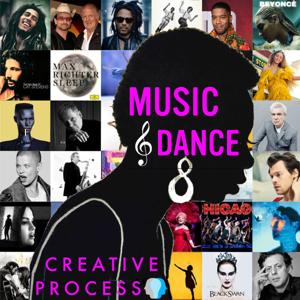
Music & Dance episodes of the popular The Creative Process podcast. To listen to ALL arts & creativity episodes of “The Creative Process · Arts, Culture & Society”, you’ll find our main podcast on Apple: tinyurl.com/thecreativepod, Spotify: tinyurl.com/thecreativespotify, or wherever you get your podcasts!
Exploring the fascinating minds of creative people. Conversations with writers, artists & creative thinkers across the Arts & STEM. We discuss their life, work & artistic practice. Winners of Oscar, Emmy, Tony, Pulitzer, leaders & public figures share real experiences & offer valuable insights. Notable guests and and organizations include: Pacific Northwest Ballet, Pilobolus Dance Company & Five Senses Festival, Harvard Dance Center, Songwriters Hall of Fame, Carter Burwell, John Powell, Edmar Castaneda, Kovacs, Marcelo Zarvos, Paulo Szot (Chicago, South Pacific), Jill Johnson (Ballet Frankfurt, The Forsythe Company), Mario Alberto Zambrano (Juilliard Dance), Nano Stern, Michael Daugherty, Bright Sheng, François Clemmons (Mister Rogers’ Neighborhood, Harlem Spiritual Ensemble), Rick Carnes (Songwriters Guild of America), Peter Boal, Noelani Pantastico, Itamar Kubovy, Jonah Bokaer Choreography & The Hudson Eye, Renée Jaworski, Matt Kent, Trish Sie (Pitch Perfect 3), Emily Kent, Seán Curran (NYU Tisch School of the Arts), Carolyn Waters Broe (Four Seasons Orchestra), Yuval Sharon, Aaron P. Dworkin (Sphinx Organization), Lorenda Ramou (Onassis Cultural Center), Terry Radigan, among others.
The interviews are hosted by founder and creative educator Mia Funk with the participation of students, universities, and collaborators from around the world. These conversations are also part of our traveling exhibition. www.creativeprocess.info
For The Creative Process podcasts from Seasons 1 2 3, visit: tinyurl.com/creativepod or creativeprocess.info/interviews-page-1, which has our complete directory of interviews, transcripts, artworks, and details about ways to get involved.
27,936 Listeners
277 Listeners
3 Listeners
149 Listeners
26 Listeners
26 Listeners
55 Listeners
55 Listeners
48 Listeners
35 Listeners

7 Listeners
89 Listeners
124 Listeners
33 Listeners
13 Listeners
7 Listeners
18 Listeners
40 Listeners
81 Listeners
11 Listeners
35 Listeners
2 Listeners
3 Listeners